Coconut Cake with Milk and Shredded Coconut
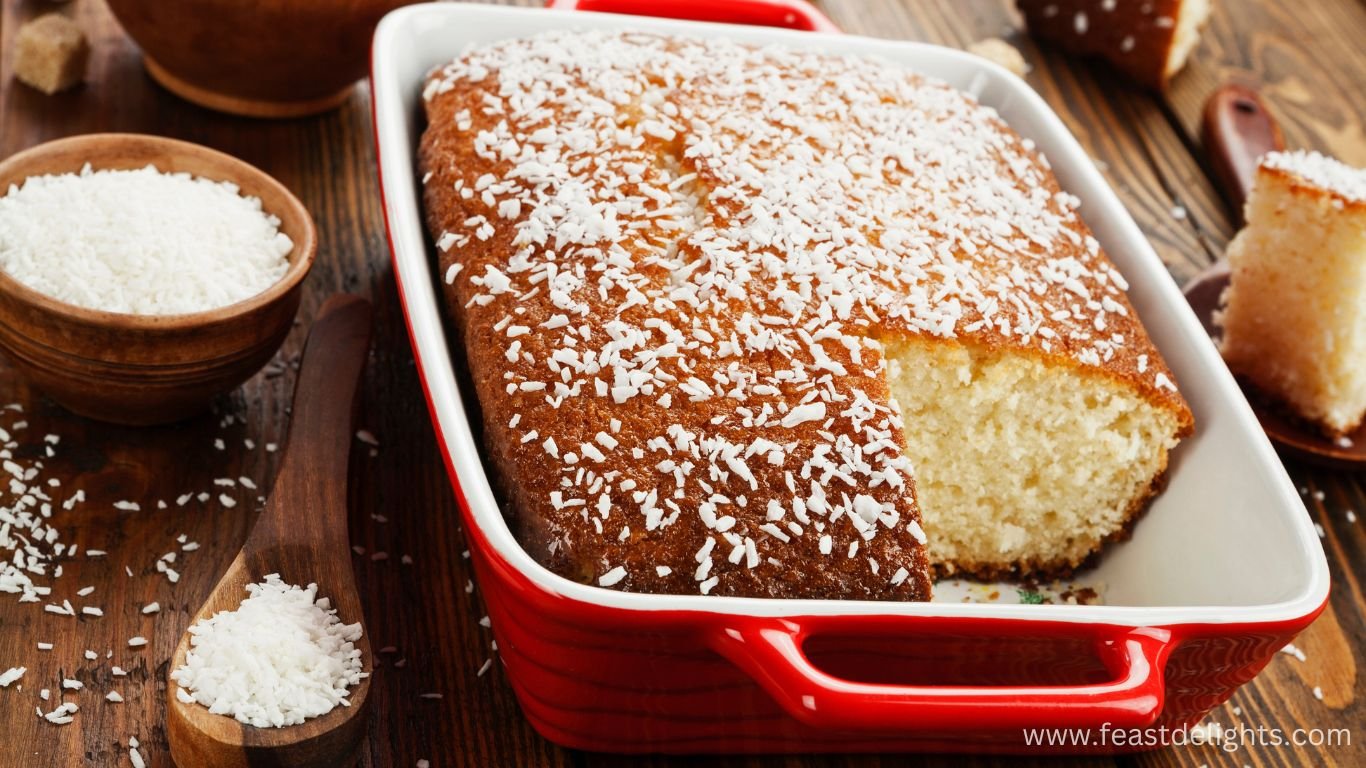
This coconut cake uses milk, melted butter and shredded coconut to make a soft, gently sweet single-layer cake with coconut throughout the crumb. There is no buttercream or elaborate layering, and the batter can be mixed by hand. Bake in a 23 cm round cake pan and cool before adding a light scattering of coconut. The recipe makes ten slices and takes about two hours, including cooling. Optional marshmallows are decorative, not required for the batter or its texture.
Coconut cake with shredded coconut is a simple single-layer bake with a tender crumb and coconut distributed throughout the batter. This recipe makes ten slices from one 23 cm (9 inch) round pan. Allow approximately two hours including cooling. It uses melted butter and ordinary milk, not coconut cream or a whipped frosting.
Choosing the coconut and measuring ingredients
Use dried unsweetened shredded or desiccated coconut. Finely desiccated coconut disperses evenly, while longer shreds provide more noticeable texture. Sweetened coconut can make the cake considerably sweeter and may absorb moisture differently. Fresh grated coconut has a different water content and is not a direct substitute. Weigh flour and sugar when possible: two US cups of plain flour are roughly 240 g when spooned and levelled, and one cup of granulated sugar is about 200 g. A cup of coconut varies with shred size and packing, so use the stated cup measure lightly filled and record its weight if repeating the recipe.
Use plain milk and melt the butter gently, cooling it until fluid but no longer hot. Three large eggs supply structure. Vanilla sugar is sugar flavoured with vanilla; a small amount of vanilla extract can be used to taste instead. The original formula contains one teaspoon of baking powder, which may give a modest rise rather than a very tall sponge. Its final height and moisture require kitchen verification.
Recipe card
Coconut Cake with Milk and Shredded Coconut
Bake 30–40 minutes, then cool approximately 60 minutes including a short rest in the tin. Allow longer if needed before decorating.
Equipment: Kitchen scale or US measuring cups, 23 cm (9 inch) round cake tin, parchment, two mixing bowls, whisk, spatula, skewer and cooling rack.
Ingredients
Dry ingredients
Dry ingredients and finish
Wet ingredients
Dry ingredients
Optional decoration
Instructions
Prepare the pan
Preheat the oven to 180°C (350°F). Grease and line the base of a 23 cm (9 inch) round cake pan.
Mix dry ingredients
Whisk flour, sugar, shredded coconut and baking powder until evenly combined. Reserve additional coconut separately for finishing.
Mix wet ingredients
Whisk eggs, milk, cooled melted butter and vanilla sugar until combined.
Combine and bake
Fold wet ingredients into dry just until no dry pockets remain. Spread batter in the pan and bake 30–40 minutes until the centre is set and a skewer comes out without wet batter.
Cool and finish
Rest about 10 minutes in the pan, then transfer to a rack and cool completely. Scatter extra coconut over slices and add optional marshmallows.
Mix without making the cake tough
Preheat the oven and grease the cake pan, lining its base with parchment for easier release. Whisk flour, sugar, coconut and baking powder to distribute the dry ingredients evenly. Separately whisk eggs, milk, cooled melted butter and vanilla sugar. If cold milk causes the butter to form small solid droplets, bring the ingredients briefly towards room temperature before combining. Fold wet ingredients into dry with a spatula just until no flour pockets remain. Scrape the bottom of the bowl, but do not continue beating to make the mixture completely smooth.
Baking and cooling
Transfer to the prepared pan and level the surface. Bake on the middle rack at 180°C (350°F) for 30–40 minutes. Check the centre rather than relying on browned edges: a skewer should come out without wet batter. If the cake is darkening early, tent loosely with foil after the surface has set and continue baking until cooked. Rest in the tin for about ten minutes, then transfer to a rack. Cool fully before cutting. Do not taste uncooked flour and egg batter.
Troubleshooting and decoration
If the cake is dense, check baking powder freshness and avoid overmixing. If the crumb is dry, weigh flour accurately and check the cake earlier. If the coconut is noticeably coarse, use a finer shred in the next batch. A little toasted coconut can add contrast; allow it to cool before scattering. Extra coconut may not adhere to a completely dry surface, so add it to individual slices rather than promising a permanent coating. Marshmallows are optional decoration only; check labels for gelatin and allergens.
Serving, variations and storage
Serve plain with tea, fresh berries or a little yoghurt. Lime or lemon zest complements the coconut. The original cake contains wheat, milk and eggs; check coconut, flavourings and decorations for cross-contact. For a frosted alternative try key lime coconut cake, or explore vanilla sponge with oil and blueberry muffins.
Keep completely cooled plain cake covered at room temperature for up to two days for best quality. Freeze wrapped slices for up to two months and thaw while wrapped. If serving with cream or yoghurt, keep those accompaniments refrigerated and add just before serving.
Frequently asked questions
Can I use sweetened coconut?
It will make the cake sweeter and may change its texture. Unsweetened dried coconut is preferred.
Can I use fresh coconut?
Fresh coconut has a different moisture content, so it is not a reliable direct replacement.
Do I need a mixer?
No. A whisk and spatula are enough.
Can I use coconut milk instead of milk?
It may change the fat content and crumb. Use a separate tested formula if a dairy-free cake is required.
Are marshmallows necessary?
No; they are optional decoration, not part of the batter.
More recipes to try






Spotted a detail that needs correcting? Contact the FeastDelights editors.