Refrigerator Wild Garlic Pickles in Vinegar Brine
Refrigerator wild garlic pickles are tender green leaves briefly wilted in a sweet-sour brine flavoured with peppercorns and bay. The leaves retain a mild garlicky character and make a tangy garnish for potatoes, beans or sandwiches. Use only verified edible wild garlic from a trustworthy food supplier, never unidentified foraged leaves. This recipe uses 500 g of leaves and takes about 20 minutes to prepare, approximately 12 minutes to cook and at least one hour to chill. Keep the finished pickles refrigerated and use within three days; they are not shelf-stable.
Refrigerator wild garlic pickles are briefly blanched edible garlic leaves in a lightly sweetened vinegar brine. They make a tangy, garlicky garnish rather than a pantry preserve. This recipe uses 500 g of verified edible leaves and takes approximately 92 minutes including chilling. Keep the finished pickles refrigerated.
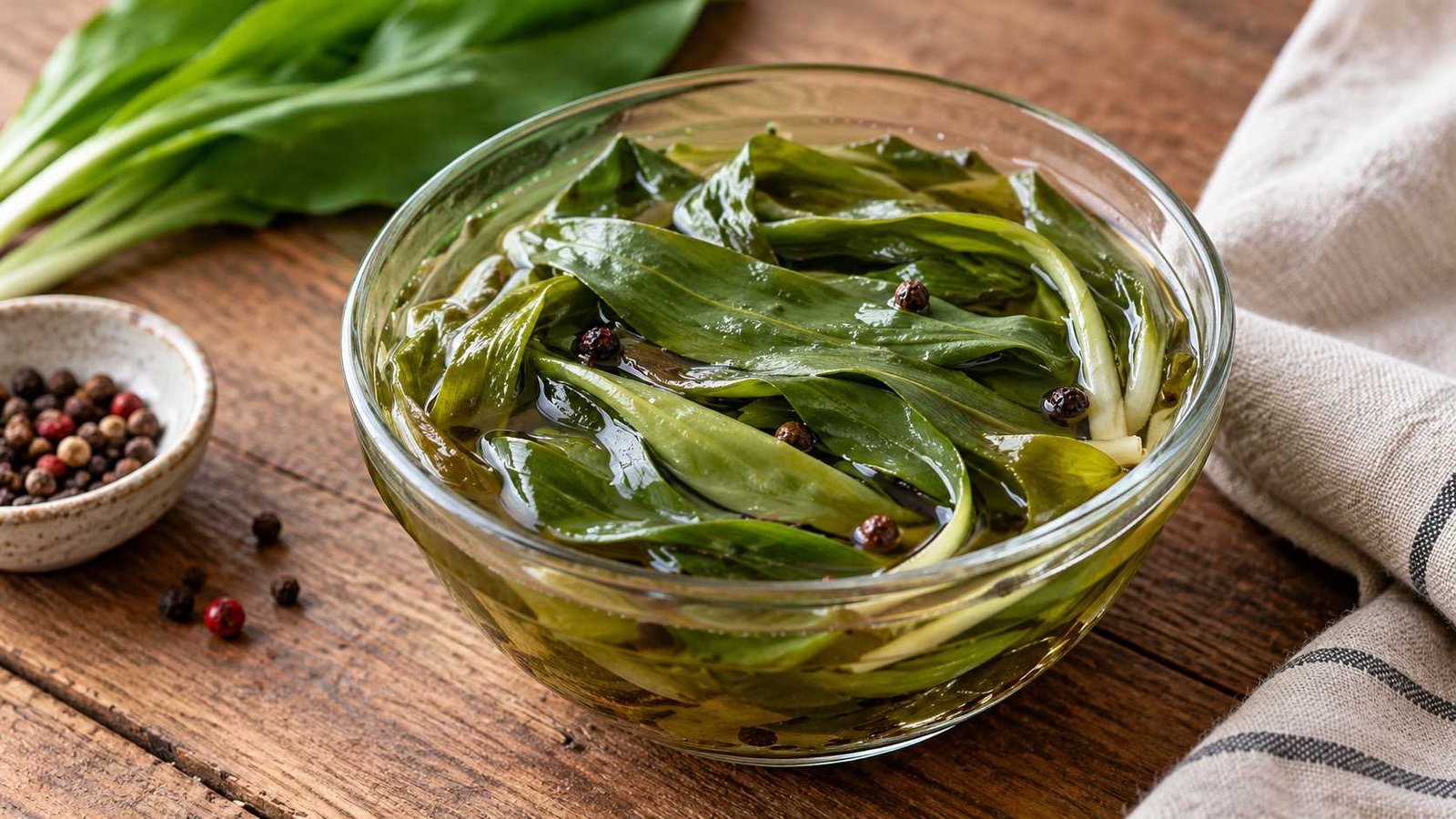
Recipe card
Refrigerator Wild Garlic Pickles in Vinegar Brine
About 12 minutes allows for heating brine and blanching leaves in batches. Chill for approximately one hour or until cold; container size and temperature affect cooling. Final drained yield is approximate.
Equipment: Large stainless steel or enamelled saucepan, colander, measuring jug and spoons, clean tongs, shallow heatproof refrigerator containers
Ingredients
Wild garlic
Vinegar brine
Instructions
Choose verified edible leaves and wash
Purchase correctly identified edible wild garlic (Allium ursinum) from a trustworthy food supplier. Do not use unidentified wild leaves or rely on smell, photographs or this recipe for plant identification. Discard damaged leaves and wash thoroughly under potable running water. Drain.
Heat the seasoned brine
Combine the water, food-grade table vinegar, sugar, salt, peppercorns and bay leaves in a large stainless steel or enamelled saucepan. Bring to a gentle boil, stirring until salt and sugar dissolve.
Blanch the leaves briefly
Add the leaves in manageable batches, returning the brine to a gentle simmer between batches. Cook each batch for 1–2 minutes, just until wilted. Do not use blanching as a method to make an unidentified plant safe.
Portion into clean containers
Use clean tongs to transfer the wilted leaves into small shallow heatproof containers. Pour over enough hot cooking brine to moisten and cover the leaves. Remove bay leaves if desired.
Refrigerate promptly and serve chilled
Cool rapidly and refrigerate covered within two hours of cooking (one hour above 32°C/90°F), at 4°C (40°F) or colder. Allow approximately one hour of refrigerated chilling or until cold before serving. Use within three days; do not pantry-store sealed jars.
Choose wild garlic safely
Wild garlic, also called ramsons or bear’s garlic, can be confused with dangerous plants. The German Federal Institute for Risk Assessment warns that lily of the valley and autumn crocus are poisonous look-alikes. A photograph, garlic-like smell or casual comparison is not sufficient to establish that leaves are edible. Buy positively identified food-grade wild garlic from a reliable supplier. Never taste an unidentified plant. Washing, vinegar and blanching do not turn poisonous leaves into safe food.
Wash purchased edible leaves carefully under potable running water, removing grit and damaged material. Drain before cooking so excess water does not dilute the brine unnecessarily.
Prepare the brine and wilt the leaves
Use a nonreactive saucepan because the liquid contains vinegar. Heat the water, food-grade table vinegar, sugar, salt, peppercorns and bay leaves until the seasoning dissolves. The original formula does not specify vinegar acidity, so read the label and use ordinary edible table vinegar, not cleaning vinegar or concentrated acetic acid.
Add the leaves in manageable batches. Blanch each batch for one to two minutes until just wilted. Longer cooking can make the leaves soft and dull their green colour. Lift out with clean tongs and distribute among small heatproof containers. Add enough brine to cover the leaves and chill promptly.
Why this recipe is refrigerator-only
No tested canning procedure or verified final acidity is supplied for this mixture. Hot filling, added vinegar and a sealed lid do not establish shelf stability. Do not adapt this recipe to water-bath or pressure canning or leave jars cooling overnight at room temperature. Use clean shallow containers and refrigerate promptly at 4°C (40°F) or colder, following FoodSafety.gov handling and cooling guidance. Use within three days.
Serving suggestions
Drain a small portion and chop into Olivier potato salad or scatter over white bean and vegetable soup. It can also accompany roasted potatoes with garlic and rosemary. Add it at the table rather than cooking it repeatedly. The listed ingredients are plant-based; check prepared vinegar and accompanying foods for dietary requirements.
Make ahead and storage
Prepare the pickles close to serving and keep them cold. Use clean utensils each time you remove a portion, and return the rest to the refrigerator. Do not dilute the stored brine to adjust flavour; drain only the portion you are about to eat. Freeze small portions promptly if necessary and thaw in the refrigerator, expecting softer leaves afterwards. The three-day refrigerator limit is conservative, not a validated preservation shelf life.
Editorial note: the original ingredient proportions have been preserved. The cooking estimate now allows for blanching in batches, and the final yield and chilling time require kitchen review.
Frequently asked questions
Can I collect wild garlic myself?
This recipe recommends commercially supplied verified edible leaves. Toxic plants can resemble wild garlic; do not eat any uncertain plant. Consult a qualified local expert rather than relying on a photograph or smell.
Does blanching remove toxins from look-alike plants?
No. Blanching is a cooking step for verified edible wild garlic only. It is not a way to make poisonous or unidentified leaves safe.
Can I keep sealed jars in the pantry?
No. This is an untested refrigerator pickle formula and is not suitable for shelf-stable canning, even if the lid seals.
Why are the leaves soft?
Brief blanching naturally wilts wild garlic. Longer cooking makes it softer and may dull its colour.
Can I adjust the brine?
The vinegar, salt and sugar are used for flavour. Any changes do not establish preservation safety. Drain a small portion before serving if the taste is too sharp.
Can I freeze the leaves?
Freeze small promptly cooled portions if needed, leaving expansion space. Thaw in the refrigerator; the leaves may become softer.
More recipes to try


Spotted a detail that needs correcting? Contact the FeastDelights editors.