Carrot Cake with Walnuts, Raisins and Cinnamon
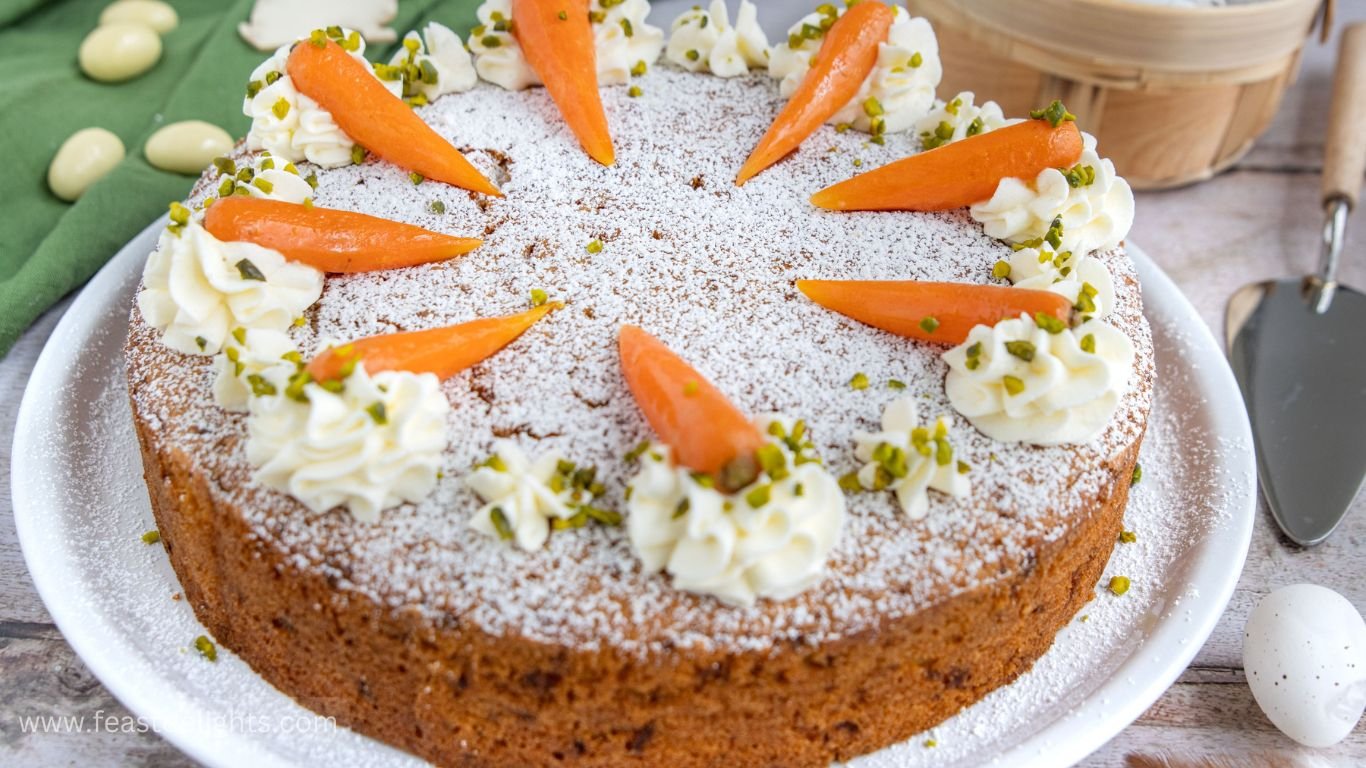
This carrot cake combines finely grated carrots, chopped walnuts and raisins in a lightly spiced, oil-based batter. The carrots add moisture, the walnuts bring a little crunch and the raisins soften as the cake bakes. You can mix it by hand without creaming butter. A 23 cm (9-inch) round tin makes ten slices. Serve the cake plain with tea, dust it with icing sugar or add your preferred cream cheese frosting after it has cooled completely; frosting is optional and separate from the cake ingredients.
A single-layer carrot cake is a practical choice when you want a moist crumb without stacking or decorating layers. Finely grate the carrots, measure the oil accurately and fold the batter gently. Walnuts and raisins provide texture without a complicated filling. This recipe makes ten slices in a 23 cm (9-inch) round tin. Allow 20 minutes preparation, 40–45 minutes baking and about an hour for cooling, longer if the centre is still warm before decorating.
Why this carrot cake stays tender
Oil remains liquid at ordinary room temperature, giving the crumb a soft texture even after cooling. Carrots add moisture and a mild sweetness. This is not a butter cake, so there is no need to cream fat and sugar. Whisk the eggs, sugar and oil until uniform, then use a spatula for the flour and additions. A stand mixer is unnecessary.
Ingredients and useful substitutions
Choose firm, fresh carrots. Grate them with the fine or medium-fine side of a box grater rather than chopping them into chunks. Weigh the grated carrots, not the untrimmed vegetables. Do not squeeze out their juice; the recipe is formulated with the moisture of fresh carrots. Very coarse shreds can make the cake harder to slice evenly.
Use a mild liquid oil such as sunflower or canola. The 200 ml quantity is deliberately retained from the original formula; reducing oil without testing can affect tenderness. All-purpose flour (plain flour) and baking powder provide structure and lift. Measure the baking powder with level teaspoons, and avoid using self-raising flour with the full additional quantity of leavening.
Cinnamon is the main spice in this version. Chopped walnuts add a nutty contrast to the soft crumb, while raisins supply small sweet bites. Pecans can replace walnuts by weight. If using another dried fruit, chop large pieces so they distribute evenly. Omit nuts or raisins if desired rather than replacing them with wet fruit, which would change the moisture balance.
Recipe card
Carrot Cake with Walnuts, Raisins and Cinnamon
20 minutes prep, 40–45 minutes baking and about 60 minutes cooling (including 15 minutes in the tin); allow longer until fully cool before frosting.
Equipment: 23 cm (9-inch) round cake tin at least 5 cm (2 inches) deep, parchment, grater, scale, measuring jug, mixing bowls, whisk, spatula, skewer, wire rack
Ingredients
Carrots and additions
Wet ingredients
Dry ingredients
Carrots and additions
Instructions
Prepare the tin and grate carrots
Preheat a conventional oven to 180°C (350°F). Grease a 23 cm (9-inch) round cake tin and line its base with parchment. Wash, trim and finely grate the carrots; weigh 250 g.
Whisk the wet ingredients
Whisk eggs and granulated sugar until evenly combined. Slowly whisk in the neutral oil and vanilla until the mixture looks uniform.
Combine the dry ingredients
In another bowl whisk plain flour, baking powder, cinnamon and salt so the leavening is evenly distributed.
Fold in carrots, nuts and raisins
Fold dry ingredients into wet mixture just until most flour streaks disappear. Add carrots, chopped walnuts and raisins and fold until evenly distributed. Do not beat the finished batter or taste it raw.
Bake until the middle is set
Spread batter evenly in the prepared tin. Bake 40–45 minutes until the centre springs back lightly and a skewer inserted in the centre comes out clean or with a few moist crumbs, not raw batter. If the centre is wet, continue baking and check again in 5 minutes.
Cool completely before decorating
Cool in tin on a rack for 15 minutes, then loosen and turn onto the rack. Allow about another 45 minutes or longer until completely cool. Serve plain or dust with icing sugar; if adding separate cream cheese frosting, spread only when the cake is completely cool and refrigerate promptly.
How to judge doneness
Use the specified round tin rather than a much smaller deep pan. A deep mass of batter can brown around the edge before cooking through in the centre. Set the tin in the middle of the oven and avoid opening the door early. Start checking at 40 minutes. A skewer should emerge without liquid batter; a few soft crumbs are fine. If you encounter a raisin, test another spot near the centre. Continue baking if necessary, shielding the top loosely with foil if it is already dark.
Troubleshooting the crumb
Dense cake: overmixing flour can develop excess gluten. Fold until the batter is uniform, then stop. Greasy texture: measure oil rather than guessing and whisk the wet ingredients evenly before adding flour. Sunken centre: check baking powder freshness, oven temperature and centre doneness. Crumbly slices: let the cake cool before cutting and keep walnuts finely chopped. A thick but scoopable batter is normal; avoid adding milk automatically.
Serving and variations
The cake can be served plain with coffee or tea. A dusting of icing sugar is a simple finish, or use a separately prepared cream cheese frosting once the cake is cold. Frosting is not included in the ingredient quantities or timing of this cake. Add a little orange zest to your chosen frosting if desired. If you are avoiding eggs, use our separate eggless carrot cake with kefir rather than simply removing the three eggs from this batter. For other straightforward single-layer bakes, try pineapple upside-down cake or lemon ciambella.
Make ahead, storage and allergens
Measure dry ingredients ahead, but grate carrots near baking time and mix the batter only when ready to bake. The cake can be baked a day in advance and wrapped after cooling. Keep the unfrosted cake covered in the refrigerator at 4°C (40°F) or below for up to 3 days. Refrigerate cream cheese-frosted cake promptly and within 2 hours (1 hour above 32°C/90°F), for up to 3 days. Freeze unfrosted, cooled slices airtight for up to 2 months for best quality; thaw in the refrigerator. Contains wheat (gluten), eggs and walnuts; frosting made with cream cheese adds milk. Check labels for other allergens and cross-contact. Omission of walnuts alone does not guarantee a nut-free kitchen or finished cake.
Let the cake cool before serving so the moist crumb holds its shape.
Frequently asked questions
Should I squeeze the grated carrots?
No. Their natural moisture is part of this batter. Use fresh carrots and weigh them after grating.
Can I use pre-shredded carrots?
Freshly grated carrots are preferable because packaged shreds can be thicker and drier; finely grate them if needed.
What oil works best?
Use a mild liquid oil such as sunflower or canola. Strongly flavoured oils may dominate the cinnamon.
Can I omit walnuts and raisins?
Yes, they are additions rather than the main structure. The cake will have a simpler texture; check cross-contact if avoiding nuts for allergy reasons.
Why did my carrot cake sink?
The centre may have been underbaked, the oven door opened too early, or the baking powder mismeasured. Use the specified tin and check doneness before removing.
Is frosting included in this recipe?
No. This card gives quantities for the single-layer cake only. Use a separate cream cheese frosting if desired.
Can I bake the cake a day ahead?
Yes. Cool completely, wrap and refrigerate. Decorate once cold, if desired.
More recipes to try






Spotted a detail that needs correcting? Contact the FeastDelights editors.