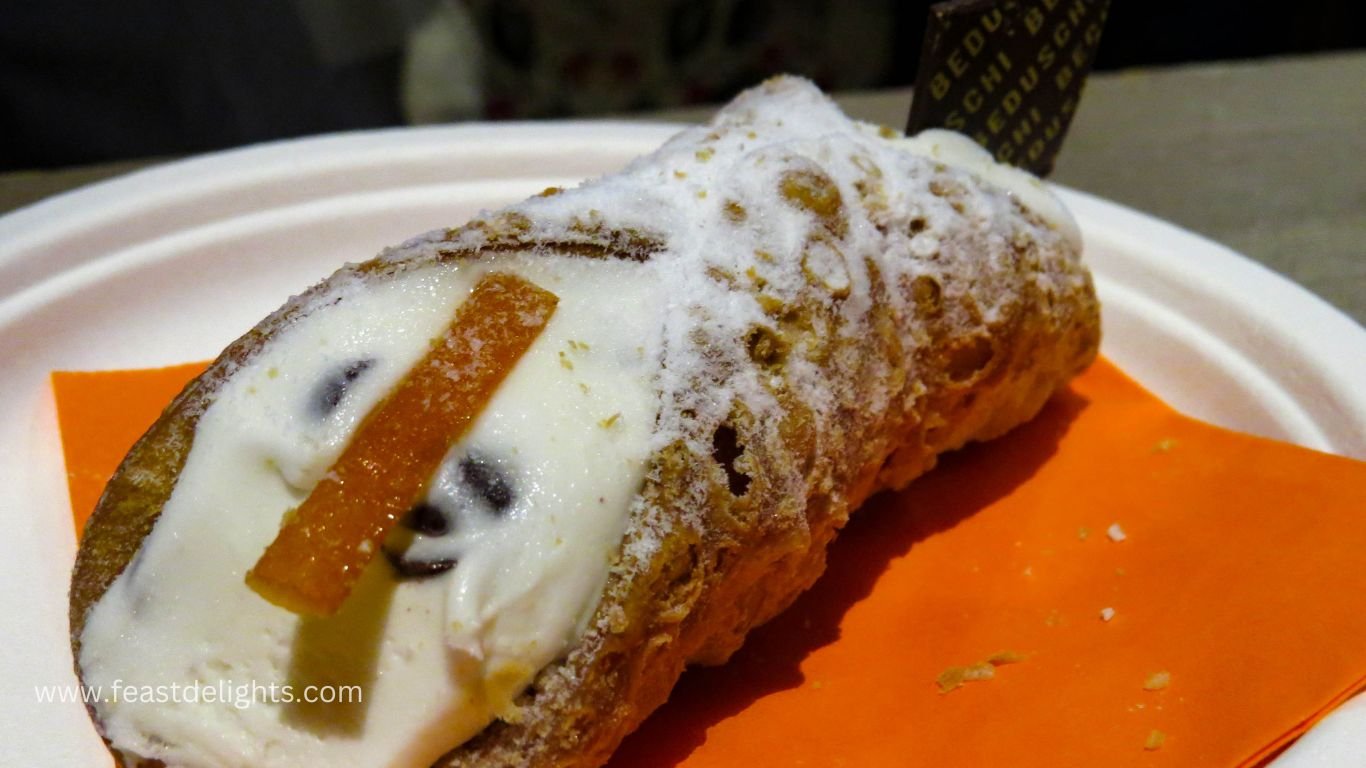
Sicilian Cannoli with Ricotta and Chocolate Chips
These Sicilian-style cannoli pair a thin, golden fried pastry shell with a smooth, sweet ricotta filling flecked with dark chocolate and toasted almonds. The recipe makes about 12 pastries using metal cannoli moulds, dry white wine and a simple butter-based dough. Allow 95 minutes for preparing, resting and frying the shells, plus cooling time and overnight ricotta draining in the refrigerator. Fill each shell just before serving to preserve the contrast between the crunchy pastry and cool, creamy centre.
What makes a Sicilian cannoli?
A cannolo is an Italian pastry with a hollow fried shell and a sweet cheese filling; cannoli is the plural. In Sicily, versions often use sheep’s milk ricotta and a dough flavoured with Marsala. This home adaptation retains the site’s butter and white-wine dough, cow’s milk ricotta, chocolate and almonds. It is not presented as the only traditional formula. The shape and technique are the defining features: a thin sheet of dough around a tube, fried until crisp, then filled when cool.
Ingredients for the pastry shells
All-purpose flour gives enough structure to hold the shape when the pastry is wrapped around the mould. Weigh it rather than packing it into a measuring cup. Sugar helps flavour the shell and encourages browning, so monitor the oil carefully. Cold butter enriches the dough. Rub it into the flour before adding liquid to distribute the fat evenly.
The egg does two jobs: part binds the dough and part seals the seam. Beat it first so that dividing it is straightforward. Keep the reserved portion refrigerated until the shells are shaped, and discard any leftover raw egg. Dry white wine is used to moisten the dough. The stated quantity is a maximum, not a target: flour absorption varies, and a wet dough is difficult to roll and seal. Add just enough to gather the crumbs into a firm mass. Wine-containing shells should not be described as alcohol-free simply because they are fried.
Ingredients for the ricotta filling
Whole-milk ricotta is the foundation of the filling. Look for a fresh pasteurised product without excessive whey in the container. A thick, slightly grainy ricotta can be pressed through a sieve for a smoother finish, but it does not need to be whipped like cream. Fresh cheese varies in moisture; 500 g before draining may yield different amounts of usable filling. That is one reason the number of finished cannoli is approximate.
Icing sugar dissolves more readily than coarse granulated sugar, and vanilla softens the flavour of the cheese without adding much liquid. Small chocolate chips pass through a piping bag more easily than large chunks. Chop toasted sliced almonds finely enough that they do not block the nozzle. If the filling still seems too loose after draining, avoid trying to repair it with a large quantity of extra sugar, which can make it overly sweet.
Set up before you start frying
Arrange the rolling surface, cutter, dry metal tubes and cooling rack before heating the oil. Check that the tubes are designed for deep frying and have no rough edges. A pasta roller can help make uniform sheets, although a rolling pin works. Roll in portions and keep the remaining dough covered. A thin shell has more opportunity to blister and crisp; thick pastry may brown on the outside while remaining dense within.
Choose a deep heavy saucepan with enough headroom for bubbling oil. If using a pot, do not fill more than one-third with oil; a thermostatic fryer has its own marked limits. The listed litre is a supply amount, not an instruction to pour it into any pan regardless of size. Use a thermometer, long metal tongs and a stable cooking surface. Keep water, wet utensils and children away from the hot oil. Do not leave it unattended. If oil catches fire, never use water or move the burning pan; leave the area and call emergency services if needed.
Recipe card
Sicilian Cannoli with Ricotta and Chocolate Chips
95 minutes includes 30 minutes dough rest but excludes overnight refrigerated ricotta draining and shell cooling. Frying time depends on the number of tubes and batches.
Equipment: Kitchen scale, mixing bowls, sieve and cheesecloth, rolling pin or pasta machine, 10 cm round cutter, food-grade metal cannoli tubes, deep heavy saucepan or thermostatic fryer, frying thermometer, long metal tongs, slotted spoon, rack, piping bag
Ingredients
Shells
Ricotta filling
Frying
Instructions
Mix a firm pastry dough
Whisk flour, sugar and salt. Rub in the cold butter until the mixture resembles coarse crumbs. Beat the egg and add half; cover and refrigerate the remainder for sealing. Add the wine gradually, stopping once a firm dough comes together. Do not pour it all in at once.
Rest, roll and cut the shells
Knead briefly until smooth, cover and rest for 30 minutes in the refrigerator. Roll in manageable portions to about 1–2 mm thick, using a little flour only as needed. Cut 10 cm (4 inch) circles; keep unused dough covered.
Wrap and seal the tubes
Use clean, completely dry food-grade metal cannoli tubes. Wrap each circle around a tube with a small overlap. Brush the overlapping pastry edge with a little reserved beaten egg and press firmly. Keep egg off the metal to reduce sticking. Do not wrap the dough so tightly that removal becomes difficult.
Fry the shells safely
Heat neutral oil to about 175°C (350°F) in a suitable heavy pot, no more than one-third full, or follow the fryer fill limits. Lower a few dry tubes gently with long metal tongs. Fry 1–2 minutes, turning as needed, until the pastry is blistered and golden. Lift and drain on a rack or paper towels. Let the moulds cool enough to handle safely, then slide them out gently; cool shells completely. Maintain oil temperature and never leave the pot unattended.
Make the ricotta filling and assemble
Drain the ricotta overnight in a covered sieve over a bowl in the refrigerator. Stir the drained cheese with icing sugar and vanilla until smooth, then fold in chocolate and finely chopped toasted almonds. Keep refrigerated until needed. Pipe into fully cooled shells from each end shortly before serving.
How to judge the shell at each stage
Before frying
The rolled pastry should be thin and even, with enough flexibility to wrap without tearing. Make sure the overlap is bonded before lowering it into oil. If a sheet keeps shrinking as you roll it, cover it and allow a short additional rest rather than forcing it.
In the oil
Look for bubbles forming on the pastry, a firm surface and an even golden colour. The shell can darken quickly near the end. Take the temperature between batches; adding too many tubes can cool the oil and make the result greasy. If the first shell browns before the pastry feels set, reduce the heat slightly. If it is pale and oily, allow the oil to return to the target temperature before proceeding.
After frying
Metal retains heat longer than the surrounding pastry. Allow the tubes to cool sufficiently before handling them, and ease them out without crushing the shell. If a tube sticks, do not force it with bare hands. Cool the shells separately on a rack so moisture does not collect underneath. The pastry should sound crisp when lightly tapped and should not have a raw dough layer at the seam.
Troubleshooting the filling and shells
A greasy shell can result from low frying temperature, crowding the pot or excess thickness. Correct the temperature before frying the next batch. A shell that splits may have an uneven thickness or an unsealed seam. If it cracks when being removed from the tube, check that the egg wash is confined to the overlap and let the metal cool further. For the next batch, use slightly less pressure when wrapping the dough.
Runny filling needs attention before assembly. Check the texture of the drained cheese: it should hold a mound on a spoon rather than release a pool of whey. A sieve and a few extra hours in the refrigerator are more useful than trying to compensate with excess sugar. Mix-ins need to be small enough for the piping bag. Use a wide opening, fill from one end to the centre, then turn the shell and fill from the other end. This avoids forcing a large quantity through the narrow centre and breaking the pastry.
Substitutions that make culinary sense
Dry Marsala is a reasonable alternative to dry white wine. A water-only version is possible but may not blister in quite the same way, so it should be treated as an adaptation rather than an identical result. Commercial ready-made shells are another option if the filling is the part you want to prepare; follow the package directions. For a different nut flavour, finely chopped pistachios can replace almonds. Candied orange peel and cinnamon are optional flavour additions, not essential ingredients.
Do not assume that a dairy-free ricotta substitute will behave the same way. Products vary substantially in moisture and firmness. A dedicated dairy-free filling formula is preferable. Likewise, replacing wheat flour with a gluten-free blend can change dough elasticity, rolling and seam strength and needs separate development.
Serving ideas and related Italian desserts
Cannoli need little decoration beyond a light dusting of icing sugar. Serve with espresso or unsweetened coffee to balance the sweet filling. For an Italian-style dessert selection, consider tiramisu without raw eggs, chocolate semifreddo or twice-baked almond cantuccini. Assemble the cannoli last so the shells stay crisp while the other desserts are prepared.
Make ahead, storage and food safety
Work backwards from serving time. Drain ricotta in the refrigerator the night before, then fry and cool the shells ahead if convenient. Keep the empty shells airtight and the filling chilled separately. Fresh cheese is perishable: keep it at or below 4°C (40°F), follow the package date and limit unrefrigerated time to two hours, or one hour in temperatures above 32°C (90°F). Filled shells lose their crispness in the refrigerator, so prepare only what you expect to serve. For more detail see FDA refrigerator guidance.
For food allergies, the recipe contains wheat, milk, egg and almonds. Chocolate may also contain milk or soy, depending on its formulation. Check the wine label for sulphites if relevant and avoid cross-contact from the equipment and frying oil. Do not eat raw dough or use leftover raw egg wash in the filling. For safe frying practices consult London Fire Brigade’s deep frying guidance.
Frequently asked questions
Can I make cannoli shells without a mould?
Food-grade metal cannoli tubes are the safest reliable way to produce the hollow shape. Avoid improvised materials not rated for deep frying.
Why are my cannoli shells soft?
Moisture transfers from the filling into the shell. Drain ricotta well, cool shells fully and fill just before serving.
Why did the shells open in the oil?
The overlap may have been too small or the seam inadequately sealed. Use a little beaten egg only on the pastry overlap and press firmly.
Why is my ricotta filling runny?
The ricotta may contain too much whey. Drain it under refrigeration before adding sugar. Avoid adding extra liquid or vigorously beating the mixture.
Can I use Marsala instead of white wine?
Dry Marsala is a traditional choice. Add it gradually just as you would the white wine.
Can I make an alcohol-free shell?
Cold water can bind the dough, but the texture and blistering may differ. Add only enough for a firm dough; this adaptation needs a separate kitchen test.
Can I use pistachios instead of almonds?
Yes, finely chopped unsalted pistachios are a suitable alternative if nut allergies are not a concern.
Can I prepare the shells the day before?
Yes. Fry, cool and store the empty shells airtight. Keep the filling refrigerated and separate.
More recipes to try






Spotted a detail that needs correcting? Contact the FeastDelights editors.