Belgian Waffles with Milk, Egg and Butter
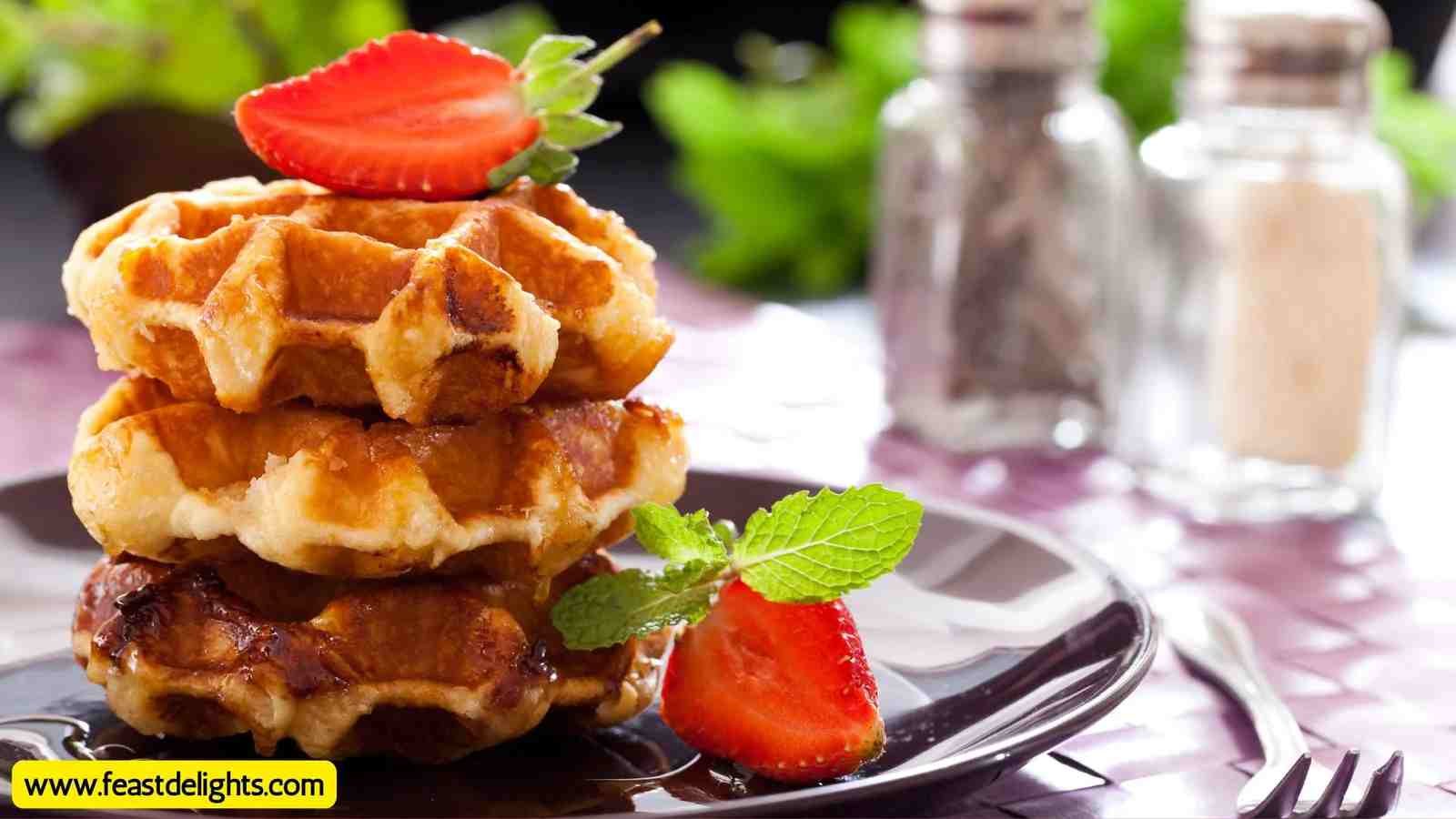
These Belgian-style waffles use a simple baking-powder batter with eggs, milk, melted butter and a little vanilla. The deep grids of a Belgian waffle iron create golden edges and a tender centre, with pockets for fruit or syrup. This version uses one cup of milk and a short batter rest rather than yeast or whipped egg whites. It makes about six waffles in an hour, including 15 minutes of resting. Serve them straight from the iron or keep them briefly on a rack.
Belgian-style waffles with milk, eggs and butter are deep-grid breakfast waffles made with baking powder rather than yeast. The batter rests briefly before cooking and produces about six waffles in an hour. Serve warm for the best contrast between golden edges and a tender centre. This is a home-style batter, not a claim to reproduce traditional Brussels or Liège waffles.
Mix and measure the batter
Measure two US cups of plain all-purpose flour by spooning it into the cups and levelling, or use approximately 240 g as a guide. Flour weight varies with measuring technique. Use one US cup of milk (about 240 ml), two large eggs and the measured melted butter. Let butter cool slightly before adding it so it does not cook the eggs. Ten grams of baking powder provides the lift; do not substitute baking soda gram for gram. Vanilla is listed to taste, so add a modest amount according to the extract strength.
Whisk the dry ingredients separately. Beat eggs with sugar and vanilla, then add milk and cooled butter. Mix the flour in gently until no dry streaks remain. A few small lumps are fine. Rest the batter 10–15 minutes, keeping it covered and away from direct heat. The original recipe uses a relatively thick batter; avoid adding extra milk automatically.
Recipe card
Belgian Waffles with Milk, Egg and Butter
15 minutes active preparation, 10–15 minutes resting and up to 30 minutes cooking one waffle at a time. Actual yield and timing depend on iron capacity.
Equipment: Two mixing bowls, whisk, scale, measuring jug and spoons, deep-grid waffle iron, heatproof pastry brush, silicone tongs and wire rack.
Ingredients
Dry ingredients
Wet ingredients
Dry ingredients
Wet ingredients
Instructions
Whisk the wet ingredients
Beat eggs with sugar and vanilla. Stir in cooled melted butter and milk.
Combine and rest the batter
Whisk flour, baking powder and salt separately. Add to the wet mixture and stir gently until no dry flour remains. Cover and rest for 10–15 minutes.
15 minPreheat the waffle iron
Preheat the waffle iron following its manual. Lightly grease with butter or oil only if required by the manufacturer.
Cook in batches
Add batter according to the iron capacity, close and cook for 3–5 minutes until golden and steam slows. Check no wet batter remains; transfer to a rack. Repeat with remaining batter.
Preheat the iron and watch the steam
Follow the manufacturer’s heating and greasing instructions. A cold iron makes sticking more likely. Add the batter amount specified for your model rather than filling the grids to the rim: it expands during cooking. Close the iron and cook about three to five minutes. Avoid opening it too early. When steam slows and the surface is golden, lift carefully with a suitable non-scratching utensil. If the waffle tears or the centre has wet batter, close the iron and cook a little longer.
Place waffles on a rack in a single layer so steam can escape. Stacking hot waffles softens their surfaces. If they darken before the centre cooks, reduce the temperature setting if your iron allows it. Avoid tasting raw batter because uncooked flour and eggs can carry harmful bacteria.
Variations and serving
Plain kefir may replace the milk as the original recipe suggests, but its acidity and thickness can change the texture. For a different formula see waffles with both milk and kefir or a higher-milk Belgian-style waffle batter. Our Viennese-style waffles with whipped egg whites use a separate aeration technique. Top these waffles with fresh berries, banana, maple syrup or whipped cream.
Make ahead and allergens
Measure dry ingredients ahead but mix the complete batter shortly before cooking. Freeze cooked waffles rather than storing mixed batter overnight. Reheat thoroughly according to official leftover safety guidance. This recipe contains wheat, eggs and milk; check toppings for additional allergens. The number of waffles depends on the size and depth of the iron.
Frequently asked questions
Does this batter use yeast?
No. It uses baking powder and a short rest rather than a yeast rise.
Why do waffles stick to the iron?
Preheat fully, follow the greasing instructions and avoid opening before the waffle has set.
Can I use kefir instead of milk?
Yes, as an original variation. Plain kefir may change batter thickness and flavour.
How do I keep waffles crisp?
Place cooked waffles on a wire rack in a single layer rather than stacking them.
Why did I get fewer than six waffles?
Iron capacity varies. Portion according to your equipment; six is an approximate yield.
More recipes to try






Spotted a detail that needs correcting? Contact the FeastDelights editors.