Belgian Waffles with Milk and Kefir
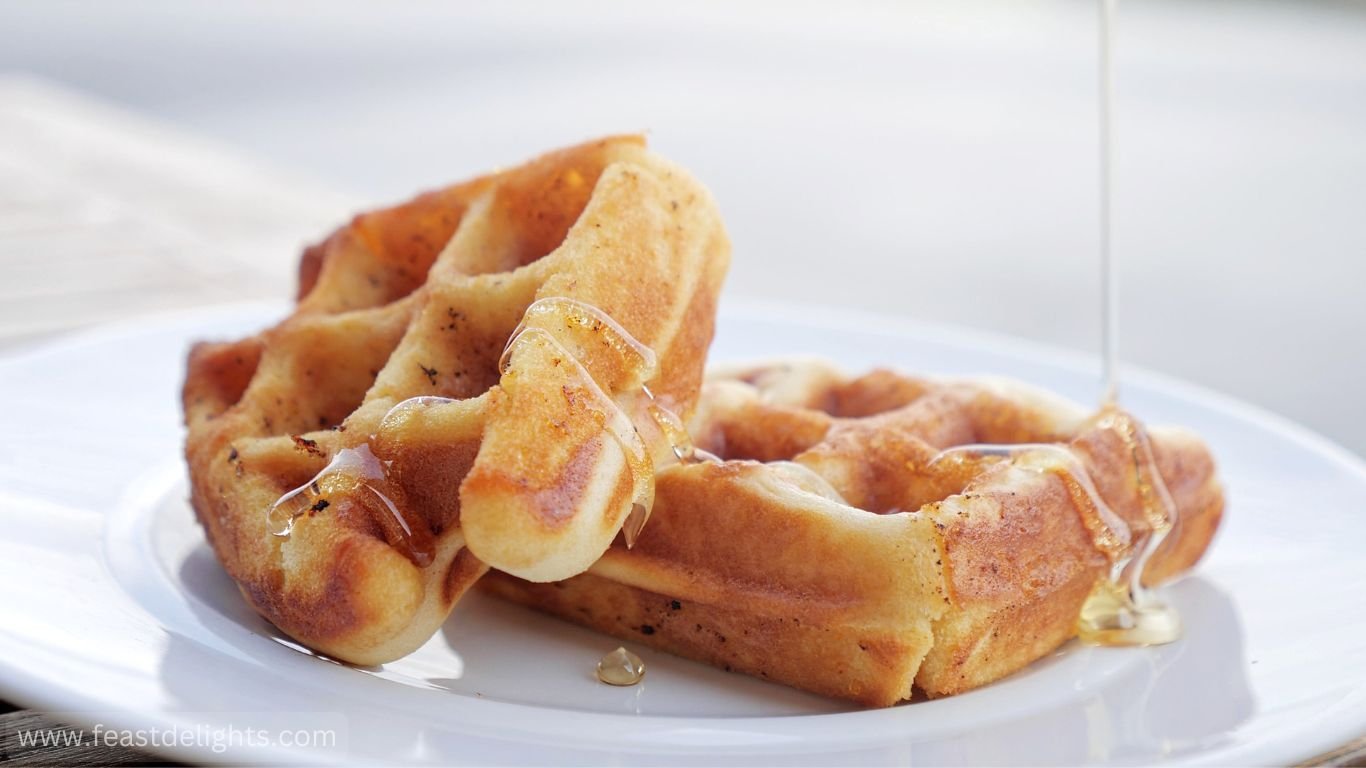
These Belgian-style waffles use both milk and kefir for a tender, lightly tangy centre and a delicate golden crust. Baking powder gives the batter lift without a long yeast rise, and neutral oil keeps the crumb soft. A deep-grid waffle iron produces pockets for berries, honey or whipped cream. The recipe takes about 40 minutes and makes approximately ten waffles, depending on the size of your iron. Serve straight from a wire rack for the best contrast between crisp edges and a soft middle.
This quick Belgian-style waffle batter uses kefir alongside milk rather than a yeast-raised dough or a separated-egg method. Kefir adds a mild cultured flavour, while the milk keeps the batter pourable. The key is to mix briefly and preheat the waffle iron fully before cooking.
Why use both milk and kefir?
Plain kefir is a cultured milk drink with a gentle tang. It contributes moisture and acidity, but the main leavening in this batter is baking powder. Use plain unsweetened kefir rather than fruit-flavoured kefir, which would alter the sugar and flavour. Milk thins the batter enough to spread across the waffle grids. Whole milk gives a slightly richer result, but lower-fat milk also works. The recipe uses neutral oil rather than melted butter, so the liquids combine without the butter solidifying into small lumps.
Measure the plain (all-purpose) flour by spooning it into the cup and levelling it; scooping straight from the bag can pack too much flour. Two US cups are approximately 240 g, depending on how they are measured. Check the baking powder is within date. Use large eggs, fine salt, granulated sugar and vanilla extract. Do not taste uncooked batter because raw flour and eggs may contain harmful microorganisms.
Equipment and yield
Use two mixing bowls, a whisk, flexible spatula, measuring tools, a ladle, a deep-grid waffle iron and a wire rack. Ten waffles is an approximate yield because round, square and double Belgian-style irons hold different amounts. Check the appliance manual for its fill level and heat settings. Preheat while you mix the batter.
Recipe card
Belgian Waffles with Milk and Kefir
Cooking estimate assumes a multi-waffle iron or several quick batches; a single deep iron may take longer.
Equipment: Two mixing bowls, whisk, spatula, measuring tools, ladle, waffle iron and wire rack
Ingredients
Dry ingredients
Wet ingredients
Instructions
Whisk the dry ingredients
Whisk flour, baking powder, salt and sugar in a large bowl until evenly distributed.
Combine eggs, milk and kefir
In a separate bowl beat eggs, then whisk in milk, plain kefir, vegetable oil and vanilla until combined.
Fold the batter and preheat
Preheat the waffle iron according to its manual. Fold wet ingredients into dry just until no dry flour remains; small lumps are fine. Do not overmix.
Cook the waffles
Lightly grease the hot grids if the manual allows. Spoon in batter according to the iron's capacity, close and cook about 3–5 minutes per batch, until golden, steam slows and no wet batter remains inside. Repeat with remaining batter.
Cool briefly on a rack
Transfer cooked waffles to a wire rack in a single layer. Serve warm with optional berries, honey or whipped cream.
Mixing batter for a tender crumb
Whisk the dry ingredients thoroughly to distribute the baking powder. In a separate bowl, beat eggs until combined, then whisk in milk, kefir, oil and vanilla. Pour the wet ingredients over the flour and fold gently. Stop when dry flour is no longer visible. Small lumps are fine; vigorous stirring develops gluten and can produce a tougher waffle. The batter should be thick but pourable, falling from a ladle in a steady ribbon. If it is exceptionally thick due to a thicker kefir or packed flour, add milk one tablespoon at a time.
How to cook golden waffles without sticking
Wait until the waffle iron indicates it has heated. Lightly grease the grids if the manufacturer’s instructions allow. Pour enough batter to fill the centre and spread towards the edges once the lid closes, leaving space for expansion. Cook for roughly 3–5 minutes per batch, or according to the appliance. Do not open the iron early: uncooked batter may tear and stick. Steam usually slows as the waffle approaches doneness, but check that the surface is golden and the centre has no wet batter. Remove with a heat-resistant utensil that will not scratch the cooking surface. Keep cooked waffles in a single layer on a wire rack, not stacked on a plate.
Troubleshooting
Soft waffles: preheat the iron thoroughly, cook until golden and use a rack to let steam escape. Waffles tear: give them more time before opening, and clean or grease the grids according to the manual. Dense centre: avoid overmixing and check the baking powder. Batter overflows: reduce the ladleful for the next batch. Uneven browning: spread batter evenly and allow the iron to recover its heat between batches. If the surface darkens before the centre cooks, reduce the heat setting.
Substitutions and serving
Plain buttermilk is a reasonable substitute for kefir, although thickness and tang vary. A little melted butter can replace neutral oil for a buttery flavour, but this is a variation rather than the original batter. Serve with fresh berries, honey or whipped cream. For a fruit topping, try refrigerator apricot and raspberry preserves. The site’s milk and butter Belgian waffles and milk-free Belgian-style waffles offer alternative batters. This recipe is not a yeast-raised Brussels waffle or a pearl-sugar Liège waffle; it is a quick home-style adaptation.
Make ahead, storage and allergens
Measure the dry ingredients in advance and keep dairy and eggs chilled until mixing. Cook the batter soon after adding liquids for the best lift. Cool waffles on a rack, then refrigerate in a covered container within two hours (one hour above 32°C/90°F). Keep at 4°C (40°F) or colder and use within two days. Freeze separated by parchment for up to two months for best quality. Reheat in a toaster or oven until crisp and heated to 74°C (165°F) throughout. The waffles contain wheat, milk and eggs. Check toppings for other allergens and use pasteurised dairy. Follow FDA safe food handling guidance.
Keep each cooked waffle on a rack while the next batch cooks. Add toppings only at the table to preserve the crisp edges.
Frequently asked questions
Can I use a regular waffle iron?
Yes. A shallower iron makes thinner waffles and may need less batter and a shorter cooking time.
Should the eggs be separated?
No. This recipe uses whole beaten eggs and baking powder, without whipping egg whites separately.
Can I make the batter the night before?
It is better to measure dry ingredients ahead and mix shortly before cooking, as baking powder loses some lift after hydration.
Why is my batter lumpy?
Small lumps are normal and preferable to overmixing. Large dry pockets should be folded in gently.
Can I make savoury waffles?
You can reduce sugar and omit vanilla in a savoury adaptation. The browning and flavour will change.
How many waffles does one batch make?
About ten with a medium iron, but the number depends on the grid size and amount used per batch.
More recipes to try




Spotted a detail that needs correcting? Contact the FeastDelights editors.