Homemade Yeasted Puff Pastry with Butter Layers
Flaky yeasted pastry made with a chilled butter block and repeated folds.
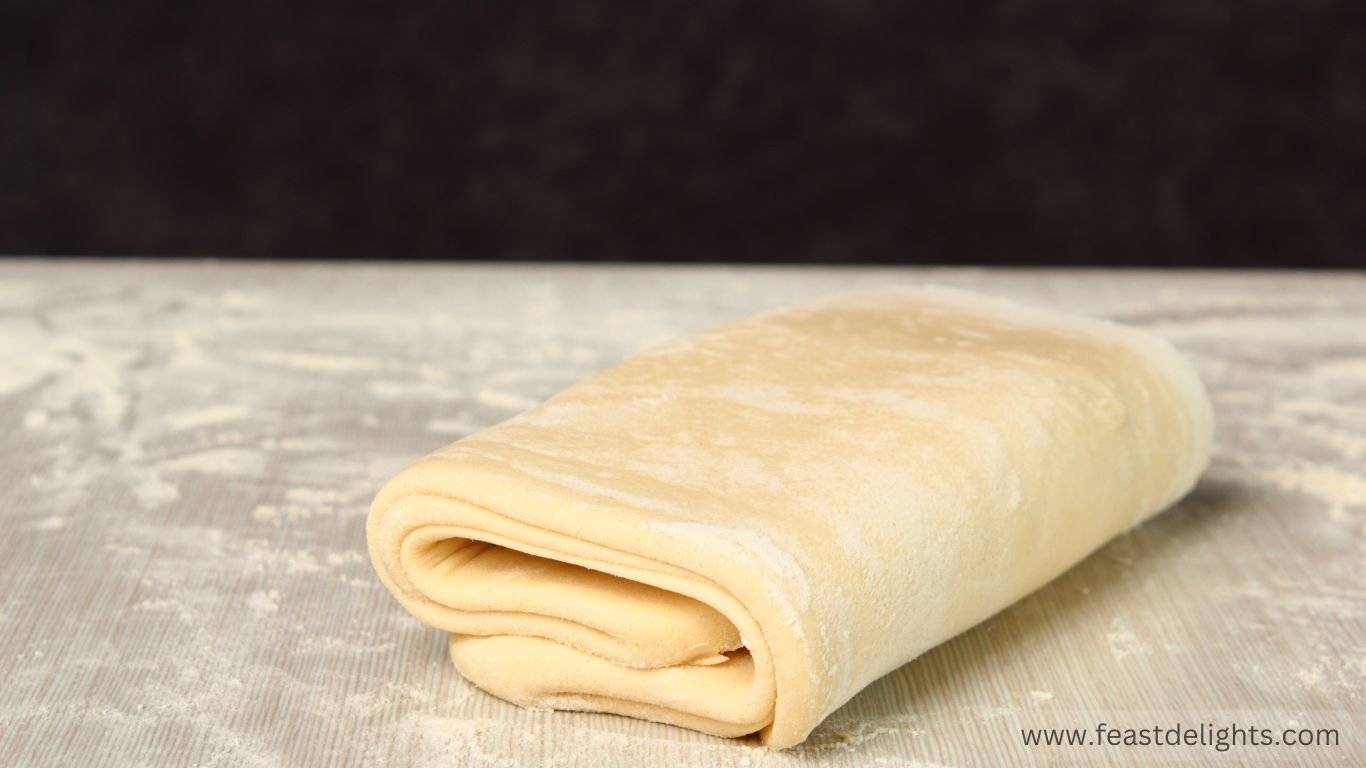
Yeasted puff pastry, often called rough Danish-style pastry, combines a soft yeast dough with cold butter folded into layers. The source spreads butter chunks over a rectangle and folds it once, a method likely to leak rather than create even lamination. This version forms a butter block, encloses it in dough and completes three letter folds with chilling between each. Keep the dough cool but flexible; if butter starts breaking through or melting, refrigerate before continuing. Use the finished pastry for turnovers, pinwheels or savoury parcels. Combine flour, yeast, sugar and salt. Add cold milk and softened butter; mix and knead 5 minutes until smooth. Shape into a rectangle, wrap and chill 45 minutes. Place cold butter between parchment sheets and tap/roll into a 15-cm square. Chill until pliable but firm, about 10 minutes.
Recipe card
Homemade Yeasted Puff Pastry with Butter Layers
Equipment: Rolling pin, parchment, ruler, bench scraper, refrigerator
Ingredients
Instructions
Mix dough
Combine flour, yeast, sugar and salt. Add cold milk and softened butter; mix and knead 5 minutes until smooth. Shape into a rectangle, wrap and chill 45 minutes.
Prepare butter block
Place cold butter between parchment sheets and tap/roll into a 15-cm square. Chill until pliable but firm, about 10 minutes.
Enclose butter
Roll dough into a 30-cm square. Place butter diagonally in the centre and fold dough corners over it, sealing seams.
First fold
Roll into a 45-by-20-cm rectangle. Fold in thirds like a letter. Wrap and chill 30 minutes.
Repeat folds
Turn dough 90 degrees. Roll and fold in thirds two more times, chilling 30 minutes between folds.
Rest
Wrap and chill at least 1 hour before rolling for a recipe. Keep any unused pastry refrigerated or freeze it.
How to tell when it is ready
Dough stays cool and butter forms distinct even layers; pastry should puff and separate when baked according to its final recipe.
Tips
- Measure flour by weight.
- Keep the butter square even in thickness.
- Use light pressure and turn dough regularly.
- Chill between folds, not just after all folds.
Troubleshooting
- If butter cracks, let the dough warm a few minutes before rolling.
- If butter smears or leaks, stop and chill until firm.
Substitutions
- Use unsalted butter for control.
- Plant butter can be difficult to laminate and may soften differently, so results vary.
Variations
- Add citrus zest to the dough.
- Use a savoury filling with herbs and cheese.
Serving suggestions
- Use for fruit turnovers.
- Make savoury cheese pinwheels.
- Cut small squares for pastry bites.
- Use for filled breakfast pastries.
Make ahead
Prepare suitable components ahead and store them safely. Refrigerate wrapped pastry up to 2 days or freeze in portions up to 2 months. Thaw overnight in the refrigerator.
Storage
Refrigerate wrapped pastry up to 2 days or freeze in portions up to 2 months. Thaw overnight in the refrigerator.
Food safety
Keep pastry and butter cold; do not leave laminated dough at room temperature for extended periods.
Frequently asked questions
Can I use this for croissants?
It can make a yeasted laminated pastry, but croissants require a dedicated formula and shaping/proofing method for the classic result.
How should I store homemade yeasted puff pastry?
Refrigerate wrapped pastry up to 2 days or freeze in portions up to 2 months. Thaw overnight in the refrigerator.
Use for fruit turnovers. Refrigerate wrapped pastry up to 2 days or freeze in portions up to 2 months. Thaw overnight in the refrigerator.
More recipes to try



Spotted a detail that needs correcting? Contact the FeastDelights editors.