Margarine Cut-Out Cookies Recipe with Vanilla
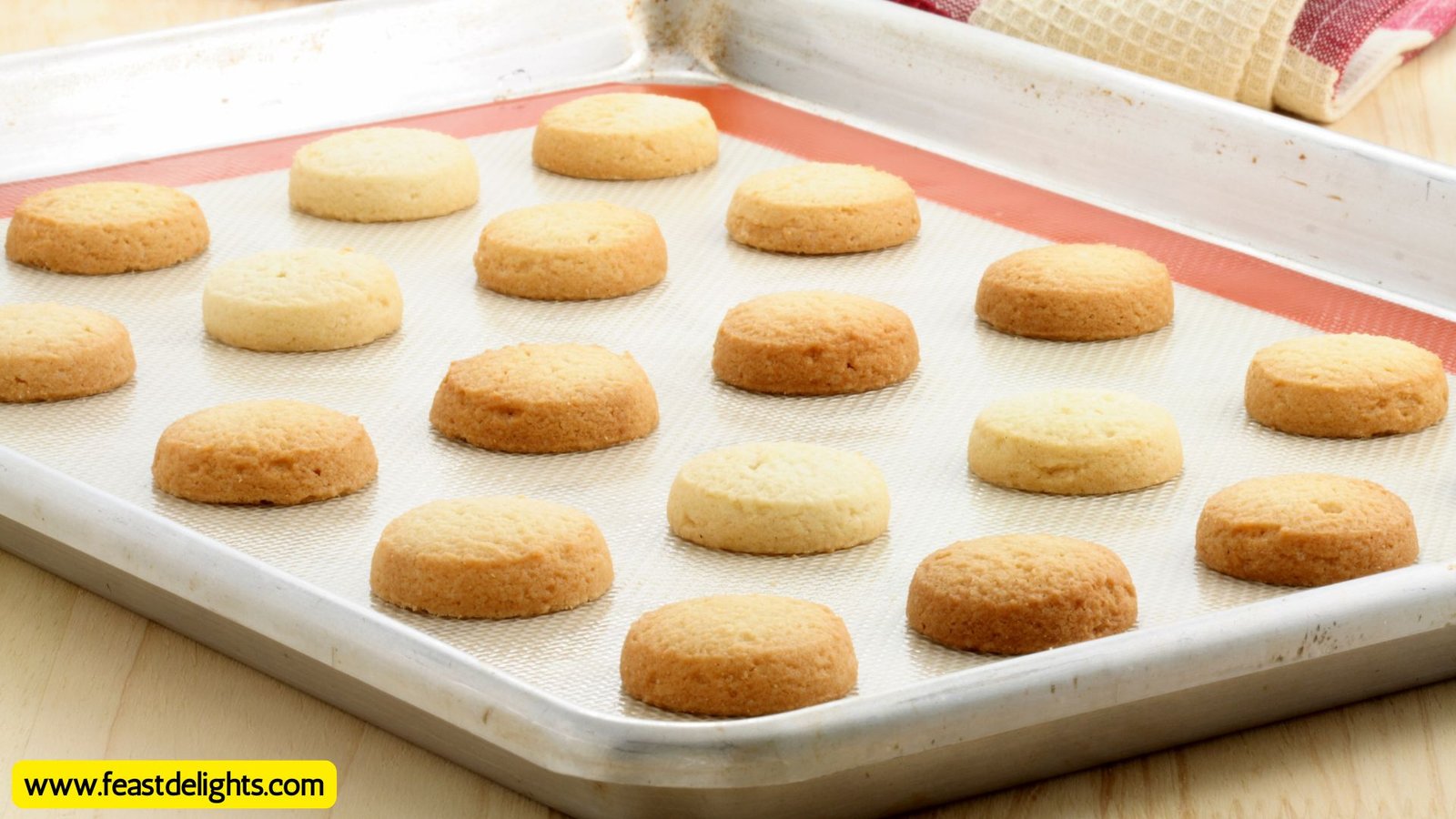
Softened baking margarine, sugar and one egg make the base of these vanilla cut-out cookies. A short chill firms the dough so you can roll it evenly and cut simple shapes. Bake until the centres look set and the rims are only lightly golden, then let the fragile cookies firm on the tray before moving them. They are tender rather than deeply crisp and can be served plain or with a light dusting of icing sugar. The flour range lets you adjust gently without making the dough dry.
These margarine cut-out cookies have a tender bite, a light vanilla flavour and pale golden edges. The dough uses one egg and a little baking powder, so the result is closer to a simple cut-out biscuit than classic butter-only shortbread. Keep the original flour range of 350–400 g: start at the lower end and add only enough for a soft dough that rolls after chilling. A baking margarine with about 80% fat is more suitable than a low-fat sandwich spread. Allow around 90 minutes for mixing, chilling, two batches and cooling. The estimated yield is 30 cookies, depending on cutter size and thickness.
Choose the right margarine
Use a block or stick baking margarine with about 80% fat, checking the label because products vary across countries. A reduced-fat tub spread brings more water and can change both spread and texture. The manufacturer’s baking guidance also recommends high-fat sticks when choosing margarine for cookies.
Softened means the margarine yields to gentle pressure but still holds its shape. It should not look oily or partially melted. If the kitchen is warm, cut it into pieces and soften briefly, then cream only until smooth with the sugar. Margarine’s flavour remains noticeable here, so choose a product you already like for baking.
Flour, vanilla and the dough’s feel
Mix 350 g flour with the baking powder, vanilla sugar and salt first. Add that mixture to the creamed margarine and egg, then use the remaining 50 g only as needed. The dough should come together softly without flowing or sticking heavily to your hands. Chilling will firm the fat, so do not make it stiff at room temperature by adding all the flour automatically.
Vanilla sugar packets vary. Use a packet containing about 8–10 g as listed. If unavailable, use about 2 teaspoons of sugar and 1 teaspoon vanilla extract in its place, adding the extract with the egg. This is a flavour substitution; keep the separate 150 g main sugar unchanged.
Recipe card
Margarine Cut-Out Cookies Recipe with Vanilla
Includes 30 minutes chilling, about 25 minutes for two baking batches and 10 minutes initial cooling. Further rack cooling, extra trays or extra chilling add time.
Equipment: Kitchen scale; mixing bowl; hand mixer or spoon; rolling pin; baking paper; simple cookie cutters; two baking trays; cooling rack
Ingredients
Cookie dough
Optional finish
Instructions
Cream the margarine and sugar
Beat the softened, not melted, baking margarine with the 150 g sugar until smooth and evenly combined. Beat in the egg, scraping the bowl so no streaks remain.
Mix a soft dough
Combine 350 g of the flour with the baking powder, vanilla sugar and salt. Mix gently into the margarine mixture. Add the remaining flour gradually only if needed, stopping as soon as the dough comes together softly. Do not knead it until stiff.
Chill the dough
Shape into a flat disc, wrap and refrigerate for 30 minutes. It should feel firm enough to roll while still bending without crumbling.
Roll and cut
Heat the conventional oven to 180°C (350°F) and line two baking trays. Roll portions of dough to an even 5–7 mm (about ¼ inch). Cut simple shapes and place about 2 cm apart. Keep unused dough cold and chill softened cutouts briefly if needed.
Bake in batches
Bake one tray on the middle rack for about 10–12 minutes, until the centres look set and the rims and bases are lightly golden. Repeat with the second tray; cutter size and oven behaviour can change timing.
Cool and finish
Leave each batch on its tray about 5 minutes, then move carefully to a rack. Cool completely before storing or dusting with optional icing sugar.
Rolling and baking evenly
Divide the chilled dough into manageable pieces and keep the unused portion refrigerated. Roll between sheets of baking paper or on a very lightly floured surface. Aim for 5–7 mm, roughly ¼ inch, throughout. Large cutters give fewer cookies and may need a little longer; small pointed shapes can brown at the tips before the centre sets.
Leave about 2 cm between the cut shapes and bake one tray on the middle rack of a fully heated 180°C (350°F) conventional oven. Start checking at 10 minutes. The surfaces should lose their raw glossy look, while the bases and edges become light gold. They will still be delicate straight from the oven. Leave them for about 5 minutes on the tray before transferring to a rack.
Troubleshooting
The dough sticks: chill it first. If it has warmed during rolling, put it back in the refrigerator instead of repeatedly flouring the surface. Excess flour can make the finished cookies hard.
The shapes spread: check that you used baking margarine rather than a low-fat spread, and that the tray was cool. Chill the cut shapes for another 10–15 minutes if necessary. Very detailed cutters are less forgiving than rounds or simple stars.
The dough cracks: let very cold dough sit briefly until it bends under the rolling pin. Press small edge cracks together. If it is crumbly even after softening slightly, too much flour may have been added.
The cookies are tough: avoid kneading after the flour is mixed in. Gather scraps gently and reroll them once if possible. Deep browning also makes the texture drier than intended.
Success tips
- Use baking margarine, softened but not melted.
- Weigh flour rather than packing it into a measuring cup.
- Mix in the last flour gently and stop once the dough holds.
- Roll to an even 5–7 mm thickness so the batch finishes together.
- Chill cut shapes again if they soften while you work.
- Place each batch on a cool lined tray.
Make ahead and variations
Wrap the dough well and refrigerate for up to 24 hours for a practical make-ahead plan. Let it soften only enough to roll. You can freeze a wrapped disc for up to one month for best quality and thaw it in the refrigerator before rolling; extra chilling and thawing are outside the basic recipe time.
For a citrus variation, add a little finely grated lemon or orange zest with the egg. To make sandwich cookies, bake and cool them plain, then join pairs with a thin layer of thick jam close to serving; filling softens the cookies over time. A cookie press needs a different dough consistency, so do not assume this chilled rolling dough is suitable.
For a butter-based version, follow the separate butter cut-out cookies rather than changing several ingredients here. The egg-free butter shortbread is also a different recipe; removing the egg from this dough without reformulation can change its binding and texture.
Serving and allergens
Serve plain with tea, alongside coffee, on a mixed cookie plate, or lightly dusted with icing sugar. Wait until cool before dusting so the sugar stays on the surface rather than dissolving. If packing as gifts, separate fragile shapes with baking paper.
This recipe contains wheat and egg. Margarine may contain milk or soy, so check its label. Margarine alone does not make the cookies dairy-free, and the egg means this version is not vegan. Any allergen substitution requires checking every ingredient and cross-contact risk.
Storage and dough safety
Cool the cookies completely on a rack before sealing. Store plain cookies in an airtight container in a cool, dry place for up to 5 days for best quality. Freeze plain cooled cookies, separated with baking paper, for up to 2 months for best quality. Thaw in their closed container before opening to limit condensation, and dust with icing sugar after thawing.
Do not taste raw dough: both uncooked flour and egg can carry harmful germs. Keep the dough refrigerated during rests and clean surfaces after rolling. Follow FDA flour-handling advice and bake the cookies before eating them.
Keep the dough cool and the colour pale. Once the cookies have firmed and cooled, serve them simply so their delicate vanilla flavour comes through.
Frequently asked questions
Are these traditional shortbread cookies?
They are shortbread-style cut-out cookies. The egg, margarine and baking powder give a different structure from a classic butter, sugar and flour shortbread.
Must I use the full 400 g flour?
No. Begin with 350 g and add the remaining flour only if needed. Warm dough often needs chilling rather than more flour.
Can I use liquid oil instead of margarine?
Not as a direct substitution. Oil does not cream or firm on chilling in the same way, so the dough would need a different formulation.
Should I grease the baking paper?
Usually no. Use baking parchment intended for oven use and place the cutouts directly on it. Extra grease can encourage spreading.
How many cookies will I get?
About 30 is an estimate for medium shapes at 5–7 mm thickness. A large cutter gives fewer cookies; allow extra baking time for additional trays.
Can I decorate them with icing?
Yes, once completely cold. A simple set icing suits them better than a heavy moist topping. Storage then depends on the decoration's ingredients.
Can I make them without the egg?
The measured base includes one large egg. Use a dedicated egg-free recipe rather than omitting it from this one.
More recipes to try






Spotted a detail that needs correcting? Contact the FeastDelights editors.