Broken Glass Jelly Cake with a Biscuit Base
Broken glass jelly cake with a biscuit base is a chilled, no-bake dessert with colourful cubes of fruit-flavoured jelly suspended in a sweet, lightly tangy sour-cream filling. A layer of Savoiardi or plain biscuits forms the base without a baked crust. Set the coloured jellies separately, temper the dissolved gelatin into the cream, and chill the assembled cake until sliceable. The recipe makes ten portions and requires about 30 minutes of active preparation plus seven to ten hours of setting time. It is best prepared a day ahead.
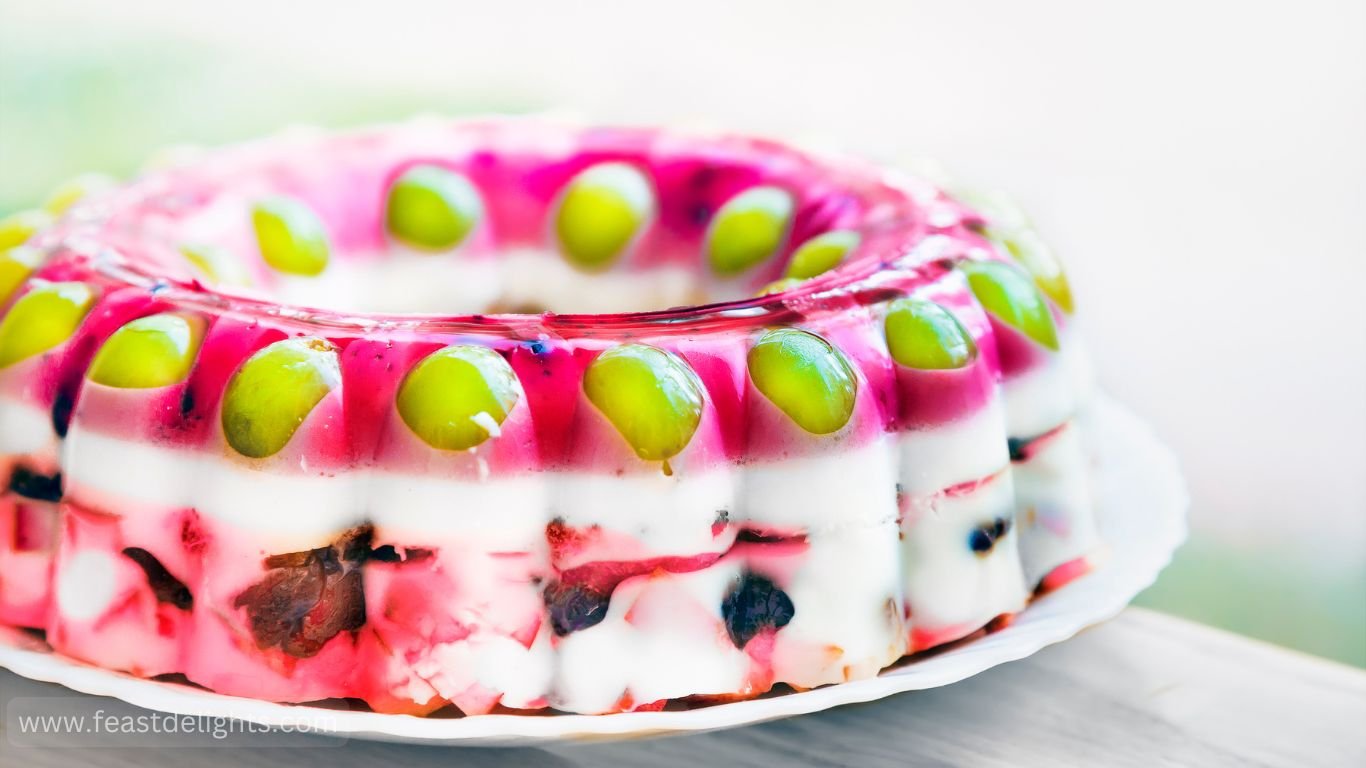
This mosaic-style broken glass cake gets its name from the colourful jelly pieces visible inside each slice. The biscuit layer is arranged directly in the tin instead of being crushed and mixed with melted butter. It softens as it absorbs moisture from the filling, so expect a distinct tender biscuit layer rather than a guaranteed crisp crust.
Ingredients for a no-bake jelly cake
Choose three contrasting colours of fruit-flavoured dessert jelly powder, around 90 g per packet. Packet sizes and water requirements vary between brands, so follow the directions for a firm, sliceable jelly and note the prepared volume before choosing a cake tin. Prepare each colour in its own shallow container. The additional 20 g of unflavoured powdered gelatin is specifically for the sour-cream layer, not for the three coloured jellies.
Use 500 g (about 1.1 lb) of smooth, full-fat pasteurised sour cream for a richer filling. Measure 100 g of granulated sugar (approximately half a US cup) and stir it into the cream until dissolved. The 100 ml of cold water hydrates the powdered gelatin. This amount does not include the water needed for the flavoured jelly packets. Savoiardi, also called ladyfingers, give a cake-like layer after absorbing the cream. Plain biscuits or mild crackers produce a different texture; choose one and arrange it evenly. The original quantity of gelatin is retained, but gel strength varies by brand and the final firmness needs a kitchen check.
Equipment and tin size
Use three shallow jelly containers, a kettle, mixing bowls, a small heatproof bowl, a saucepan for a water bath, whisk, spatula, knife and a deep cake tin. A lined 23–24 cm (9–9½ inch) springform tin or deep mould is a practical starting point if it holds the prepared jelly and cream mixture with room to spare. Check the combined volume first; a larger mould may be needed. A removable-base tin should be leakproof or properly lined.
Recipe card
Broken Glass Jelly Cake with a Biscuit Base
Total allows the upper end of both chilling ranges. Brief gelatin heating is included in preparation; no baking. Actual set depends on product and mould.
Equipment: Three jelly containers, kettle, mixing bowls, whisk, water bath, spatula, knife and deep leakproof or lined cake tin
Ingredients
Coloured jelly
Biscuit base
Sour-cream filling
Instructions
Prepare and chill the coloured jelly
Prepare all three jelly flavours separately according to their packet instructions. Refrigerate in shallow containers for 3–4 hours or until firm, then cut into 1.5–2 cm cubes and keep chilled.
240 minHydrate and temper the gelatin
Sprinkle unflavoured gelatin over 100 ml cold water and leave 10–15 minutes. Stir sour cream and sugar until smooth. Gently warm the hydrated gelatin until dissolved, without boiling. Whisk a few spoonfuls of cream into the gelatin, then whisk this back into the remaining cream.
Arrange the biscuit layer
Choose a deep leakproof or lined cake tin large enough for the prepared jelly and cream mixture. Arrange Savoiardi biscuits or crackers in a snug even layer across the base.
Fold in the jelly and assemble
Gently fold the chilled jelly cubes into the tempered sour-cream mixture. Spoon over the biscuit layer, distribute cubes evenly and smooth the top.
Chill until sliceable
Cover and refrigerate for 4–6 hours or overnight until the centre holds its shape. Release the tin carefully and cut ten slices with a clean knife. Keep chilled.
360 min
Set the coloured jellies first
Mix each packet according to its directions in a separate container. Refrigerate until firm enough to cut cleanly, allowing around three to four hours or longer if required by the product. Cut into roughly 1.5–2 cm (½–¾ inch) cubes. Keep refrigerated while preparing the filling. Soft or warm cubes can break down, bleed colour or melt into the cream.
How to dissolve and temper gelatin
Sprinkle the unflavoured powdered gelatin evenly over the measured cold water and leave for 10–15 minutes to hydrate, or follow the manufacturer’s bloom instructions. Warm gently over a water bath until dissolved and smooth. Do not boil. Stir sugar into sour cream until it is no longer gritty. To prevent gelatin strings, whisk a few spoonfuls of sour cream into the dissolved gelatin before gradually stirring that mixture into the rest of the cream. This reduces the temperature difference, consistent with gelatin preparation guidance. Work promptly once combined, because the cold jelly cubes will begin to cool and set the filling.
Assembly and doneness
Arrange the Savoiardi or biscuits snugly across the tin base, trimming pieces to fit. Fold the drained jelly cubes through the sour-cream mixture with a broad spatula, using gentle movements so the colours stay distinct. Spoon the mixture over the biscuits rather than pouring from a height. Smooth the top and chill for four to six hours or overnight. The centre should feel set and hold its shape when the tin is moved gently. Do not unmould or slice while the centre still flows. Release the sides carefully and cut with a clean knife, wiping between slices.
Troubleshooting
Gelatin lumps: hydrate fully in cold water, dissolve gently and temper with a little cream. Cloudy or smeared colours: chill the jelly cubes thoroughly and fold gently into cream that is not hot. Biscuits float: arrange snugly, add a small spoonful of filling first and then gently add the remainder; avoid pressing into a partially set gelatin layer. Filling too firm: record the brand and gel strength for the next batch rather than changing the recipe mid-set. Cake too soft: allow the full chilling period; if it remains loose, serve in dessert glasses instead of forcing it out of the mould.
Variations and serving ideas
Mix berry, citrus and lime jelly flavours for contrasting colours. The separate broken glass cake with biscuit or sponge base uses a different ratio of jelly and sugar and a butter-bound crumb or sponge option. For another chilled dessert, try no-bake cottage cheese cheesecake or berry compote parfaits. Serve the mosaic cake with berries or tea. Fresh pineapple, kiwi and some other raw fruits contain enzymes that can interfere with gelatin; do not mix them into the filling without a suitable recipe. Agar is not a direct one-for-one substitute, as it sets differently.
Make ahead, storage and allergens
Set the coloured jellies the previous evening and assemble the cake the following morning if convenient. Keep the cake covered in the refrigerator at 4°C (40°F) or colder and use within three days of assembly, or sooner if any ingredient’s use-by date requires it. Return uneaten portions to the refrigerator within two hours, or one hour above 32°C (90°F). Freezing is not recommended because gelatin and sour cream can release water and lose their texture after thawing. This dessert contains milk and usually wheat and eggs from Savoiardi. Check the jelly and gelatin labels for colourings, allergens and animal-derived ingredients. Ordinary gelatin is animal-derived, so the recipe is not automatically vegetarian.
Cut the fully chilled cake with a clean knife to reveal the colourful mosaic. Serve cold and refrigerate the remaining slices promptly.
Frequently asked questions
Can I use ready-set jelly?
Yes, if firm enough to cube and the prepared quantity is similar. Keep it cold before folding.
Is the biscuit layer crunchy?
It will absorb moisture from the filling and usually soften during chilling. This is not a baked or butter-bound crust.
Can I use Greek yoghurt instead of sour cream?
A thick full-fat yoghurt may work, but acidity, water content and texture differ; the gel strength would need checking.
Can I replace gelatin with agar?
Not directly. Agar has different dissolving temperatures and setting properties. Use a formulation developed for agar.
Why are the colours bleeding?
The jelly may be too soft or the cream too warm. Use fully chilled firm cubes and fold gently.
Can I use sheet gelatin?
Use the manufacturer's equivalent for the same gel strength and follow its hydration directions. Sheet counts alone are unreliable.
Can I serve it in individual glasses?
Yes. Divide biscuits and filling among glasses and chill until set; no unmoulding is necessary.
More recipes to try






Spotted a detail that needs correcting? Contact the FeastDelights editors.