Baked Salmon with Lemon Dijon Mayonnaise Glaze
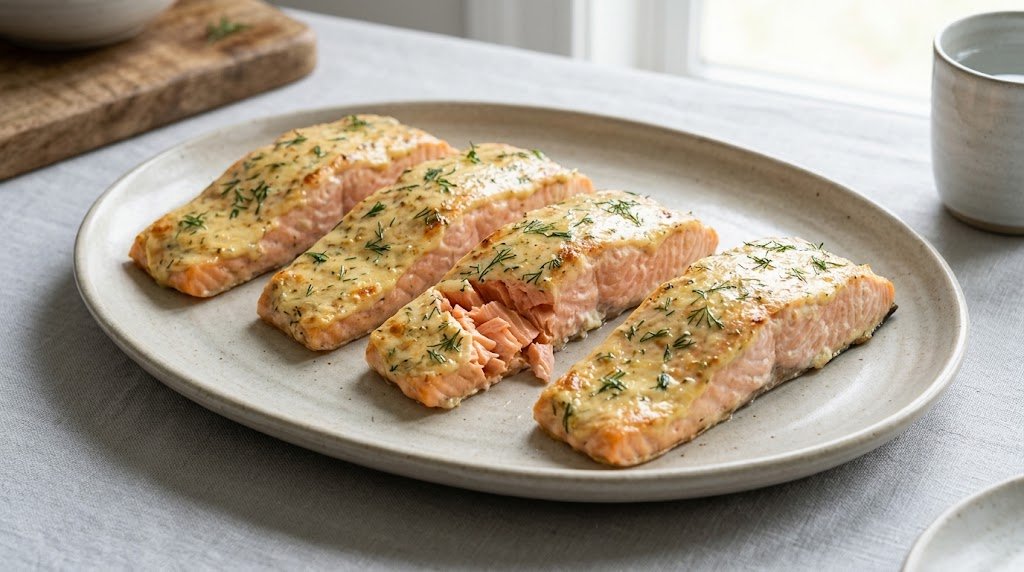
This baked salmon has a thin tangy coating that browns lightly in the oven.
This baked salmon has a thin tangy coating that browns lightly in the oven. Mayonnaise carries the lemon and mustard across the flesh without making a separate sauce. Choose fillets of similar thickness and start checking the thinner ones first. Their cooking time can differ even when they weigh the same. The surface may become golden before the centre is ready, so use a thermometer rather than colour alone.
Recipe at a glance
Yield: 4 servings. Preparation: 10 minutes. Cooking: 18 minutes. Additional resting, chilling, marinating or drying wait: 0 minutes. Total: 28 minutes. Times are estimates; follow the doneness cues in the directions.
Equipment
Rimmed tray, bowl, brush and thermometer
Recipe card
Baked Salmon with Lemon Dijon Mayonnaise Glaze
Total includes additional waiting time stated in the directions. Preparation overlaps are stated where applicable; times are estimates.
Equipment: Rimmed tray, bowl, brush and thermometer
Ingredients
Instructions
Prepare
Heat oven to 200°C (400°F). Line a rimmed tray with baking paper and pat salmon dry; check for pin bones.
Mix glaze
Stir mayonnaise, mustard, lemon juice, zest, garlic powder, paprika, salt and pepper.
Bake
Lay fillets skin-side down and coat the tops. Bake 14–18 minutes until thickest flesh reaches 63°C (145°F) and separates into moist flakes.
Finish
Scatter dill over the hot fish and serve without scraping away the coating.
Cooking tips
- Check for pin bones.
- Use similar-thickness fillets.
- Coat the tops evenly.
- Check the thickest centre.
Serving suggestions
- Serve with boiled potatoes.
- Pair with green beans.
- Add a cucumber salad.
- Offer with plain rice.
Substitutions and variations
A thick trout fillet can use the same coating, with earlier doneness checks.
Replace dill with chopped parsley.
Make ahead and storage
Mix glaze a day ahead and refrigerate. Coat fish just before baking.
Refrigerate promptly and use within 2 days for best quality. Reheat leftovers to 74°C (165°F), avoiding repeated reheating.
Food safety
Use clean equipment and prevent raw meat or egg cross-contamination. Keep perishable food at 4°C (40°F) or below; refrigerate within 2 hours, or 1 hour above 32°C (90°F). Follow the specific cooking, cooling and storage guidance in this recipe.
Questions and troubleshooting
Can I use low-fat mayonnaise?
It may release more water and brown differently.
Why is the coating browned but fish underdone?
A thick fillet needs longer. Cover loosely and keep checking its centre.
How to tell when it is ready
Heat oven to 200°C (400°F). Line a rimmed tray with baking paper and pat salmon dry; check for pin bones. Lay fillets skin-side down and coat the tops. Bake 14–18 minutes until thickest flesh reaches 63°C (145°F) and separates into moist flakes.
Tips
- Check for pin bones.
- Use similar-thickness fillets.
- Coat the tops evenly.
- Check the thickest centre.
Troubleshooting
- It may release more water and brown differently.
- A thick fillet needs longer. Cover loosely and keep checking its centre.
Substitutions
- A thick trout fillet can use the same coating, with earlier doneness checks.
Variations
- Replace dill with chopped parsley.
Serving suggestions
- Serve with boiled potatoes.
- Pair with green beans.
- Add a cucumber salad.
- Offer with plain rice.
Make ahead
Mix glaze a day ahead and refrigerate. Coat fish just before baking.
Storage
Refrigerate promptly and use within 2 days for best quality. Reheat leftovers to 74°C (165°F), avoiding repeated reheating.
Food safety
Use clean equipment and prevent raw meat or egg cross-contamination. Keep perishable food at 4°C (40°F) or below; refrigerate within 2 hours, or 1 hour above 32°C (90°F). Follow the specific cooking, cooling and storage guidance in this recipe.
Frequently asked questions
Can I use low-fat mayonnaise?
It may release more water and brown differently.
Why is the coating browned but fish underdone?
A thick fillet needs longer. Cover loosely and keep checking its centre.
Serve in the style described above and adjust optional seasonings to taste.
More recipes to try
Spotted a detail that needs correcting? Contact the FeastDelights editors.