Homemade Farmer’s Cheese with Pasteurized Milk
Fresh farmer’s cheese can be made by heating pasteurized milk and adding a measured acid to separate curds and whey.
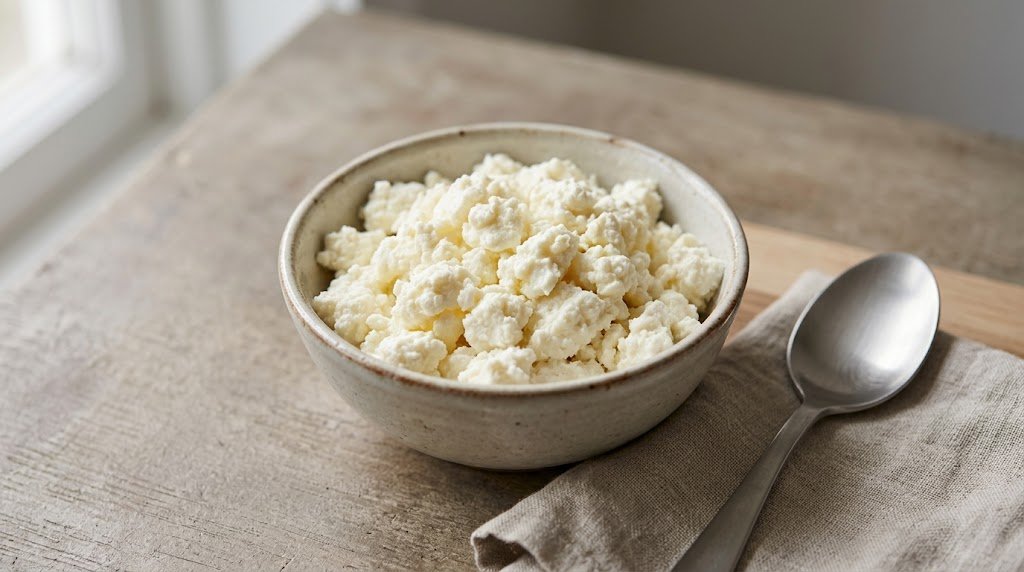
Fresh farmer’s cheese can be made by heating pasteurized milk and adding a measured acid to separate curds and whey. This direct-set version is mild and crumbly after draining; it is not a multi-day cultured tvorog. Keep the heat gentle to avoid a scorched taste and use clean cloth and utensils. Short draining gives softer curds, while longer draining in the refrigerator gives a firmer result. Actual yield depends on the milk and how much whey is removed.
Recipe at a glance
Yield: about 300–400 g fresh cheese. Prep: 10 minutes. Cook: 20 minutes. Total: 100 minutes, including 70 minutes of additional resting, cooling, chilling or draining where stated. Times are estimates; follow the doneness checks.
Equipment
Heavy stainless steel pot, thermometer, colander, clean fine cheesecloth, heatproof bowl.
Ingredients and directions
Recipe card
Homemade Farmer’s Cheese with Pasteurized Milk
Equipment: Heavy stainless steel pot, thermometer, colander, clean fine cheesecloth, heatproof bowl.
Ingredients
Instructions
Prepare equipment
Line a clean colander with two layers of clean fine cheesecloth and set over a heatproof bowl. Use a heavy stainless steel pot and a thermometer.
Heat the milk
Warm milk slowly over medium-low heat, stirring to prevent scorching, until 85–88°C (185–190°F). Remove from heat before it boils hard.
Set the curds
Stir in vinegar gently, then leave for 10 minutes. White curds should separate from yellowish whey. If the whey remains milky, add vinegar 1 teaspoon at a time only until separation improves; record any extra used.
Drain
Pour carefully into the lined colander. Drain 20–30 minutes, then refrigerate the colander over its bowl for another 30 minutes for a firmer cheese. Mix in optional salt.
Store
Transfer cheese to a clean covered container and keep refrigerated. Yield varies with milk and draining; the estimate is not a guaranteed batch weight.
Doneness checks
Curds separate from yellowish whey and drain to the chosen soft or firmer texture.
Helpful tips
- Use pasteurized milk from a reliable source.
- Avoid ultra-pasteurized milk when possible because it may set poorly.
- Stir gently after adding acid to preserve curds.
- Move longer draining into the refrigerator.
Troubleshooting
- No. Acid-set cheese has a different process and flavour. This recipe does not use warm-room fermentation.
- Move longer draining into the refrigerator.
Serving ideas
- Spread soft curds on toast.
- Use drained cheese in cheese pancakes.
- Serve with fresh fruit.
- Add to cooked vegetable fillings after checking their moisture needs.
Substitutions
Fresh lemon juice can curdle milk, but acidity varies; distilled vinegar provides a more predictable starting amount. Do not use raw milk in this method.
Variation
Stir chopped dill into a serving portion after draining for a savoury spread.
Make ahead
Make a day ahead and refrigerate in a clean covered container. Drain longer only under refrigeration.
Storage and reheating
Refrigerate at 4°C (40°F) or below and use within 3 days as a conservative quality target. Do not age at room temperature or treat as a shelf-stable cheese.
Food safety
Use pasteurized milk, clean equipment and clean cloth. Keep fresh curds refrigerated; do not ferment at room temperature.
Frequently asked questions
Is this the same as cultured tvorog?
No. Acid-set cheese has a different process and flavour. This recipe does not use warm-room fermentation.
Why is the yield smaller than expected?
Milk composition and drain time affect yield. More whey removal gives less, drier cheese.
How to tell when it is ready
Curds separate from yellowish whey and drain to the chosen soft or firmer texture.
Tips
- Use pasteurized milk from a reliable source.
- Avoid ultra-pasteurized milk when possible because it may set poorly.
- Stir gently after adding acid to preserve curds.
- Move longer draining into the refrigerator.
Troubleshooting
- No. Acid-set cheese has a different process and flavour. This recipe does not use warm-room fermentation.
- Move longer draining into the refrigerator.
Substitutions
- Fresh lemon juice can curdle milk, but acidity varies; distilled vinegar provides a more predictable starting amount. Do not use raw milk in this method.
Variations
- Stir chopped dill into a serving portion after draining for a savoury spread.
Serving suggestions
- Spread soft curds on toast.
- Use drained cheese in cheese pancakes.
- Serve with fresh fruit.
- Add to cooked vegetable fillings after checking their moisture needs.
Make ahead
Make a day ahead and refrigerate in a clean covered container. Drain longer only under refrigeration.
Storage
Refrigerate at 4°C (40°F) or below and use within 3 days as a conservative quality target. Do not age at room temperature or treat as a shelf-stable cheese.
Food safety
Use pasteurized milk, clean equipment and clean cloth. Keep fresh curds refrigerated; do not ferment at room temperature.
Frequently asked questions
Is this the same as cultured tvorog?
No. Acid-set cheese has a different process and flavour. This recipe does not use warm-room fermentation.
Why is the yield smaller than expected?
Milk composition and drain time affect yield. More whey removal gives less, drier cheese.
More recipes to try





Spotted a detail that needs correcting? Contact the FeastDelights editors.