Kubdari Recipe for Georgian Meat-Filled Bread
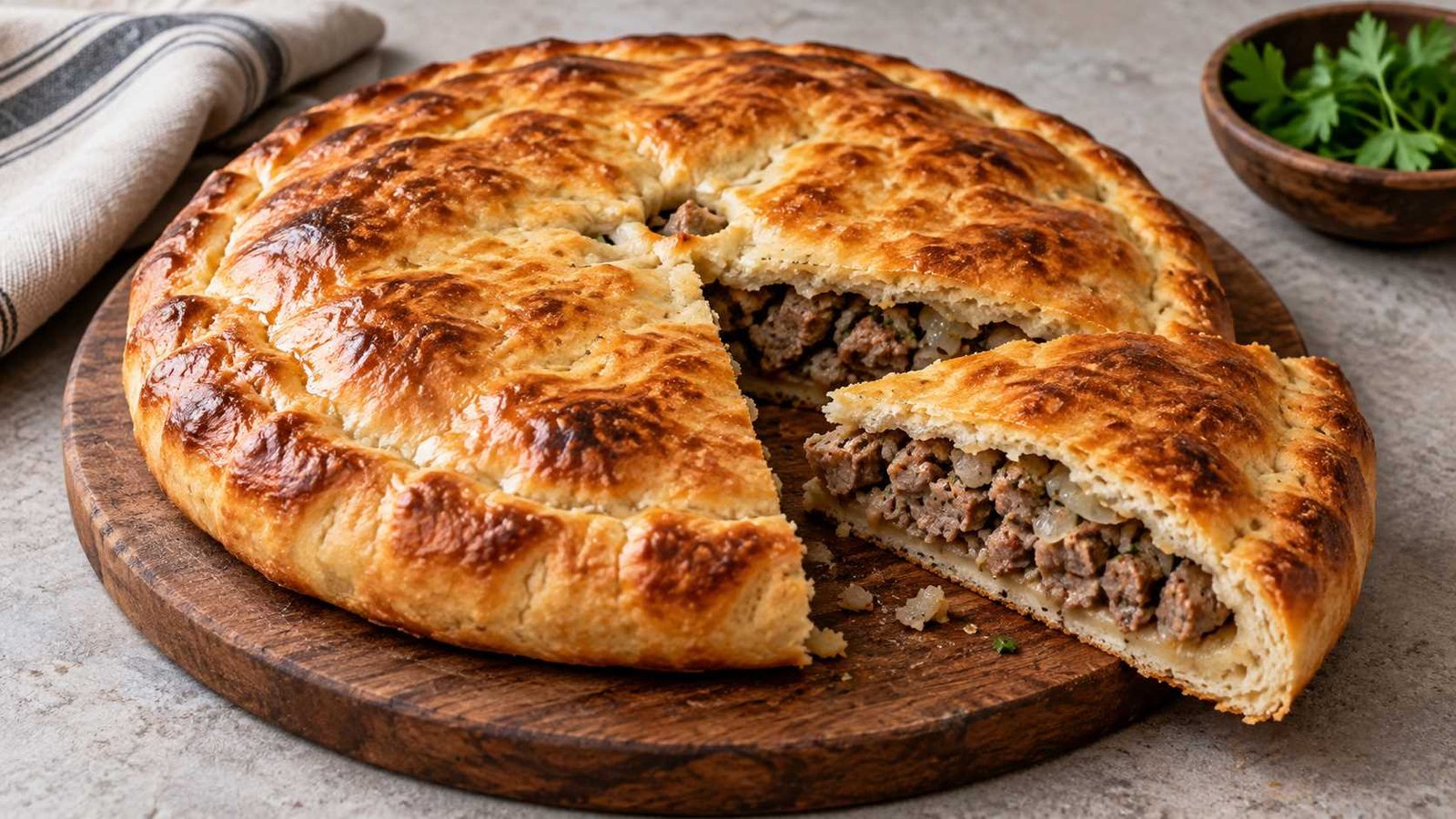
This kubdari recipe makes two Georgian meat-filled breads with finely chopped beef and pork, onion, garlic and warm spices.
This kubdari recipe makes two Georgian meat-filled breads with finely chopped beef and pork, onion, garlic and warm spices. The filling is enclosed inside yeast dough and flattened into rounds before baking. Unlike cheese-filled khachapuri, kubdari centers on meat. Finely chopping gives more distinct texture than a smooth paste. This is a home-oven version inspired by Svanetian bread, with measured coriander, cumin and optional blue fenugreek rather than a claim that every household uses one fixed seasoning.
What matters for kubdari
Keep the filling cold, dice meat into very small pieces and make an even layer all the way toward the edge. A thick lump at the center can remain undercooked while the crust browns. Seal the gathered dough securely, then flatten gently from the center outward. A small steam opening on top reduces bursting.
Recipe at a glance
Yield: 2 breads; 6 servings. Preparation: about 50 minutes. Cooking: about 30 minutes. Total elapsed time: about 175 minutes. Includes about 95 minutes for the resting, rising, cooling or chilling described below.
How to make kubdari
Recipe card
Kubdari Recipe for Georgian Meat-Filled Bread
Equipment: Bowl; knife; rolling pin; heavy baking tray; parchment; food thermometer.
Ingredients
Dough
Filling
Main
Instructions
Make dough
Mix dough ingredients and knead 8–10 minutes until smooth. Cover and rise about 75 minutes until nearly doubled.
Season meat
Combine chopped beef and pork with onion, garlic, spices, filling salt and pepper. Refrigerate while preparing dough.
Fill rounds
Heat oven to 220°C/425°F conventional with a heavy tray inside. Divide dough in half and roll each to 25 cm. Place half the filling in the middle, gather dough edges over it and pinch closed. Turn seam down and flatten gently into a 24–26 cm round, spreading filling evenly.
Rest and vent
Put each bread on parchment. Rest 15 minutes. Make a small central hole through the top dough only to vent steam.
Bake and check
Slide onto the hot tray and bake 25–30 minutes until browned. If baking both together, leave space and rotate. Check filling at the thickest point reaches 71°C/160°F. Brush with butter, rest 5 minutes and cut into wedges.
How to tell when it is ready
Crust is golden and meat filling reaches 71°C/160°F across the thickest section.
Tips
- Chop meat finely.
- Keep filling cold.
- Flatten evenly.
- Check center temperature.
Troubleshooting
- Burst seam: pinch firmly and add a steam hole.
- Raw middle: flatten thinner and continue baking under a foil tent.
- Dry filling: use shoulder cuts with some fat.
Substitutions
- Use all beef with some fat instead of beef and pork.
- Omit blue fenugreek if unavailable rather than replacing with a large amount of ordinary fenugreek.
Variations
- Add ¼ tsp chili flakes for a hotter filling.
Serving suggestions
- Serve warm wedges.
- Add tomato salad.
- Offer fresh herbs.
- Pair with a light soup.
Make ahead
Refrigerate risen dough overnight. Bring it to workable temperature; prepare meat filling on baking day.
Storage
Refrigerate leftovers 3–4 days. Reheat at 180°C/350°F until center reaches 74°C/165°F. Freeze baked wedges up to 2 months for quality.
Food safety
Keep perishable ingredients at 4°C/40°F or below. Refrigerate perishable leftovers within 2 hours, or within 1 hour above 32°C/90°F. Use clean equipment and separate raw animal ingredients from ready-to-eat food.
Frequently asked questions
Can I use mince?
Yes, for a simpler home adaptation, though chopped meat gives the characteristic separate pieces.
Is there cheese inside?
No. This bread has a meat filling, distinguishing it from cheese khachapuri.
More recipes to try




Spotted a detail that needs correcting? Contact the FeastDelights editors.