Knedliky Recipe for Czech Bread Dumplings
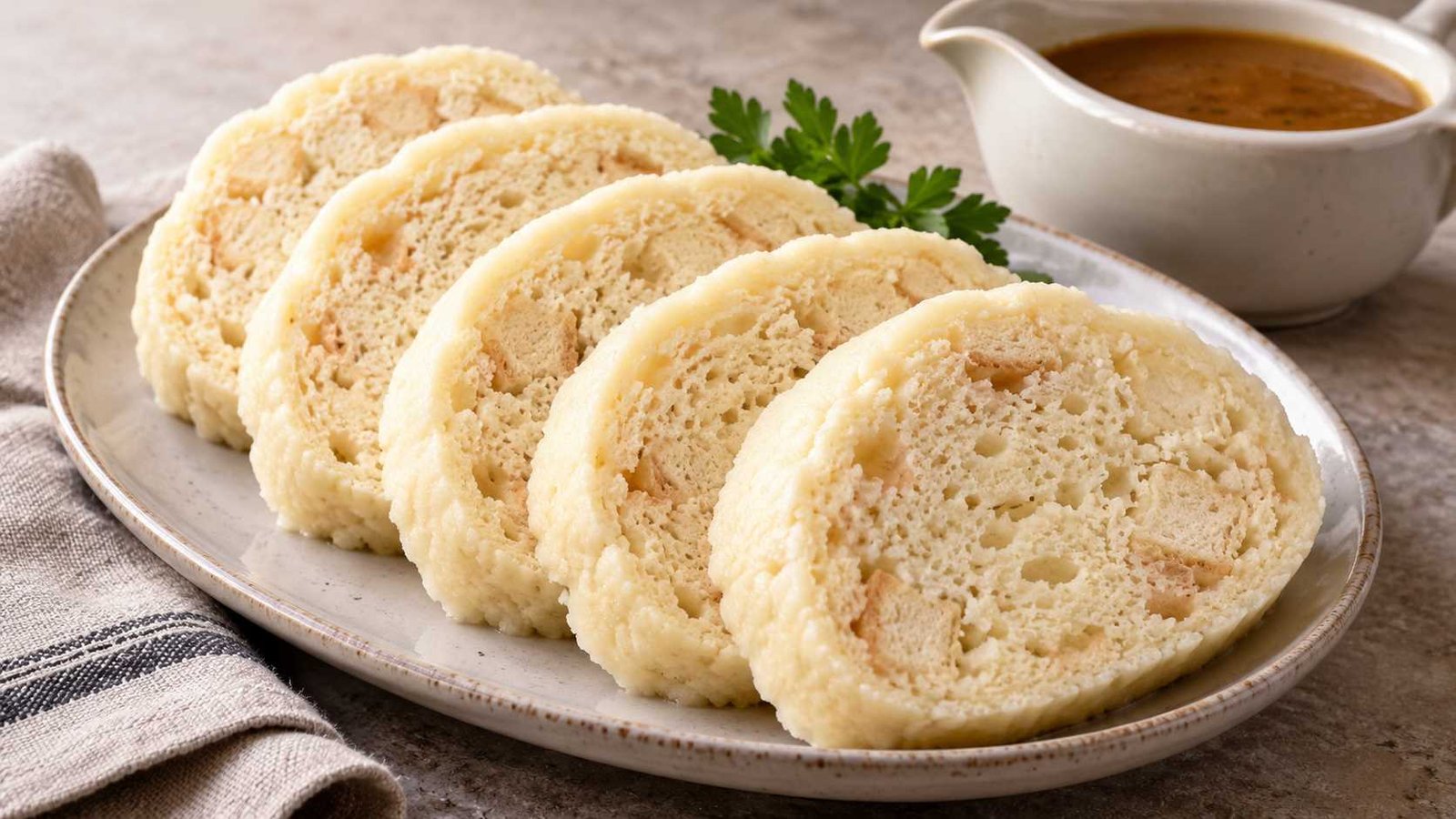
This knedliky recipe makes Czech bread dumplings, houskové knedlíky, as two yeast-raised logs with bread cubes inside.
This knedliky recipe makes Czech bread dumplings, houskové knedlíky, as two yeast-raised logs with bread cubes inside. They cook in simmering water and are sliced to accompany saucy dishes. The texture should be soft and airy, without a browned crust. Use plain day-old white bread rather than heavily seeded or sweet bread. Pierce the logs as soon as they leave the water to release steam, then cut with thread or a thin blade so the warm crumb is not crushed.
What matters for knedliky
These are bread dumplings rather than potato dumplings. Fine semolina mixed with all-purpose flour offers a practical approximation when Czech coarse flour is unavailable. Leave enough room for the logs to expand in the pot. Water should simmer steadily rather than toss them against the sides.
Recipe at a glance
Yield: 2 dumpling logs; 6 side servings. Preparation: about 30 minutes. Cooking: about 25 minutes. Total elapsed time: about 125 minutes. Includes about 70 minutes for the resting, rising, cooling or chilling described below.
How to make knedliky
Recipe card
Knedliky Recipe for Czech Bread Dumplings
Equipment: Large broad pot; bowl; clean cutting thread or sharp knife; slotted utensils.
Ingredients
Main
Instructions
Knead dough
Mix flour, semolina, yeast, sugar and salt. Add milk and egg. Knead 7–8 minutes to a soft dough. Fold in bread cubes without crushing them.
Rise and shape
Cover and rise about 60 minutes until doubled. Divide into two and shape smooth logs about 20 cm long and 6 cm thick. Cover and rest 10 minutes while heating a broad pot of water.
Simmer logs
Bring lightly salted water to a steady simmer. Lower logs in with room to expand; cook 20–25 minutes, turning carefully halfway. Cut a small end from one to check there is no wet dough streak in the center; return briefly if needed.
Release steam and slice
Lift with broad slotted utensils. Pierce immediately in several places with a skewer. Cut into 1.5 cm slices using clean thread pulled around the log or a very sharp thin knife. Serve warm.
How to tell when it is ready
Center is airy and cooked through, with visible bread cubes and no raw dough.
Tips
- Use plain bread cubes.
- Leave room for expansion.
- Turn gently halfway.
- Pierce immediately after cooking.
Troubleshooting
- Dense center: allow a fuller rise and check cooking.
- Wrinkled surface: release steam promptly.
- Crushed slices: use thread instead of a blunt knife.
Substitutions
- Use all-purpose flour alone for a softer, slightly different dough.
- Water can replace milk with less richness.
Variations
- Add 1 tbsp chopped parsley with the bread cubes.
Serving suggestions
- Pair with goulash.
- Serve with roast meat gravy.
- Use with mushroom sauce.
- Steam slices to warm them.
Make ahead
Cook and slice a day ahead; refrigerate promptly and reheat by steaming.
Storage
Refrigerate cooked slices 3–4 days. Steam to 74°C/165°F before serving. Freeze separated slices up to 2 months for quality.
Food safety
Keep perishable ingredients at 4°C/40°F or below. Refrigerate perishable leftovers within 2 hours, or within 1 hour above 32°C/90°F. Use clean equipment and separate raw animal ingredients from ready-to-eat food.
Frequently asked questions
Are these potato dumplings?
No. Houskové knedlíky use flour, yeast and bread cubes.
Why use thread?
It cuts soft warm dumplings with less compression than a knife.
More recipes to try





Spotted a detail that needs correcting? Contact the FeastDelights editors.