Greek Salad Dressing Recipe with Lemon and Oregano
This Greek salad dressing recipe combines olive oil, lemon juice, oregano and a little garlic into a bright vinaigrette.
This Greek salad dressing recipe combines olive oil, lemon juice, oregano and a little garlic into a bright vinaigrette. It suits tomatoes, cucumbers and olives without hiding their flavor. The dressing takes ten minutes and makes enough for roughly six side salads. Lemon acidity and olive-oil bitterness vary, so taste with a vegetable piece rather than judging a concentrated spoonful. This is a lemon-forward ladolemono-style dressing, with mustard included as an optional emulsifier.
What matters for greek salad dressing
Three parts oil to one part lemon is a useful starting point, not a compulsory rule. Salt lightly if the salad includes feta and olives. Shaking makes a temporary emulsion; separation in the jar is normal. Raw garlic mellows during a short refrigerated rest, but fresh garlic-in-oil mixtures are not suitable for room-temperature storage.
Recipe at a glance
Yield: about 150 ml; 6 salad servings. Preparation: about 10 minutes. Cooking: about 0 minutes. Total elapsed time: about 10 minutes.
How to make greek salad dressing
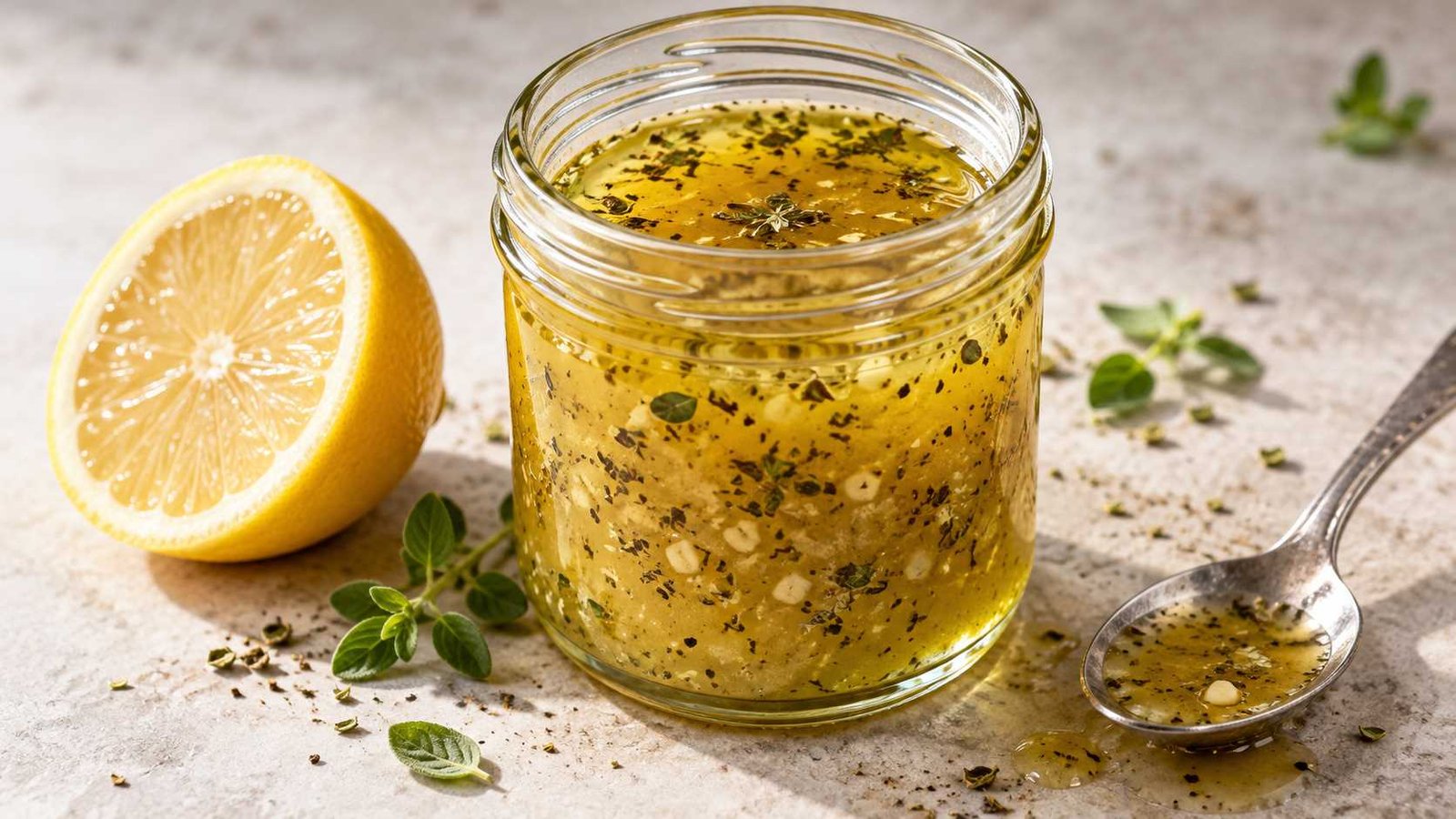
Recipe card
Greek Salad Dressing Recipe with Lemon and Oregano
Equipment: Small clean lidded jar; citrus juicer; teaspoon measure.
Ingredients
Main
Instructions
Mix the acid and seasoning
Put lemon juice, oregano, garlic, mustard if using, salt and pepper in a clean jar. Stir until salt dissolves.
Add olive oil
Pour in oil, close the lid firmly and shake for 20–30 seconds until the dressing looks cloudy and combined. Alternatively whisk oil gradually into the lemon mixture.
Taste with the salad
Dip a cucumber or tomato piece into the dressing. Add a few drops of lemon for sharper flavor, or a small splash of oil to soften it. Account for salty feta and olives before increasing salt.
Dress just before serving
Shake again, then begin with 1 tbsp per side serving of vegetables. Toss and add more only if needed. Refrigerate unused dressing promptly.
How to tell when it is ready
Dressing is temporarily emulsified and tastes balanced on a vegetable.
Tips
- Use fresh lemon juice.
- Crush oregano between fingers.
- Start with little salt.
- Shake before every use.
Troubleshooting
- Too sharp: add oil in small amounts.
- Bitter: try a milder olive oil.
- Oil solidifies chilled: let stand briefly and shake.
Substitutions
- Replace lemon with red-wine vinegar for a different vinaigrette.
- Omit mustard; the dressing will separate faster.
Variations
- Add 1 tsp chopped fresh dill at serving time.
Serving suggestions
- Toss with cucumber and tomato.
- Drizzle over cooked green beans.
- Serve with leafy salads.
- Spoon onto warm roasted potatoes.
Make ahead
Mix a day ahead and refrigerate; shake before serving.
Storage
Refrigerate in a covered jar for up to 3 days. Bring only the needed amount out briefly to loosen; do not store garlic dressing at room temperature.
Food safety
Keep perishable ingredients at 4°C/40°F or below. Refrigerate perishable leftovers within 2 hours, or within 1 hour above 32°C/90°F. Use clean equipment and separate raw animal ingredients from ready-to-eat food.
Frequently asked questions
Why does it separate?
Oil and lemon naturally separate. Shake or whisk again immediately before dressing the salad.
Does it contain feta?
No. Feta belongs in the salad if wanted, rather than in this vinaigrette.
More recipes to try



Spotted a detail that needs correcting? Contact the FeastDelights editors.