Gimbap Recipe with Beef, Egg and Vegetables
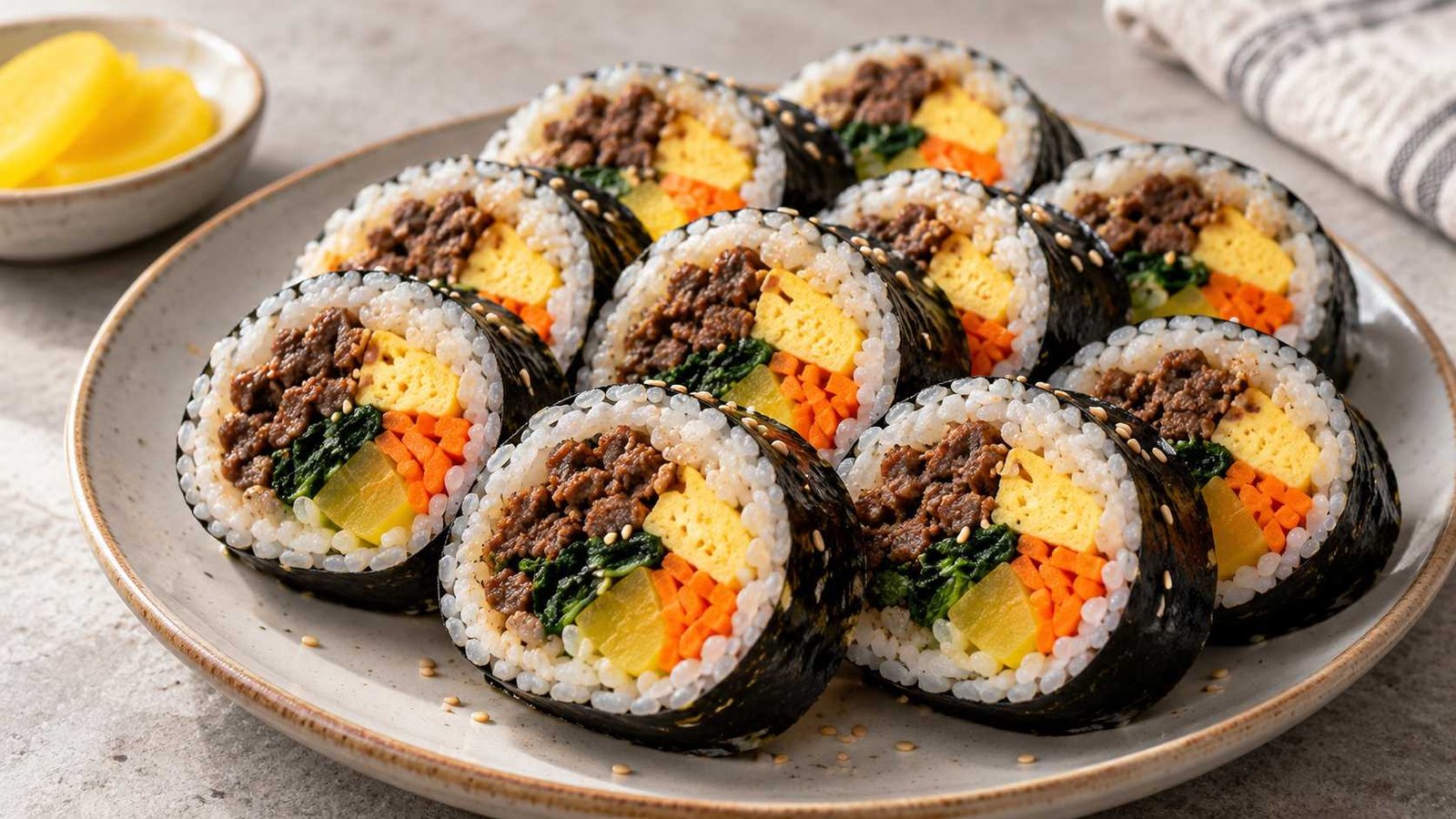
This gimbap recipe rolls sesame-seasoned rice, beef, egg and colorful vegetables in roasted seaweed.
This gimbap recipe rolls sesame-seasoned rice, beef, egg and colorful vegetables in roasted seaweed. Yellow pickled radish adds a crisp, tangy center. Unlike vinegar-seasoned sushi rice, the rice here gets sesame oil and salt. Prepare each filling separately, then build narrow rows across the rice so every slice contains a little of everything. The rolls are best eaten soon after assembly; refrigerating them firms the rice, while keeping them warm for hours is unsafe.
What matters for gimbap
Use short-grain rice cooked just firm enough to hold together. Spread it briefly in a wide bowl so steam escapes, then roll while slightly warm. Squeeze blanched spinach thoroughly and drain the pickled radish. Wet fillings weaken the seaweed and make cutting messy. A bamboo mat helps apply even pressure, but do not roll the mat itself into the food.
Recipe at a glance
Yield: 4 rolls; 4 servings. Preparation: about 40 minutes. Cooking: about 25 minutes. Total elapsed time: about 75 minutes. Includes about 10 minutes for the resting, rising, cooling or chilling described below.
How to make gimbap
Recipe card
Gimbap Recipe with Beef, Egg and Vegetables
Equipment: Rice pot; frying pan; bamboo mat; sharp knife; clean board.
Ingredients
Main
Instructions
Cook rice
Rinse and cook rice using the packet water ratio. Rest covered 10 minutes. Spread in a wide bowl and season with 1 tbsp sesame oil and ¼ tsp salt; let steam escape briefly.
Prepare vegetables
Blanch spinach 30–60 seconds, cool under clean cold water and squeeze dry. Toss with 1 tsp sesame oil and ¼ tsp salt. Sauté carrot in 1 tsp neutral oil over medium heat 3–4 minutes with a pinch from the remaining salt.
Cook egg and beef
Beat eggs with remaining salt. Heat 1 tsp neutral oil in a nonstick pan; cook a thin omelet until fully set, then cut into strips. Mix beef with soy, sugar and garlic. Stir-fry in remaining neutral oil over medium-high heat 3–4 minutes until cooked; drain excess juices.
Roll firmly
Place seaweed shiny side down on a mat. Spread one-quarter of the rice thinly across it, leaving 3 cm bare at the far edge. Arrange one-quarter of each filling in parallel lines. Lift the near edge over the fillings, press gently and continue rolling, pulling the mat clear. Set seam down.
Finish and slice
Repeat for four rolls. Brush with remaining sesame oil, scatter sesame seeds and slice with a sharp lightly moistened knife, wiping between cuts. Serve immediately or refrigerate promptly.
How to tell when it is ready
Roll is firm enough to slice, rice grains remain distinct and egg is fully set.
Tips
- Keep filling rows narrow.
- Dry spinach well.
- Use a thin rice layer.
- Wipe starch from the knife.
Troubleshooting
- Roll tears: reduce rice and filling amounts.
- Loose center: press evenly through the mat.
- Slices stick: clean and lightly wet the blade.
Substitutions
- Use cooked tofu instead of beef for a meat-free filling.
- Use tamari with verified labeling if avoiding gluten.
Variations
- Add thin cucumber strips after removing the watery seed center.
Serving suggestions
- Serve bite-size slices.
- Pair with kimchi.
- Add a light broth.
- Transport chilled with an ice pack.
Make ahead
Cook fillings a day ahead and refrigerate separately; make fresh rice and assemble shortly before eating.
Storage
Best fresh. Refrigerate promptly and eat within 24 hours for texture. Do not freeze assembled rolls. Reheating changes their character; pan-fry refrigerated slices until hot throughout if desired.
Food safety
Keep perishable ingredients at 4°C/40°F or below. Refrigerate perishable leftovers within 2 hours, or within 1 hour above 32°C/90°F. Use clean equipment and separate raw animal ingredients from ready-to-eat food.
Frequently asked questions
Is gimbap sushi?
Both use rice and seaweed, but this gimbap uses sesame-seasoned rice and cooked fillings rather than a sushi formula.
Can I leave it out for a picnic?
Use an insulated chilled container. Rice and cooked fillings must not remain unrefrigerated beyond safe time limits.
More recipes to try



Spotted a detail that needs correcting? Contact the FeastDelights editors.