Easy Napa Cabbage Kimchi Recipe for the Refrigerator
Bite-size napa cabbage kimchi with gochugaru, radish, garlic and a rice-flour paste, refrigerated after mixing for slow flavor development. This easy napa cabbage kimchi recipe cuts the cabbage into bite-size pieces before seasoning, a convenient approach often called mak-kimchi. The flavor is spicy, garlicky and savory, with crisp stems and softer leaves. This version goes straight into the refrigerator after mixing, where it develops slowly rather than following a room-temperature fermentation schedule. It can be eaten fresh, but the listed total includes two days of cold resting for the flavors to mingle; that is not a promise of fully fermented sourness. Gochugaru provides the characteristic red color and a fruity chili flavor. Salting softens the stems, and thorough rinsing removes excess salt before the paste is worked through the cabbage.
Salt for texture and develop flavor under refrigeration
Use napa cabbage, also called Chinese cabbage, rather than a dense round head. Weight is more useful than the number of heads because they vary dramatically in size. Test a thick stem after salting: it should bend without snapping sharply.
This is a refrigerator-first adaptation based on the chopped-cabbage approach, not a validated room-temperature preservation process. It uses fish sauce in the base recipe; a plant-based substitute is given separately. Keep the jar cold, use clean utensils and expect gradual changes in sourness rather than a fixed fermentation deadline.
Recipe at a glance
Yield: About 1.3 kg kimchi; roughly 20 small side portions. Active preparation: about 40 minutes. Cooking: about 5 minutes. Total elapsed time: about 3045 minutes. Includes about 3000 minutes of resting, rising, cooling or chilling, as specified in the method. The cold rest is two days for flavor development, not a guarantee of full fermentation.
How to make easy napa cabbage kimchi for the refrigerator
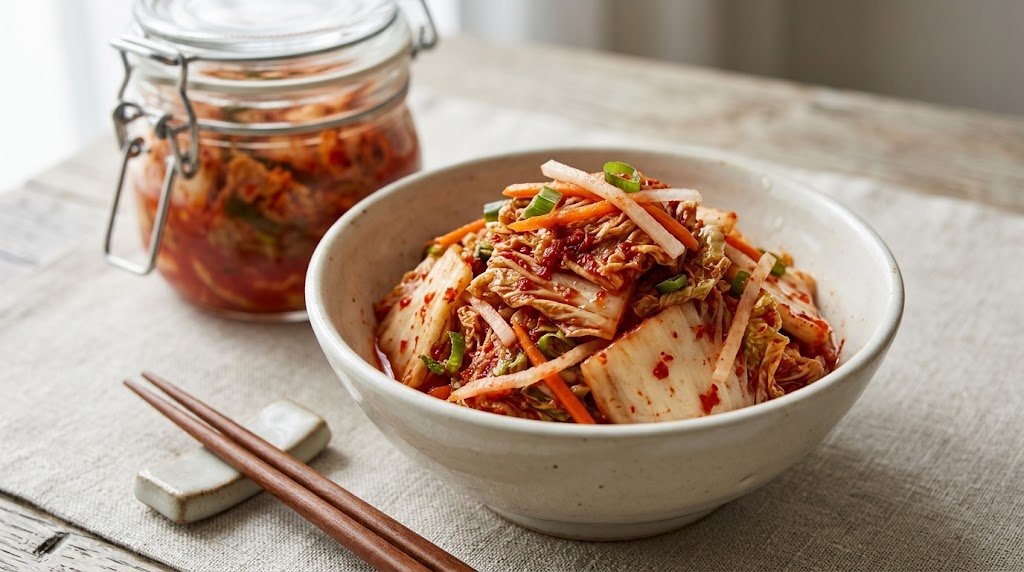
Recipe card
Easy Napa Cabbage Kimchi Recipe for the Refrigerator
Equipment: Large bowl; colander; small saucepan; gloves if desired; clean 2 litre food-safe container or jars with headspace.
Ingredients
Main
Instructions
Salt the cabbage
Rinse cabbage briefly, drain loosely and toss with 50 g salt in a large bowl. Leave 90 minutes, turning every 30 minutes. A thick stem should bend; extend salting slightly if still rigid.
Rinse and drain
Rinse in three changes of cold water, separating leaves so salt washes away. Drain in a colander for about 10 minutes. Taste a small clean stem; it should be pleasantly seasoned, not sharply salty. Rinse again if necessary.
Cook and cool the paste base
Whisk 200 ml water and rice flour in a small saucepan. Cook over medium-low heat, stirring, about 5 minutes until lightly thickened. Stir in sugar, then cool completely, allowing about 20 minutes in a shallow bowl.
Add seasonings and vegetables
Mix cooled paste with gochugaru, fish sauce, garlic, ginger and grated onion. Add radish, carrot and spring onions. Fold into drained cabbage until every piece is coated, using clean gloved hands or utensils.
Pack and refrigerate
Pack into clean food-safe containers, pressing gently to remove large air spaces and leaving at least 3 cm/1¼ inches headspace. Cover and refrigerate immediately at 4°C/40°F or below. A fermentation lid may be used; if an ordinary lid bulges, release pressure carefully and briefly.
Taste cold and serve
Eat fresh or allow 2 days in the refrigerator before tasting again. Keep all batches refrigerated; sourness may take longer to develop in the cold. Use clean utensils and close the container after each serving.
How to tell when it is ready
After salting, thick stems bend and retain crunch. The finished cabbage is evenly coated; fresh kimchi need not bubble or taste sour to be served under this refrigerated method.
Tips
- Weigh trimmed cabbage and salting salt.
- Turn during salting so thick stems soften evenly.
- Rinse thoroughly before adding the paste.
- Cool the rice paste before mixing with raw vegetables.
Troubleshooting
- Too salty: rinse cabbage again before seasoning; finished paste cannot easily remove excess salt.
- Not sour after two days: cold development is slow; this recipe can also be eaten fresh.
- Jar pressure: open carefully and use adequate headspace; never allow a sealed container to swell unchecked.
Substitutions
- Daikon can replace Korean radish, with a slightly different texture.
- For a plant-based version replace fish sauce with 30 ml soy sauce plus 10 ml water; flavor and saltiness change, and this is still for refrigeration only.
Variations
- Gentler chili: reduce gochugaru to 25 g; keep the same handling and refrigeration.
- No carrot: omit it and increase radish to 140 g.
Serving suggestions
- Serve a small cold portion beside rice.
- Add to a tofu or egg rice bowl.
- Serve alongside grilled meats or mushrooms.
- Use more mature tangy portions in cooked fried rice within the stated storage period.
Make ahead
The recipe is intended for advance preparation. Two days in the refrigerator develops the seasoning, while the final acidity depends on temperature, ingredients and time rather than a guaranteed clock.
Storage
Keep refrigerated at 4°C/40°F or below and use within 2 weeks as a conservative home limit. Do not treat this batch as shelf-stable or use its timing as a canning process. Discard the entire batch if mold, unusual slime or a putrid odor appears; do not scrape off spoiled areas.
Food safety
Use clean food-safe containers and keep the product refrigerated from the packing stage. The method does not establish a tested final pH for shelf stability. Fish sauce contains fish; the plant-based option often contains soy and wheat. Gochugaru can irritate skin and eyes.
Frequently asked questions
Is this fully fermented after two days?
Not necessarily. Two cold days are a resting estimate for flavor development. Fermentation and sourness develop at variable rates in the refrigerator.
Can I leave this jar on the counter instead?
This recipe is written for immediate refrigeration. For controlled room-temperature fermentation, use a validated process with appropriate temperature and acidity checks rather than changing this schedule casually.
More recipes to try






Spotted a detail that needs correcting? Contact the FeastDelights editors.