Milk and Peanut Sherbet Fudge
Milk and peanut sherbet fudge is a dense, sliceable confection made by cooking milk and sugar to the soft-ball stage, adding butter and beating the cooled mixture before folding in roasted nuts. Unlike frozen fruit sherbet, this sweet is served in small squares with tea or coffee. A candy thermometer is useful because the temperature and crystallisation stages matter more than a fixed boiling time. The original formula targets about twenty small pieces. Allow several hours for cooling and setting; the revised beating technique still needs kitchen confirmation.
Milk and peanut sherbet fudge is a cooked sugar confection with toasted nuts and butter. This recipe targets about twenty small squares using the original five ingredients. The term sherbet here describes a sweet sometimes called shcherbet, rather than a frozen fruit dessert. Plan on roughly an hour of active preparation and cooking and several hours for cooling and setting.
Editorial technique note: The earlier method mixed butter and nuts directly into the hot syrup and poured it into the dish. Conventional crystalline fudge methods recommend cooling the cooked syrup to about 43–45°C before beating, as explained by Exploratorium’s candy science guide and Ricardo’s fudge technique guide. The original ingredient proportions and soft-ball target are retained, but the revised method and final firmness have not been tested in a FeastDelights kitchen.
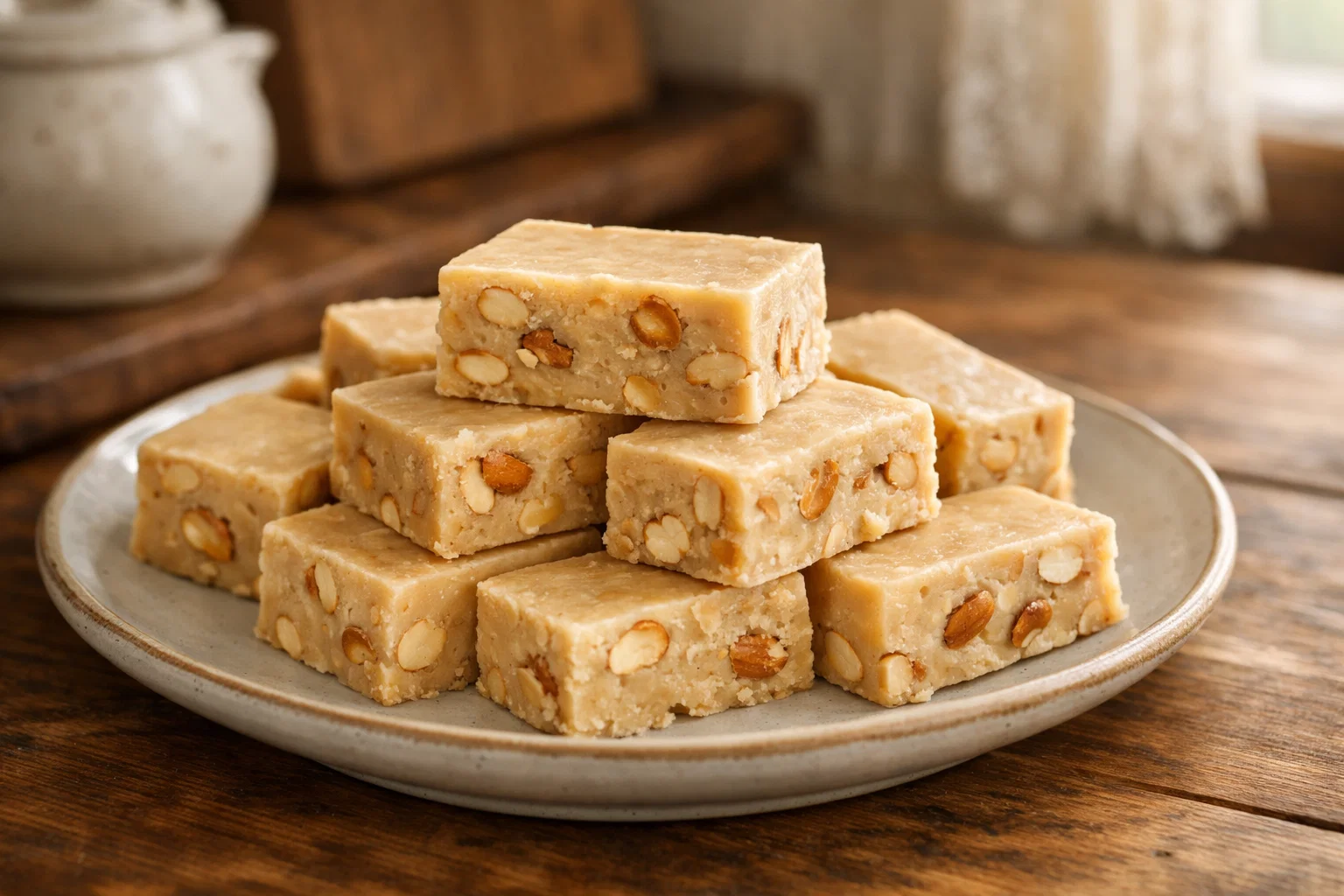
Recipe card
Milk and Peanut Sherbet Fudge
Cook to the temperature rather than the clock. Allow approximately four hours for cooling, beating and setting combined; actual setting time and yield need kitchen confirmation.
Equipment: Scale, measuring jug, tall heavy saucepan, candy thermometer, long heatproof spoon, oven gloves, small square heatproof dish (approximately 15–18 cm), parchment, knife
Ingredients
Milk fudge base
Nuts and flavour
Instructions
Prepare the tin and nuts
Line a small square heatproof dish with parchment. If the nuts are already roasted, use them dry at room temperature. If they need more colour, toast gently in a dry skillet and cool before use. Have the thermometer and long heatproof spoon ready.
Dissolve sugar in the milk
Combine sugar and pasteurised milk in a tall heavy saucepan. Heat gently, stirring until the sugar dissolves. Leave plenty of headroom because milk can foam. Position a candy thermometer in the mixture without touching the base.
Cook to the soft-ball stage
Bring to a controlled boil over medium-low heat, avoiding a violent boil. Once sugar has dissolved, avoid unnecessary agitation, but gently stir if needed to prevent milk solids scorching. Cook to the original target of 112–113°C (234–235°F) at sea level; adjust for local boiling point at altitude. Time varies with the pan. Never touch or taste the hot mixture.
Cool before beating and adding nuts
Remove from heat and place the cubed butter on the surface. Do not beat while very hot. Allow to cool undisturbed to about 43–45°C (110–113°F). Add optional vanilla and beat with a clean heatproof spoon until the mixture thickens and begins losing its gloss. Fold in the roasted nuts just before it becomes too stiff to spread. This cooling and beating correction is based on conventional crystalline fudge methods; the exact result needs kitchen review.
Transfer, set and cut
Transfer promptly to the prepared dish and level with a spatula. Let cool fully in a protected place and refrigerate once cool; do not leave out for extended periods. Allow several hours to firm. Cut into about 20 pieces only when the mixture holds its shape. If it remains soft, do not claim a successful set or store at room temperature.
Choosing the milk, sugar and nuts
Use pasteurised milk and ordinary granulated sugar. The sugar concentration controls the structure, so this is not a recipe in which sugar can be reduced freely. Butter contributes richness and is added after cooking the milk and sugar. Use dry roasted peanuts or hazelnuts. If they are already toasted, there is no need to cook them again; excessive toasting may make them bitter. Chop large nuts if you want cleaner cuts, but keep pieces large enough to provide contrast.
Cook the milk syrup carefully
A tall heavy saucepan gives foaming milk room to rise. Heat gently until sugar dissolves. Keep the thermometer probe in the liquid without touching the bottom. The original recipe specifies 112–113°C at sea level, within the soft-ball range for conventional fudge. At altitude, adjust relative to the local boiling temperature. Keep the boil controlled and watch for scorching. A clock alone cannot establish concentration because evaporation varies with pan width and heat.
Do not scrape dry crystals from the walls into the finished mixture. If the milk mixture begins to catch, reduce heat and stir carefully with a long heatproof spoon. Do not walk away from boiling milk and sugar.
Why the cooling and beating stage matters
Once the syrup reaches temperature, take it off the heat. Place butter on top and let the mixture cool without vigorous stirring. The approximately 43–45°C beating target helps avoid forming large sugar crystals. Then beat until the mass thickens and starts looking less glossy. Add vanilla and fold in the nuts before it becomes difficult to spread. Transfer immediately; beating too long can cause the fudge to stiffen in the saucepan.
Allow the slab to cool and set. The texture should be cohesive enough to cut without flowing. The existing formula may yield a softer confection than a commercial sherbet; the temperature, beating time and final yield need kitchen verification rather than a promise of a particular firmness.
Troubleshooting
Grainy candy: ensure sugar dissolves and avoid disturbing the syrup during its early cooling stage. Soft slab: check the actual syrup temperature and whether the mixture thickened during beating; refrigeration alone does not correct a poorly crystallised formula. Scorched milk: use a heavier pan and gentler heat. Very stiff fudge: transfer as soon as it loses its gloss and begins to thicken; overbeating can make it difficult to level.
Serving and storage
Serve small pieces with tea or coffee. The nuts provide a pleasant contrast to the dense base. Once fully cool, keep refrigerated in a clean airtight container and use within three days. The moisture content and shelf stability of this homemade formula have not been measured. Separate pieces with parchment.
Allergens and hot syrup safety
Contains milk and peanuts or tree nuts depending on the choice. Check nut and vanilla labels for cross-contact. Boiling sugar syrup can stick to skin and cause serious burns. Keep children away, use oven gloves and long utensils, and never touch hot syrup to check its texture. If burned, follow NHS burns and scalds guidance.
Frequently asked questions
Is this sherbet a frozen dessert?
No. This name refers to a dense milk-and-nut confection, sometimes transliterated as shcherbet. It is cooked and cut rather than frozen.
Why cool the syrup before beating?
Cooling allows sugar crystallisation to be controlled. Beating around 43–45°C encourages finer crystals instead of large, gritty ones. The revised technique needs testing with this exact formula.
Can I use hazelnuts?
Yes, the original formula allows roasted peanuts or hazelnuts by weight. Use unsalted dry nuts, and identify the nut type for allergy safety.
Why is the fudge still soft?
The syrup may not have concentrated enough or the beating stage may not have developed sufficient structure. Check the thermometer, cooling and beating cues before the next batch; do not add dry flour to the cooked candy.
Why is it grainy?
Large crystals may form if the syrup is disturbed while hot or dried sugar is scraped into it. Dissolve the sugar first, cool before beating and stop beating once the mixture thickens.
Can I reduce the sugar?
Not without developing a different formula. Sugar provides the structure of this confection, not just sweetness.
More recipes to try






Spotted a detail that needs correcting? Contact the FeastDelights editors.