Carrot Sauerkraut without Added Sugar
Tangy fermented white cabbage and freshly grated carrot make a colourful, crunchy accompaniment without added sugar. This version ferments the cabbage separately using a published small-batch method and adds carrot only when serving, rather than relying on an unverified mixed-vegetable ferment. The cabbage takes roughly one to two weeks at the recommended temperature, with a calibrated pH check and completed bubbling before refrigeration. Serve a portion with sunflower oil, black pepper or green onion alongside potatoes, grains or roasted meats.
This Ukrainian-style carrot sauerkraut pairs naturally fermented white cabbage with freshly grated carrot, added just before serving. It is crisp, tangy and gently sweet from the vegetables alone. Start with 5 lb (about 2.27 kg) of cabbage and three level tablespoons of pickling salt, using a one-US-gallon fermentation jar. Allow about 40 minutes of active preparation and roughly one to two weeks of fermentation at 21–24°C (70–75°F), or longer if necessary. The acidity check, not the calendar, determines readiness.
Editorial safety correction: An earlier version fermented cabbage and carrot together with a lower salt proportion and a three-to-five-day timetable. We could not verify that particular process. The updated recipe follows the Oregon State University Extension small-batch cabbage method, with acidity monitoring informed by University of Minnesota Extension fermentation guidance. The carrot is now a fresh addition at serving. This is not an independently tested carrot fermentation formula.
Ingredients for carrot sauerkraut without added sugar
Choose a firm white cabbage without damaged or rotten leaves. Weigh the trimmed cabbage so the salt corresponds to the published five-pound batch. The specified pickling salt is essential: its fine grain and lack of additives make it suitable for the measured recipe. Do not exchange it for the same volume of coarse salt or a reduced-sodium substitute. Carrots give the finished serving its orange colour and mild sweetness; keep them separate until the cabbage is fully fermented. No added sugar is needed.
Equipment and preparation
Use a clean, intact wide-mouth fermentation jar of one US gallon, a food-grade weight and an airlock lid. The weight must hold the cabbage below the liquid while the airlock releases gas. A kitchen scale and accurate measuring spoons help maintain the intended formula. Use a room thermometer and a calibrated food pH meter. Follow the meter’s instructions for calibration and hygienic sampling. If you cannot verify acidity, choose commercially prepared refrigerated sauerkraut instead of guessing when a homemade batch is ready.
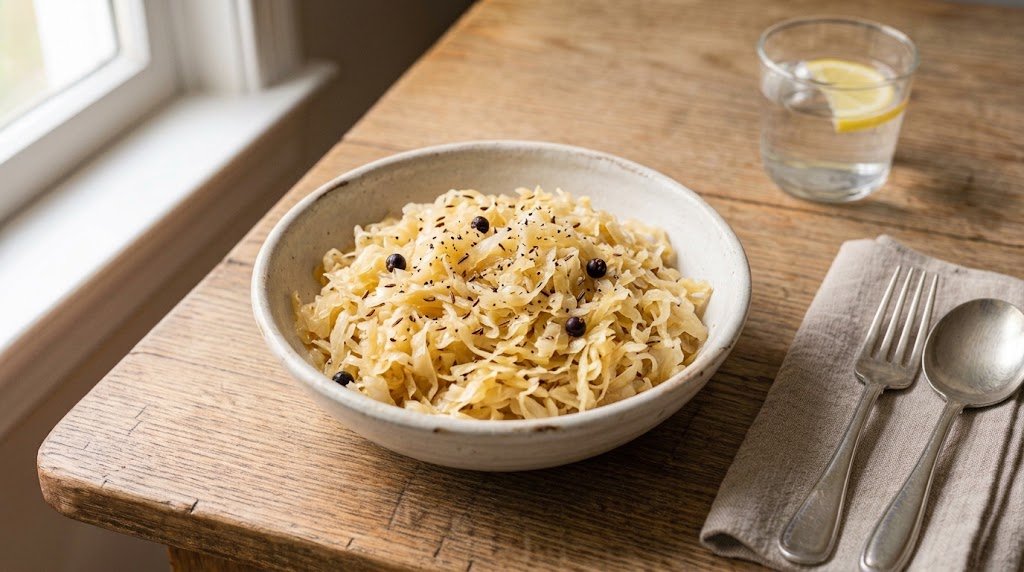
Recipe card
Carrot Sauerkraut without Added Sugar
Planning estimate: 14 days plus 40 minutes active work. At 21–24°C small batches typically take 1–2 weeks. Fermentation may take longer; do not refrigerate or serve as finished until pH is 4.6 or lower, bubbling has ceased and the batch shows no spoilage.
Equipment: Kitchen scale, US measuring spoons, knife or shredder, large bowl, clean 1-US-gallon (3.8 litre) wide-mouth fermentation jar, food-grade weight, airlock lid, room thermometer, calibrated food pH meter, grater
Ingredients
Fermentation base
Add only at serving
Instructions
Trim and shred the cabbage
Wash hands, equipment and the firm cabbage. Remove outer leaves, rinse the head under running water, remove the core and weigh 5 lb (about 2.27 kg) of trimmed cabbage. Shred thinly. Keep carrots out of the fermentation jar.
Salt and massage
In a clean bowl mix the cabbage with three level US tablespoons of canning or pickling salt. Massage and press until enough liquid begins to collect. Do not reduce the salt or use a salt substitute.
Pack and submerge
Press the cabbage and all its expressed liquid into a clean food-grade one-US-gallon (3.8 litre) wide-mouth fermentation jar. Leave 7.5–10 cm (3–4 inches) of headspace. Fit a suitable food-grade fermentation weight so all shreds stay under the brine. If more liquid is needed, prepare extra brine with 1⅛ teaspoons pickling salt per US cup (237 ml) of hot water; cool it before adding. Fit a fermentation lid with an airlock according to its instructions.
Ferment and monitor acidity
Keep the jar out of direct sunlight at 21–24°C (70–75°F). Check it daily for submersion, signs of spoilage and acidity with a calibrated food pH meter, sampling hygienically. Small batches often take one to two weeks; allow longer if needed. It is ready only when fermentation bubbling has stopped and pH is 4.6 or lower, with no signs of spoilage. Do not taste a suspect batch. Discard mouldy, slimy, foul-smelling or failed ferments.
Refrigerate and add carrot at serving
Once fermentation is complete, refrigerate the plain cabbage in a clean covered container under its brine at 4°C (40°F) or colder. Wash and grate only the amount of fresh carrot needed for the serving, then mix with the corresponding portion of sauerkraut. Add optional black pepper to taste. Do not return mixed leftovers to the fermentation jar.
What happens during fermentation?
Salt encourages liquid to leave the shredded cabbage, creating the brine in which fermentation takes place. Naturally occurring lactic acid bacteria convert vegetable carbohydrates into acid. Keep the cabbage beneath the liquid and avoid unnecessary opening of the jar. An airlock releases carbon dioxide without exposing the vegetables to prolonged contact with air.
Checking readiness and troubleshooting
Use the recommended temperature range and check the small batch regularly. Early bubbling is expected, but neither a sour smell nor the passage of a certain number of days establishes readiness. Follow the acidity and bubbling criteria in the method. The cabbage should retain a pleasantly firm texture. If acidification fails, the vegetables become slimy, mould develops or the batch smells rotten, discard the whole batch without tasting it. Do not attempt to rescue a suspect ferment by adding vinegar, rinsing or cooking it. For additional troubleshooting see Oregon State University Extension’s sauerkraut problem guide.
Serving ideas
In Ukrainian and other Eastern European kitchens, sour cabbage is a familiar accompaniment to potatoes and hearty dishes. This version preserves that flavour pairing while leaving the fresh carrot out of the fermentation process. Mix a small portion with grated carrot and, if desired, a little sunflower oil or green onion. Serve with roasted potatoes with garlic and rosemary or Ukrainian potato deruny. The plain fermented cabbage can also be used in kapustnyak sauerkraut soup. Check any accompaniments for allergens. The salt is necessary for this method; people limiting sodium may prefer a smaller portion.
Storage and freezing
Refrigerate fully fermented plain cabbage under its brine in a clean covered container at 4°C (40°F) or colder. For this recipe, use within three weeks. Keep carrots separate; add only to the portion being served. Refrigerate mixed leftovers within two hours (one hour above 32°C/90°F) and use within three days, or sooner if the cabbage is nearing its storage limit. Freeze the plain finished sauerkraut in suitable containers with expansion space for up to three months for best quality; thaw in the refrigerator. Do not pantry-store or can this mixed dish. The published fermentation method does not validate the addition of fresh carrot for prolonged preservation. Keep it separate until needed.
Take out only the cabbage you intend to serve, grate the carrot and toss them together. A little sunflower oil or black pepper is optional. Keep the remaining plain sauerkraut submerged and refrigerated.
Frequently asked questions
Does sauerkraut need added sugar?
No. The cabbage contains naturally occurring carbohydrates that support lactic acid fermentation. Do not add sugar or change the salt in the fermentation base.
Why is the carrot added after fermentation?
The earlier cabbage-and-carrot ratio and short fermentation time were not established as a tested formula. This version uses a published plain-cabbage method and adds the carrot as a fresh serving ingredient.
Can I reduce the salt?
No. Salt is part of the controlled fermentation process. Use the specified amount of pickling salt; if the fully fermented cabbage tastes salty, rinse only the portion you plan to eat.
How do I know the cabbage is ready?
Check with a calibrated food pH meter. Fermentation should have finished bubbling and the pH should be 4.6 or below, with no signs of spoilage. Time and sour flavour alone are not sufficient.
What if the cabbage is exposed above the liquid?
Keep all cabbage below the brine throughout fermentation. Check the weight and add cooled brine prepared as directed if needed. Discard the batch if mould, slime, a rotten smell or other signs of spoilage appear.
Can I ferment in a tightly sealed ordinary jar?
Use a fermentation lid with an airlock that permits gas to escape, following its instructions. Do not seal an ordinary jar without a means of pressure release.
Can I keep the carrot sauerkraut in the pantry?
No. This page is for refrigerated sauerkraut served with fresh carrot. It does not provide a validated shelf-stable canning process.
More recipes to try




Spotted a detail that needs correcting? Contact the FeastDelights editors.