Buttery Vanilla Poppy Seed Filling for Sweet Rolls
Buttery vanilla poppy seed filling is a thick, spoonable mixture of culinary ground poppy seeds, milk, sugar and butter. A gentle simmer hydrates the seeds and reduces excess liquid; vanilla and optional honey round out their nutty flavour. The batch yields about 450–500 g, depending on evaporation, and takes roughly 25 minutes to prepare and cook, plus cooling. Spread it on sweet yeast dough, pastry or pancakes only after it has cooled completely. Use food-grade seeds from a reputable supplier and keep the dairy-based filling refrigerated when made ahead.
Poppy seed filling for baking should spread without dripping and stay in place when a roll is shaped. This version uses ground culinary seeds, which absorb milk more readily than whole seeds. It is a useful component for sweet breads and pastry, with a buttery finish rather than a jam-like gel. Prepare it before making the dough so it has time to cool.
Choosing culinary poppy seeds
Buy food-grade poppy seeds from a reputable supplier, and follow preparation instructions on the packet. Ground seeds should smell fresh and nutty rather than stale or rancid. Do not use poppy seed washing liquid or non-food-grade seeds. A dedicated seed mill gives a more even grind than a blender.
How thick should the filling be?
The warm mixture should move as a thick paste and not leave a puddle of milk. It firms further as butter cools. Stir along the bottom and corners to prevent burning, and use gentle heat rather than a hard boil. If it becomes dry after chilling, loosen only the portion you need with a little milk.
Recipe card
Buttery Vanilla Poppy Seed Filling for Sweet Rolls
Allow approximately 1 hour for rapid cooling and chilling in a shallow container; cooling depends on depth.
Equipment: Scale, measuring jug, heavy saucepan, silicone spatula, shallow heatproof container
Ingredients
Main ingredients
Instructions
Combine the base
Stir 200 g ground culinary poppy seeds, 200 ml milk and 100 g sugar together in a heavy saucepan.
Simmer gently
Heat over low to medium-low heat until gently bubbling. Stir frequently across the base for 15–20 minutes until the mixture holds a spatula track briefly and no loose milk pools at the edge.
Finish off the heat
Remove from heat. Stir in 50 g butter, 1 tsp vanilla sugar or extract, a pinch of salt and optional 1 tbsp honey until combined.
Cool and refrigerate
Spread in a shallow clean heatproof container and cool promptly, refrigerating within 2 hours (1 hour above 32°C/90°F). Allow about an hour or until cold throughout.
Adjust before spreading
Stir the cold filling. If too firm, add milk by the teaspoon until spreadable. Keep chilled until needed; spread in an even thin layer on dough.
Using the filling in dough
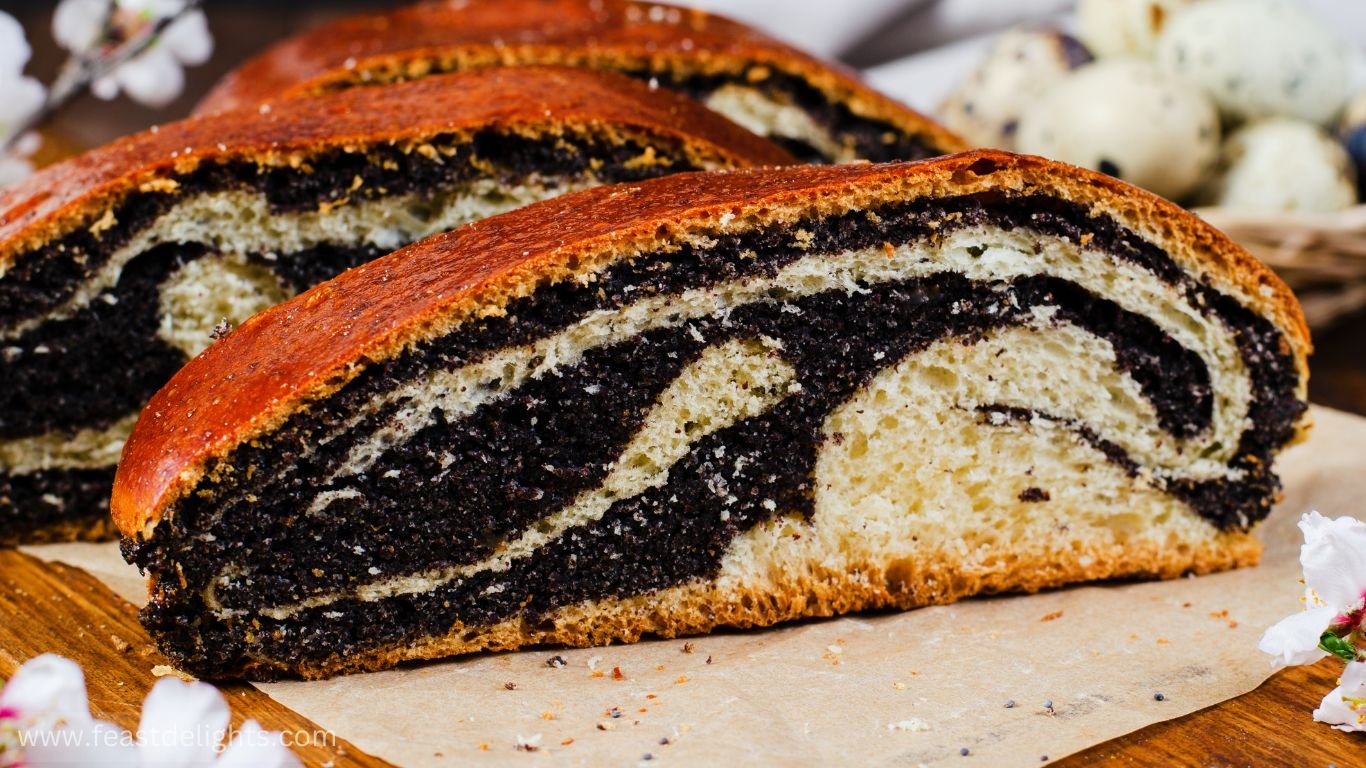
Spread a thin even layer, leaving an uncovered edge for sealing. Excess filling can squeeze out when the roll is twisted or cut. A sweet yeast dough such as milk and vanilla babka can provide a starting point for a filled variation, but shaping and baking time may change.
Flavour, storage and allergens
Lemon zest or a small amount of finely chopped toasted walnut gives contrast. Optional honey adds flavour rather than serving as a preservative. This filling contains milk and poppy seeds; nuts or plant milk may introduce additional allergens.
Storage and make-ahead
Refrigerate promptly at 4°C/40°F or below and use within 3 days. Freeze up to 2 months for quality; thaw in the refrigerator and stir before spreading.
Cool the filling until thick and spreadable before using it in a pastry.
Frequently asked questions
Can I use whole poppy seeds?
Grind culinary seeds with a suitable poppy seed mill before measuring the filling ingredients. Whole seeds give a coarser, less cohesive paste.
Why is the filling runny?
It needs more gentle evaporation or cooling. Return it to low heat briefly if liquid pools, then cool again.
Can I use plant milk?
Unsweetened plant milk and a baking-suitable dairy-free butter alternative can be used, but the thickness and flavour may differ.
Can I reduce the sugar?
A modest reduction changes sweetness and consistency. Do not treat sugar as a preservation method.
Can I add nuts?
Finely chopped walnuts can be folded in after cooking; they add texture and an allergen.
Can I spread it while warm?
No. Warm filling can soften or tear dough and melt pastry fats. Cool it first.
More recipes to try






Spotted a detail that needs correcting? Contact the FeastDelights editors.