Two-Layer Matcha Green Tea Cake with Buttercream
This two-layer matcha cake has a tender butter-cake crumb, gentle green tea bitterness and a soft matcha buttercream. Culinary matcha is whisked into the flour for even colour, while a second measured portion flavours the frosting. The layers are baked in two 20 cm tins and cooled completely before stacking. The recipe makes twelve slices and takes about two hours and twenty minutes, including cooling. Serve thin slices with unsweetened tea to complement the sweet frosting.
Make a two-layer matcha green tea cake with butter, milk, eggs and culinary matcha, finished with a simple matcha buttercream. Allow about 40 minutes active preparation and assembly, 30 minutes baking and 70 minutes cooling. The cake has a soft green crumb rather than the airy structure of a Japanese sponge.
Choosing matcha for baking
Use unsweetened pure matcha powder, not a sweetened green tea latte mix. Culinary-grade matcha works well in cakes, where butter, sugar and flour soften its bitterness. The two tablespoons for the cake and one tablespoon for the frosting are measured separately. Sift the powder with the dry ingredients to break up small clumps. Colour varies with matcha freshness and baking conditions, so a muted olive-green crumb is normal. Store the powder sealed away from light and moisture.
The 250 g flour equals about two US cups, spooned and levelled; 115 g butter is approximately eight tablespoons. Use softened, not melted, butter and bring eggs and milk to a cool room temperature before mixing. The existing formula uses both baking powder and a small amount of baking soda. Ordinary milk provides limited acidity, so the soda may influence flavour and colour; the original proportions have been retained and should be confirmed in a kitchen test rather than adjusted without testing.
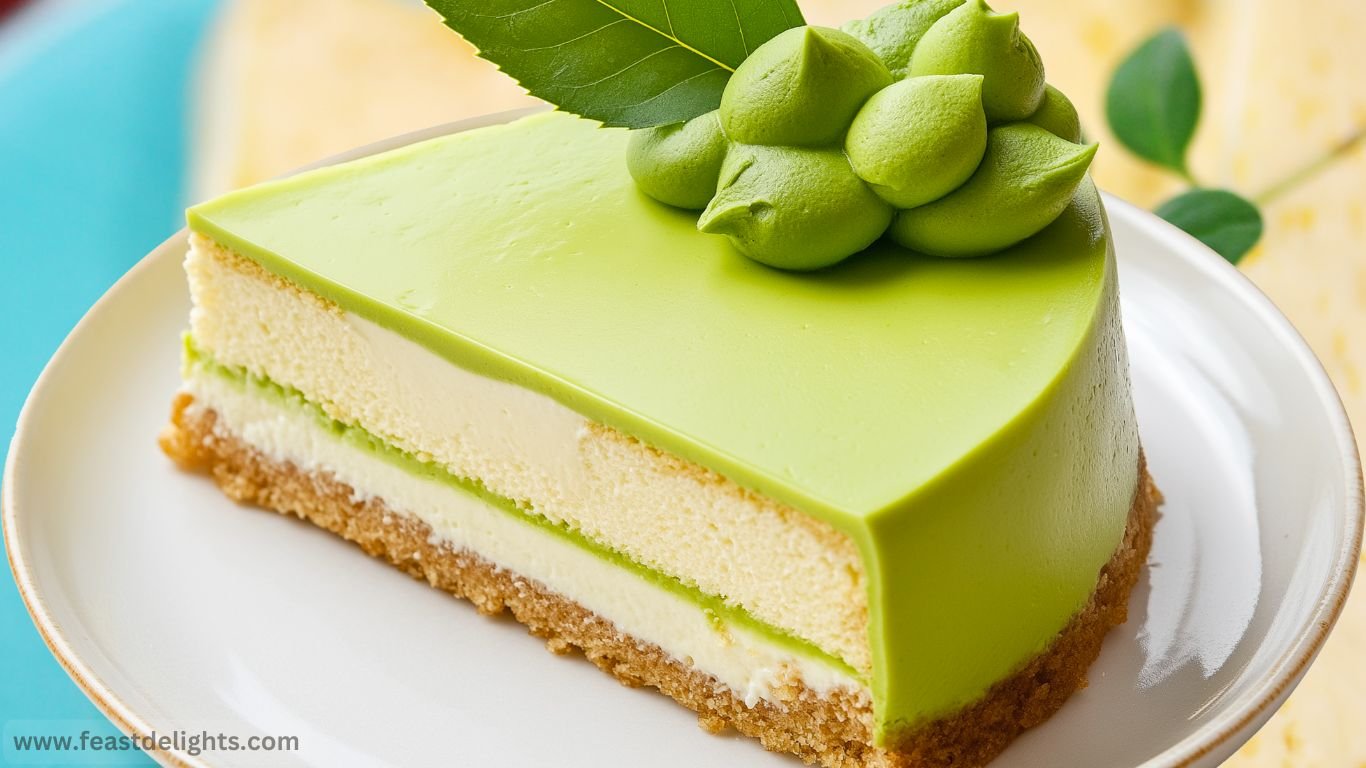
Recipe card
Two-Layer Matcha Green Tea Cake with Buttercream
Includes 10 minutes cooling in tins and approximately 60 minutes on racks. Cool completely before frosting; allow longer if necessary.
Equipment: Two 20 cm round cake tins, parchment, kitchen scale, sieve, electric mixer, mixing bowls, spatula, wire racks, offset spatula, skewer
Ingredients
Cake layers
Matcha buttercream
Instructions
Prepare tins and dry ingredients
Preheat oven to 175°C (350°F). Grease two 20 cm round tins and line bases. Sift together flour, baking powder, baking soda and the cake matcha.
Mix the cake batter
Cream softened cake butter and sugar until pale and fluffy. Beat in eggs one at a time and vanilla. Alternate additions of dry mixture and cake milk, mixing just until combined.
Bake and cool both layers
Divide batter equally between tins. Bake 25–30 minutes, until a skewer comes out clean or with dry crumbs. Cool 10 minutes in tins, then turn onto racks and cool completely.
Make matcha buttercream
Beat softened frosting butter until smooth. Gradually beat in sifted icing sugar and frosting matcha, adding measured milk as needed until spreadable.
Stack and finish
Place one fully cooled layer on a plate, spread frosting over it and add second layer. Spread remaining frosting over top. Slice into 12 portions.
Mixing and baking the layers
Grease two 20 cm (8 inch) round tins and line their bases with parchment. Cream butter and sugar until lighter and fluffy, scraping down the bowl. Add eggs one at a time; if the mixture begins to look curdled, add a spoonful of the measured flour mixture. Alternate additions of flour and milk, beginning and ending with flour. Mix only until no dry streaks remain. Divide the batter equally by weight for layers of similar thickness. Bake on the middle rack until a skewer inserted in the centre comes out clean or with a few dry crumbs and the surface springs back gently. Avoid opening the oven early.
Preparing and spreading matcha buttercream
Beat softened frosting butter until smooth. Sift icing sugar and matcha together and add in stages at low speed. Add the measured milk gradually, stopping once the frosting spreads without sliding. If it is too soft, chill briefly; if too stiff, add a few drops of the measured milk. Let the cakes cool completely before frosting. Set one layer on a plate, spread some frosting evenly across the top, then place the second layer on it. Use the remaining frosting over the top; the quantity is intended for a modest finish rather than a thick coating around the entire cake.
Serving, substitutions and storage
If the cake tastes excessively bitter, check the matcha is pure and fresh and use the specified measured amount rather than adding extra. If the cake is dense, avoid overmixing after adding flour. For a variation, add a few fresh raspberries at serving time, not into the untested batter. Serve with plain tea or coffee. For other layered or chilled desserts, try raspberry swirl cheesecake, Mont Blanc chestnut dessert or Italian lemon ring cake. Contains wheat, milk and eggs. Matcha naturally contains caffeine; the quantity per serving varies. Do not taste raw batter. Refrigerate the finished cake covered and let individual slices soften briefly before serving.
Frequently asked questions
Can I use a matcha latte mix?
No. It contains other ingredients and does not provide the same concentration of matcha.
Can I bake in one tin?
The original formula uses two tins. A deeper single cake needs a different baking time and may rise unevenly.
Why did the green colour fade?
Matcha colour naturally changes with heat, light and its freshness.
Can I make the layers ahead?
Yes, wrap fully cooled layers and refrigerate or freeze before frosting.
Why is the frosting grainy?
Sift icing sugar and matcha, and use softened butter; beat until evenly combined.
Can I freeze the cake?
Yes, freeze wrapped layers or individual frosted slices; thaw in the refrigerator.
More recipes to try






Spotted a detail that needs correcting? Contact the FeastDelights editors.