Mixed-Fruit Galette with Homemade Butter Pastry
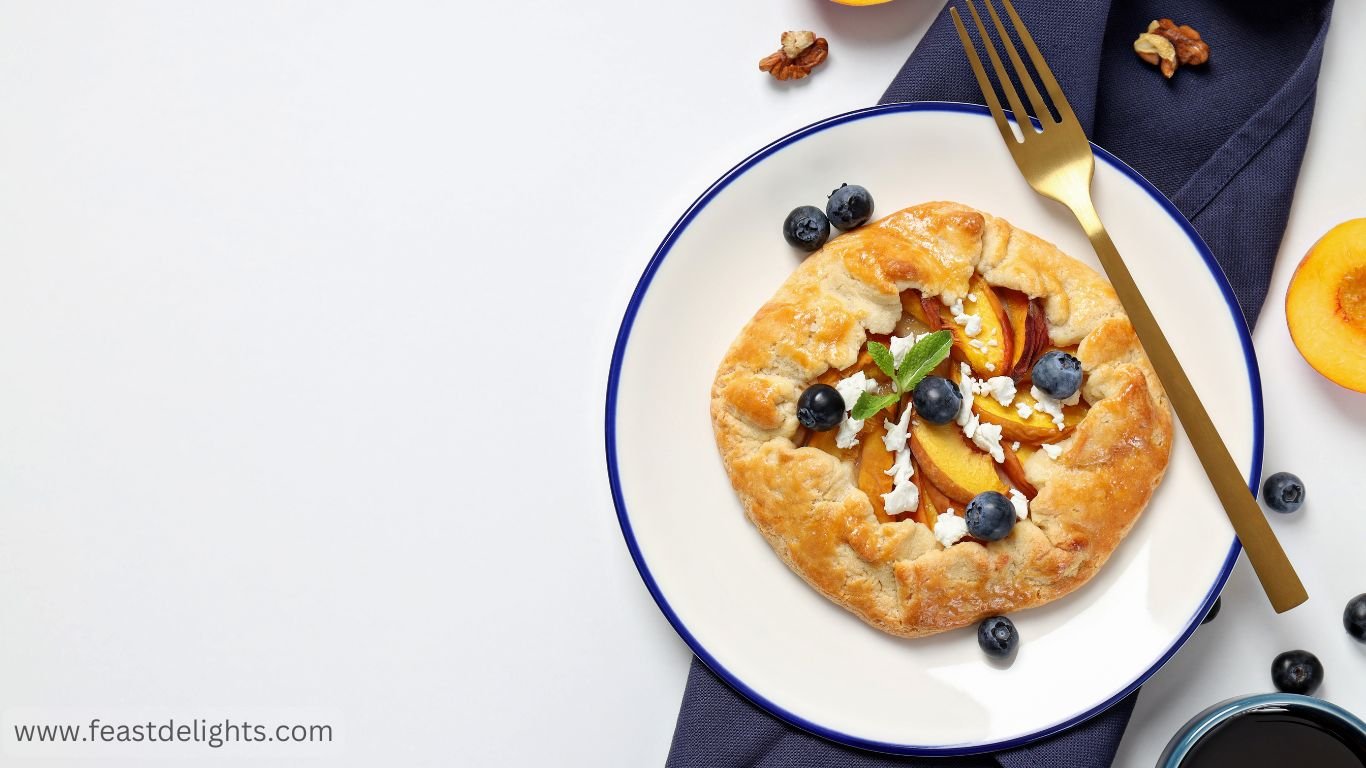
This mixed-fruit galette is a rustic, free-form tart made with homemade butter pastry folded around ripe sliced fruit. The crust bakes into crisp, flaky layers, while lemon juice and cornstarch help the fruit juices form a lightly thickened filling. No tart tin is needed: roll the dough into a circle and fold the edges directly on a lined baking tray. The recipe makes eight modest slices and takes about two hours, including chilling and resting. Choose ripe, sweet fruit because the measured sugar belongs in the pastry, not the filling.
Mixed-fruit galette is a free-form fruit tart with a golden folded crust and a soft, juicy centre. This French-inspired version uses homemade butter pastry and two cups of fresh fruit. It makes eight modest slices and takes around two hours, including chilling and resting. Unlike a moulded tart, it is shaped directly on a baking tray.
Choosing fruit and making the pastry
Use ripe fruit that is sweet enough to eat on its own. Peaches and blueberries, plums and thin apple slices, or a mixture of ripe berries are useful combinations. Remove stones and cores, slice larger pieces evenly and drain excess juice. The original two tablespoons of sugar belong to the pastry rather than the filling. Lemon juice adds brightness, and cornstarch helps thicken the juices.
Keep butter cold so pieces remain visible in the dough. Add the ice water gradually and stop when the dough holds together when squeezed. Do not knead it smooth. Chilling helps the butter firm and the flour hydrate. This revision increases the original 20-minute chill to at least 30 minutes, following the principles in King Arthur Baking’s pie crust guide.
Recipe card
Mixed-Fruit Galette with Homemade Butter Pastry
Chill pastry at least 30 minutes, bake 35–40 minutes, then rest at least 15 minutes. A very warm kitchen or juicy fruit may require longer chilling or baking.
Equipment: Kitchen scale, mixing bowl, pastry cutter or fingertips, rolling pin, parchment, large rimmed baking tray, knife, pastry brush, cooling rack
Ingredients
Butter pastry
Fruit filling
Egg wash
Instructions
Make and chill the butter pastry
Combine flour, sugar and salt. Cut cold cubed butter into the flour until the mixture contains small, visible flat pieces of butter. Sprinkle ice water over the mixture a tablespoon at a time, tossing gently until a squeezed handful holds together. Press into a disc without kneading, wrap and refrigerate for at least 30 minutes.
30 minPrepare and season the fruit
Wash and dry fruit; remove stones, cores or stems as needed. Slice firm fruits thinly and leave small berries whole. Toss the measured fruit with lemon juice and cornstarch just before assembling. Drain any excessive free juice first. Choose ripe sweet fruit, since the original filling contains no added sugar.
Roll, fill and fold the galette
Preheat a conventional oven to 190°C (375°F). Roll the chilled pastry into a roughly 28–30 cm (11–12 inch) circle, about 3 mm thick, on lightly floured parchment. Transfer parchment to a rimmed baking tray. Arrange fruit in the centre in an even layer, leaving a 4–5 cm border. Fold the border over the fruit in overlapping pleats, gently pressing seams closed. Chill briefly if the dough has softened.
Brush and bake until bubbling
Brush the exposed pastry lightly with beaten egg, avoiding pools. Bake on the middle rack for 35–40 minutes, or longer if needed, until the rim and base are golden, the fruit is tender and its juices bubble visibly. If the rim colours early, shield loosely with foil while the filling and base finish cooking.
40 minRest and slice
Rest on the tray for at least 15 minutes so the juices thicken slightly. Transfer carefully and cut into eight slices. Cool longer for neater portions.
15 min
How to fold a galette without leaking
Roll a roughly 28–30 cm circle on parchment so it is easier to transfer to the tray. Arrange the fruit in an even layer rather than piling it into a tall mound. Leave a 4–5 cm border and fold it over the fruit in overlapping pleats. Press seams together gently. A rimmed tray catches any escaping juice. Chill the shaped tart briefly if the pastry becomes soft before baking.
How to tell when the galette is ready
Look for a golden, firm base as well as a browned rim. Fruit should soften and the juices should bubble visibly, which helps activate the starch thickener. Fruit pie thickener guidance explains why bubbling matters. Very juicy fruit may need a different amount of starch, so confirm the original quantity with the chosen fruit. Rest the galette before slicing to let the filling settle.
Troubleshooting
If the pastry crumbles during rolling, let it soften briefly and patch small cracks. If it becomes greasy or sticky, refrigerate it again. If juice escapes, use less wet fruit, press the folds together and avoid overfilling. If the rim browns before the base is cooked, loosely shield the rim and continue baking. Do not taste uncooked pastry dough.
Serving and variations
Serve with vanilla ice cream, plain yoghurt or tea. For a plant-based apple version see vegan apple galette. Other options include a buttery shortcrust apple tart and pear frangipane tart. If using particularly tart fruit, a small amount of additional sugar is a separate variation, not part of this original formula.
Make ahead, storage and allergens
Prepare the pastry disc ahead and refrigerate wrapped for up to one day. Mix fruit just before assembling. Refrigerate baked leftovers within two hours (one hour above 32°C/90°F) and use within two days. Reheat in the oven for a crisper base or freeze slices for up to one month for quality. Contains wheat, milk and egg; check labels and equipment for cross-contact.
Frequently asked questions
Do I need a tart tin?
No. Roll the dough on parchment and fold the border directly on a rimmed baking tray.
What fruit works best for this galette?
Ripe peaches, plums, thin apple slices and berries are useful options. Combine fruits with similar cooking times and avoid excessively wet fruit.
Why does my pastry crack when rolling?
The dough may be too cold or dry. Let it soften briefly and press small cracks together. Add ice water gradually during mixing if needed.
Why is my galette soggy?
Wet fruit, insufficient thickener or underbaking can cause a damp base. Drain excess juice and bake until the base is golden and the filling bubbles.
Is the fruit filling sweetened?
No added sugar is listed for the filling. The two tablespoons of sugar go into the pastry, so choose naturally sweet ripe fruit. Extra sugar is an optional variation.
Can I make the dough ahead?
Yes. Wrap the dough disc and refrigerate for up to a day. Let it soften briefly if too firm to roll.
More recipes to try






Spotted a detail that needs correcting? Contact the FeastDelights editors.