Folded Cottage Cheese Pastries with Raisins
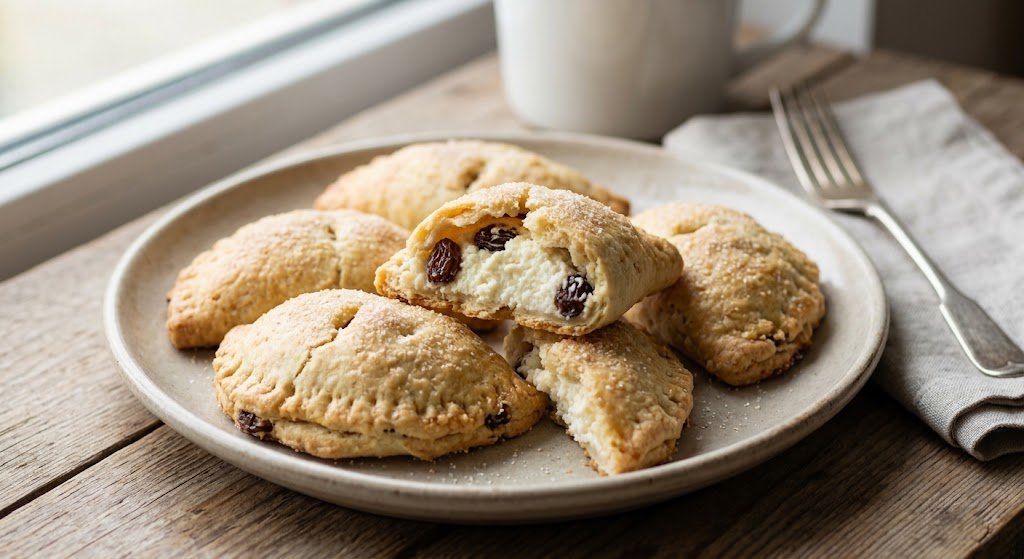
Folded cottage cheese pastries are individual butter-dough rounds filled with sweetened dry cottage cheese, vanilla and raisins. The dough is chilled before rolling and folded over the filling so a little cheese remains visible. A short bake produces lightly golden edges and a soft set centre. This batch makes approximately 16 pastries, depending on cutting and filling size, in about 90 minutes if baked together. Use well-drained cheese to prevent leaks and add the second dough egg gradually so the pastry stays rollable. Serve as a snack or dessert with tea.
These folded cottage cheese pastries resemble the open-sided sweet cheese pastries often made with dry curd cheese. They are individual pastries rather than a whole cheesecake. The butter dough needs to stay firm enough to roll and cut; the filling should hold a spoonful without releasing liquid. The ingredient list provides two dough eggs, while the older method used one. This version starts with one and adds the second only as needed, so the amount can suit the flour and egg size.
Choosing a cheese that will not leak
Dry curd cheese or farmer’s cheese works better than a creamy cottage cheese packed in liquid. If using standard cottage cheese, drain in a sieve in the refrigerator and weigh afterwards. Mash larger curds lightly if a smoother filling is preferred.
How to keep the pastry tender
Start with pliable butter and mix flour only until the dough holds. If it cracks badly before chilling, add a little of the beaten second egg. If it becomes sticky, chill rather than adding large amounts of extra flour. Roll between sheets of parchment if the work surface is warm.
Recipe card
Folded Cottage Cheese Pastries with Raisins
Includes 30 minutes of dough chilling; baking time assumes trays fit together. Add time if baking in batches.
Equipment: Scale, bowls, mixer or wooden spoon, rolling pin, 10 cm/4 inch round cutter, parchment, baking trays, rack
Ingredients
Butter dough
Cheese filling
Instructions
Mix butter dough
Cream 150 g softened butter and 100 g sugar. Beat in one large egg. Whisk 300 g flour with 1 tsp baking powder and ½ tsp salt; mix into the butter. Beat the second dough egg separately and add a little at a time only if needed to bring the dough together. Stop when soft but not sticky.
Chill
Flatten the dough into a disc, cover and refrigerate for 30 minutes. Keep chilled while preparing the filling.
Prepare the cheese
Mix 300 g dry cottage cheese, 80 g sugar, one separate egg, 1 tsp vanilla and 60 g raisins until evenly combined. The mixture should mound on a spoon. Keep refrigerated until shaping.
Cut and fold
Heat a conventional oven to 180°C/350°F. Roll dough to about 4 mm thick on a lightly floured surface. Cut 10 cm/4 inch rounds; reroll scraps gently. Divide the filling among about 16 rounds, leaving a clear rim. Fold each loosely over the filling.
Bake and cool
Place on lined trays with space between pastries. Bake 20–25 minutes until lightly golden and the filling is set; verify the egg-containing centre reaches at least 71.1°C/160°F. Cool on a rack and refrigerate promptly if not serving.
Filling and shaping without spills
Divide the filling before starting if you want an even yield. Place it slightly off centre and leave room around the rim. Wet raisins can add moisture; use them dry or pat thoroughly dry if rinsed. If the filling runs, check cheese drainage rather than adding unmeasured flour.
Serving and variations
Serve with tea or a spoonful of fruit compote. A little lemon zest can brighten the filling. For a different cheese dessert without pastry, try crustless cottage cheese syrnyk. The pastries contain milk, wheat and eggs.
Storage and make-ahead
Refrigerate covered at 4°C/40°F or below within 2 hours of baking (1 hour above 32°C/90°F); use within 3 days. Freeze baked cooled pastries up to 1 month for quality; thaw in the refrigerator.
Keep the filling thick and the dough cool for neat folded pastries.
Frequently asked questions
Can I use ordinary wet cottage cheese?
Drain it well in a fine sieve before weighing. A watery filling may leak.
Why might I not need the second dough egg?
Flour absorption and egg size vary. Adding it gradually resolves the original ingredient-method mismatch without forcing extra liquid into the dough.
Can I omit raisins?
Yes. The filling will be a little less sweet and the yield slightly lower.
Do I need to seal the edges?
No. The folded shape leaves some filling visible; avoid overfilling.
Can I make smaller pastries?
Yes, use a smaller cutter and less filling. Begin checking earlier for browning.
Can I make the dough ahead?
Yes, chill it covered overnight. Keep the cheese filling separate and cold until shaping.
More recipes to try






Spotted a detail that needs correcting? Contact the FeastDelights editors.