Japanese Mitarashi Dango with Sweet Soy Glaze
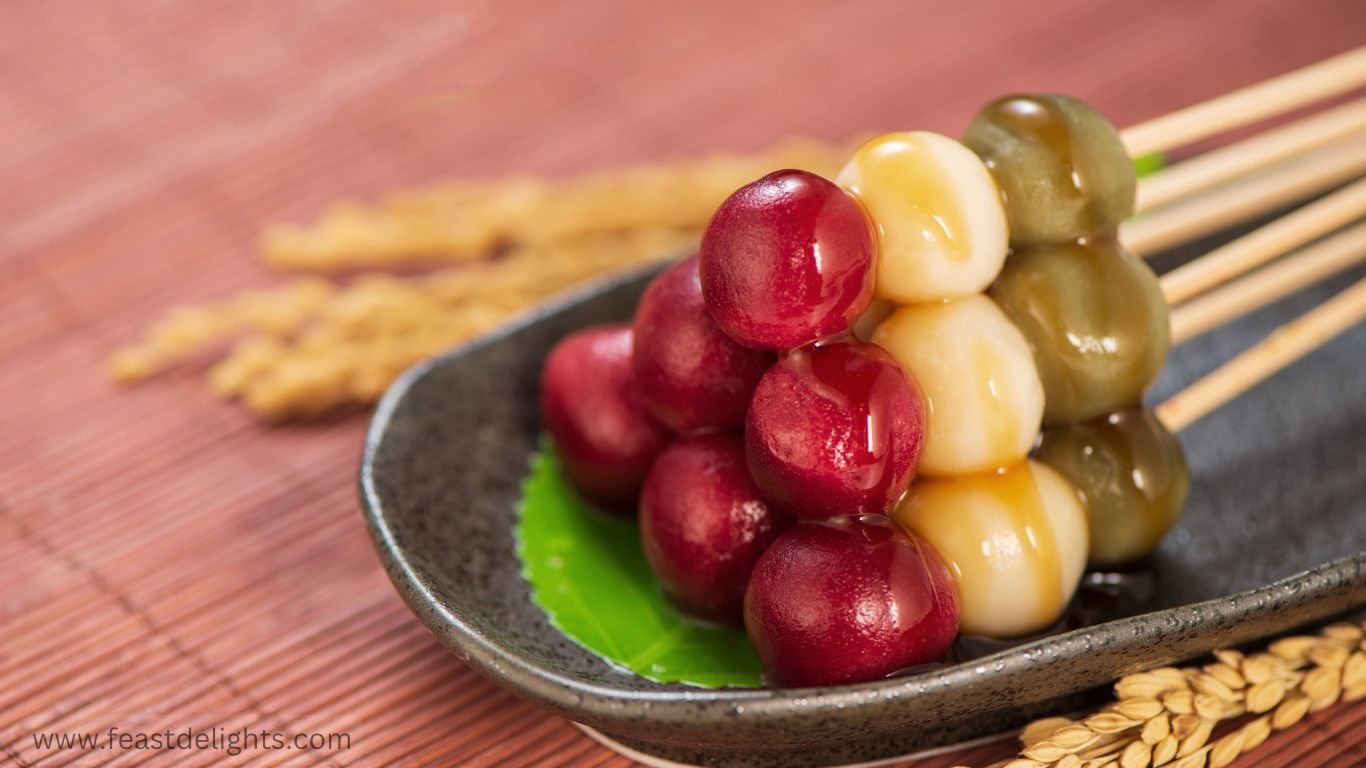
Mitarashi dango are soft, chewy Japanese rice dumplings served with a glossy sweet soy glaze. This version uses shiratamako, a Japanese glutinous rice flour, for a particularly tender texture, with the sweetness concentrated in the sauce rather than the dough. Make 20 small dumplings and thread four onto each of five skewers, or serve them in shallow bowls. Allow about 35 minutes from mixing to serving. Add water gradually, cook beyond the point when the dumplings float, and glaze just before eating for the best texture.
Mitarashi dango pair a mild rice flavour with a sweet, salty glaze that clings to each dumpling. Their appeal is the contrast between the springy dough and the smooth sauce, so the flour and hydration matter more than elaborate equipment. This recipe retains the existing 250 g flour batch and sweet soy sauce proportions, but specifies Japanese shiratamako rather than treating every rice flour as interchangeable. It makes 20 dumplings, enough for five skewers of four, in about 35 minutes. The all-shiratamako dough is softer than versions made with a blend of regular and glutinous Japanese rice flours. Serve it freshly cooked, with the glaze warm and fluid enough to brush on.
The flour determines the texture
Shiratamako is made from Japanese glutinous rice. Glutinous describes its sticky cooking properties, not wheat gluten. Regular rice flour, wheat flour and cornstarch cannot replace it gram for gram in this dough. Flour from other rice varieties can absorb water differently and produce a different chew.
Some mitarashi recipes combine shiratamako with joshinko, a Japanese non-glutinous rice flour, for a firmer dumpling. The rice-flour comparison from Just One Cookbook explains this distinction. Here the existing single-flour formula is retained, with a softer result; it is not rewritten as a blended-flour recipe without testing.
Weigh 250 g of shiratamako, about 8.8 oz. A cup conversion is unreliable because the granules and packing vary. Measure 200 ml warm water, about ¾ US cup plus 1 tablespoon and 1 teaspoon, but do not pour it all in at once. Start with about three-quarters, crush any dry granules and knead before deciding how much more is needed. Have a little extra water available only if the dough still cracks.
Ingredients for a smooth sweet soy glaze
The glaze keeps the existing 2 tablespoons soy sauce, 100 g granulated sugar, 100 ml water and 1 tablespoon cornstarch. The sugar is about ½ US cup, and the water about 6 tablespoons plus 2 teaspoons. Use level 15 ml tablespoons. This makes a generous, distinctly sweet coating, so add it to taste rather than assuming every drop must be used.
Choose a standard Japanese-style soy sauce. Very dark, sweetened or strongly reduced sauces will change the balance and colour. Stir cornstarch into the cold liquid before heating: adding dry starch straight to a simmering syrup tends to create lumps. Keep the separate tablespoon of dusting starch for your hands only, and use it sparingly.
Shape evenly and check the centre
You need a mixing bowl, scale, measuring spoons, large saucepan, slotted spoon, bowl of cold water and small saucepan for the glaze. Five short skewers are optional. Keep a clean plate nearby for the drained dumplings.
Divide the dough into 20 equal pieces, roughly 22 g each if most of the measured water is used. Small, even balls cook more predictably than a mixture of large and small ones. The uncooked dough should hold a smooth sphere without slumping, while yielding easily when pressed.
Recipe card
Japanese Mitarashi Dango with Sweet Soy Glaze
Water absorption and cooking time depend on the flour and dumpling size; 35 minutes is an estimate for 20 small dumplings.
Equipment: Kitchen scale, mixing bowl, measuring spoons, large saucepan, slotted spoon, cold-water bowl, small saucepan, whisk; 5 skewers optional
Ingredients
Dumplings
Sweet soy glaze
Instructions
Knead a soft, shapeable dough
Place 250 g shiratamako in a bowl. Add about 150 ml of the measured warm water, crushing granules and mixing well. Knead, then add more water a teaspoon at a time from the remaining 50 ml, stopping when the dough is smooth, soft and able to hold a ball without cracking or slumping. A little more water may be needed depending on the flour.
Divide into 20 dumplings
Divide into 20 equal portions and roll between your palms until smooth. Cover with a barely damp cloth while working. Use only a very light dusting from the separate 1 tablespoon cornstarch if necessary.
Boil beyond the floating stage
Bring a large saucepan of water to a boil. Add dumplings in batches so they have space to move, and maintain a steady gentle boil. Once they rise to the surface, cook for 2 minutes more. Cut one open: the centre should be uniformly chewy with no dry or chalky flour. Cook briefly longer if needed.
Cool briefly, then drain
Lift the cooked dumplings into a bowl of cold water to stop the cooking. When no longer hot, drain well and place on a clean plate. Do not leave them soaking while the rest of the meal is prepared.
Thicken the sweet soy glaze
Before heating, whisk 2 tablespoons soy sauce, 100 g sugar, 100 ml water and 1 tablespoon glaze cornstarch in a small saucepan until the starch is dispersed. Heat over medium-low heat, stirring constantly, until gently bubbling, glossy and thick enough to coat a spoon, about 2–3 minutes after warming. Remove from the heat while still pourable.
Skewer and serve
Thread 4 drained dumplings onto each of 5 skewers, or divide between bowls. Brush or spoon on the warm glaze to taste and serve promptly. Allow hot glaze to cool enough to eat.
Getting the dough and sauce right
Cracks while rolling: knead in water a teaspoon at a time. Sprinkle the water over the dough, then work it through before adding more. A wet outside with a dry centre is not yet properly mixed.
Dough sticks heavily: stop adding water and knead again. Lightly damp hands may help; use only a trace of the measured dusting starch. Repeatedly coating the dough in starch can make its surface pasty when boiled. If it slumps into a puddle, work in a little more shiratamako and note that the yield and proportions have changed.
Chalky centre: floating is a cue to continue cooking, not an automatic finish line. Cook for another 2 minutes after the balls rise, then cut one open. It should be uniformly hydrated and chewy, with no dry flour pocket. Continue briefly if needed.
Glaze sets too thick: stir in water a teaspoon at a time over low heat. It should coat a spoon but still flow. Cornstarch sauce thickens as it cools, so avoid reducing it to a stiff paste in the pan. If lumpy, whisk gently and strain while warm.
Serving, variations and allergens
Drain well so the glaze adheres. Thread four dumplings onto each skewer, supporting the dumpling with your fingers and pointing the sharp end away from your hand. A small bowl is equally useful and avoids skewering soft dough. Serve with unsweetened green tea; the sauce supplies plenty of sweetness.
For a different finish, serve a few unglazed dumplings with sweetened roasted soybean powder, noting that this introduces soy. A matcha dough variation needs a separate hydration check because powder changes the mixture; do not add an unspecified amount and expect the original formula to behave identically. For another tea-table dessert, see matcha green tea cake with buttercream.
Soy sauce normally contains soy and often wheat. Use a product explicitly labelled gluten-free if required, and check the flour and cornstarch for relevant cross-contact statements. Tamari is not automatically gluten-free. The plain recipe contains no listed egg or dairy ingredients, but individual products and serving additions still need checking.
Make ahead, storage and reheating
Measure the dry ingredients ahead, but mix and cook the dumplings close to serving. If preparing the sauce earlier the same day, refrigerate it covered and loosen with a little water while reheating. Keep dumplings and glaze separate until serving so the coating remains distinct.
Eat dango fresh for the softest texture. Refrigerate leftovers promptly in a covered container at 4°C/40°F or below and use within 1 day. Do not leave cooked dumplings out for more than 2 hours, or 1 hour in temperatures above 32°C/90°F. Refrigeration firms the rice starch, so cold leftovers will not feel like a fresh batch.
Reheat plain dumplings in gently simmering water until hot throughout, then drain and glaze. For already glazed leftovers, microwave in a covered microwave-safe dish in short bursts, turning and checking the centre; the glaze can become very hot. Reheated leftovers should reach 74°C/165°F. Serve as soon as they are comfortable to eat.
For longer make-ahead storage, freeze unglazed shaped dumplings separately on a tray, then transfer to a sealed container for up to 1 month for quality. Boil from frozen rather than thawing on the counter, allowing extra time and checking a centre before serving. Keep the sauce separate.
Make the dumplings evenly, check one centre before draining the batch and add the glaze at serving time. Freshly cooked dango should be tender and pleasantly chewy.
Frequently asked questions
Is dango the same as mochi?
They have a related chewy rice texture but are different preparations. This dango dough is mixed from rice flour and water, shaped into small balls and boiled; the word mochi does not mean any rice-flour dumpling.
Can I use ordinary supermarket rice flour?
Not as a direct replacement here. Use Japanese shiratamako for the specified soft dough. Non-glutinous rice flour needs a different formula and technique.
Why is there no sugar in the dough?
This version keeps its sweetness in the glaze. Adding sugar to the dough changes both flavour and hydration, so it is not included as an untested adjustment to this batch.
Do I need to grill the skewers?
No. This recipe serves the dumplings after boiling and glazing. A grilled finish is a separate option, but it is not needed to cook the centres or make the sauce adhere.
Can I serve dango without skewers?
Yes. Put four drained dumplings in each small bowl and spoon over glaze. This is especially useful when a softer dumpling is difficult to thread.
Can I halve the recipe?
Yes. Use 125 g flour and up to about 100 ml water, adjusting by feel, for 10 balls. Halve each glaze ingredient and cook by the same texture cues.
More recipes to try






Spotted a detail that needs correcting? Contact the FeastDelights editors.