Baked Vanilla Cheesecake with Sour Cream
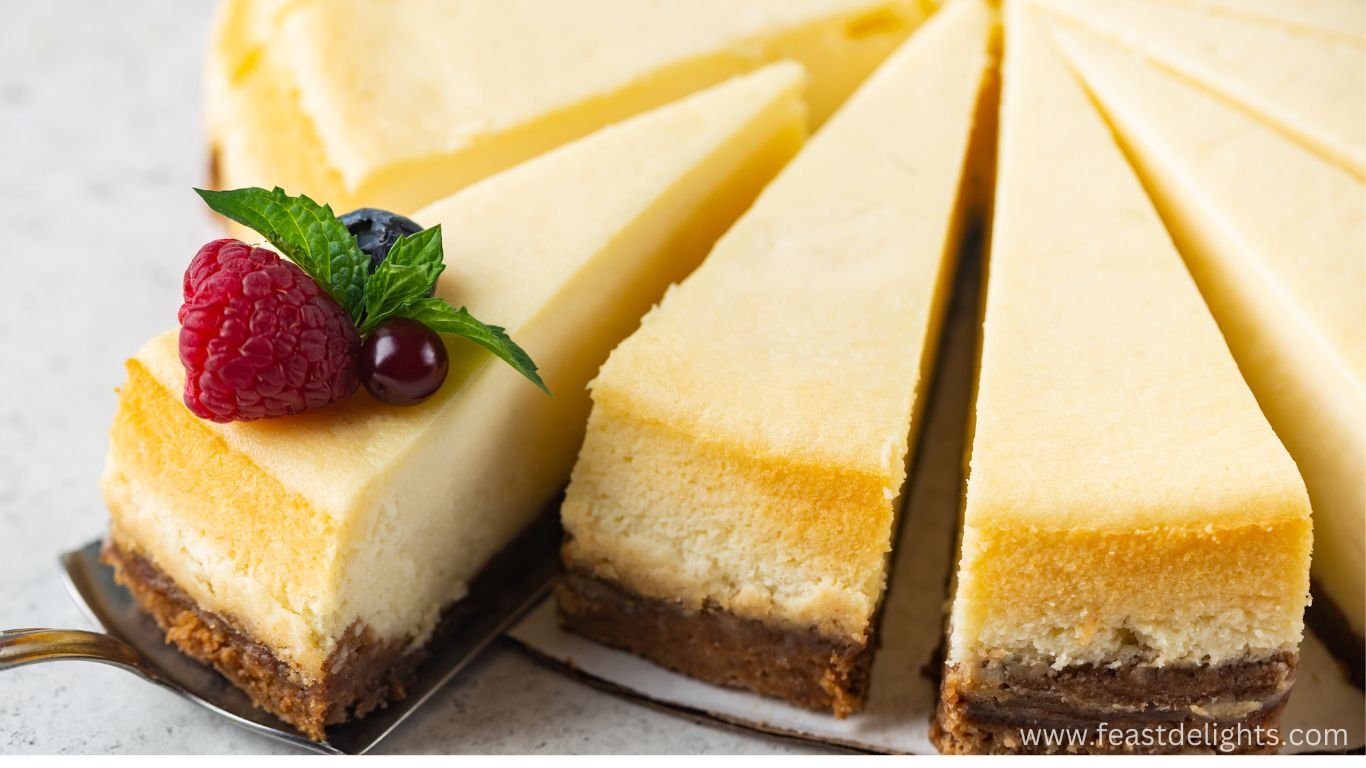
Classic baked vanilla cheesecake combines a buttery biscuit base with a smooth filling of cream cheese, sour cream, eggs and vanilla. A gentle water bath helps the filling set evenly, while sour cream balances its richness with a slight tang. This 23 cm (9 inch) cake serves 12 and is best made the day before serving: allow time for baking, gradual cooling and at least six hours in the refrigerator. Serve plain or add fresh berries just before slicing.
This baked vanilla cheesecake with sour cream has a compact biscuit crust and a creamy, lightly tangy centre. Unlike a no-bake cheesecake, its filling sets through gentle cooking of the eggs and firms further as it chills. The original formula uses 500 g cream cheese and 200 g sour cream in a 23 cm springform pan, so expect a relatively low cake rather than a towering New York-style cheesecake. Make it a day ahead for neat slices.
Classic baked cheesecake at a glance
Yield: 12 slices. Allow about 30 minutes of hands-on preparation, up to 75 minutes of baking and about 8 hours 20 minutes for crust chilling, gradual cooling and refrigeration. The total planning estimate is 10 hours 5 minutes. Use a 23 cm (9 inch) springform pan and a roasting dish large enough to hold it. The oven temperature is 160°C (320°F), conventional.
Ingredients and their purpose
Digestive biscuits or graham crackers form the base. Crush 200 g to fine, even crumbs rather than leaving large pieces that make slicing difficult. Melt 100 g unsalted butter (about 7 US tablespoons) and mix thoroughly; the crumbs should resemble damp sand. Different biscuits absorb butter differently, so press evenly without compacting the base into a hard slab.
Use 500 g (17.6 oz) full-fat cream cheese, preferably a firm block-style product rather than whipped spread. Its fat and milk proteins give the filling its body. The 200 g sour cream (7 oz) loosens the mixture and contributes acidity. Granulated sugar, 150 g (about 3/4 US cup), sweetens the cake. Four large eggs provide structure. One tablespoon of cornstarch helps bind moisture, and one teaspoon of vanilla extract gives the filling its familiar aroma.
How to make baked vanilla cheesecake
Recipe card
Baked Vanilla Cheesecake with Sour Cream
20 minutes crust chilling, 60 minutes oven cooling, up to 60 minutes rack cooling and at least 360 minutes refrigeration; refrigerate within two hours of baking, sooner in hot conditions. Baking time may vary.
Equipment: Digital scale; 23 cm (9 inch) springform pan; mixing bowl and low-speed mixer or spatula; wide foil; roasting dish; kettle; thermometer; cooling rack; thin knife.
Ingredients
Biscuit crust
Vanilla filling
Instructions
Prepare the biscuit base
Heat the conventional oven to 160°C (320°F). Mix finely crushed biscuits with melted butter. Press evenly into the base of a 23 cm (9 inch) springform pan and refrigerate for 20 minutes.
Mix the vanilla filling
Beat softened cream cheese and sugar on low until smooth, scraping the bowl. Add eggs one at a time, mixing only until incorporated. Stir in sour cream, cornstarch and vanilla until just combined.
Fill and protect the pan
Pour filling over the chilled crust. Smooth gently. Wrap the outside of the pan in two intact wide layers of foil, above the intended waterline.
Bake gently in a water bath
Place the pan in a roasting dish on the oven rack. Carefully add hot water to halfway up the springform sides, below the foil edge. Bake 60–75 minutes or longer if necessary until edges are set, centre gently wobbles and a thermometer reads at least 71°C (160°F) in the centre.
Cool and refrigerate
Switch off the oven, crack the door and leave for about one hour. Carefully remove the pan from the bath and cool briefly on a rack. Refrigerate within two hours of baking (one hour in very hot conditions); chill at least six hours.
Release and slice
Run a thin knife around the chilled cake, release the springform ring, and cut 12 slices with a warm, clean knife. Wipe and dry the blade between cuts.
How to keep the filling smooth
Take the cream cheese, sour cream and eggs from the refrigerator only long enough to soften slightly before mixing. Cut firm cream cheese into small pieces to help it soften evenly. Beat cheese and sugar on low speed, scraping the bowl and paddle before adding the eggs. Once eggs are in the bowl, mix only until the streaks disappear. Whipping the mixture introduces air, which expands in the oven and can leave a sunken or cracked surface as it cools. Sift the cornstarch over the sour cream or stir it into a small portion before mixing into the filling to prevent pockets of dry starch.
Set up a water bath safely
Check that the springform base is locked in place. Wrap the outside with two wide, intact sheets of foil, extending well above the planned waterline. Place the filled pan in a deep roasting dish. Put the roasting dish on the oven rack before pouring in hot water from a kettle, taking care not to splash the batter. Aim for halfway up the springform sides, below the foil edge. The surrounding water buffers the heat, helping the edges and centre set more evenly. If the dish is difficult to lift, let it cool enough to handle safely and remove the cheesecake separately with dry oven gloves. Never lift a heavy bath of near-boiling water unnecessarily.
Doneness and cooling
Begin checking at 60 minutes; the original 60–75 minute estimate depends on your oven and pan. The outer portion should look set, with a small area in the centre moving gently as one mass rather than rippling like liquid. Use an instant-read thermometer in the centre: aim for at least 71°C (160°F), consistent with official egg-dish guidance. Avoid baking until the entire surface becomes rigid. If it needs longer, continue in short intervals. Turn the oven off and crack the door for a gradual one-hour cool, then transfer to a rack and refrigerate promptly, within two hours of baking. Chill at least six hours before cutting.
Troubleshooting
Lumps: Cheese may have been too cold or the bowl insufficiently scraped. Smooth the cheese before adding eggs rather than beating the completed batter vigorously. Cracks: Excess air, overbaking and rapid temperature change can all contribute. A crack in a fully baked cake is usually cosmetic; cover with fruit if desired. Wet crust: Check the pan seal and foil for holes next time. Soft centre: A freshly baked cake is not meant to slice neatly, but refrigeration cannot make an undercooked egg filling safe. Check temperature during baking rather than trying to rescue a raw centre by freezing.
Variations and serving
Add finely grated lemon zest for a brighter flavour without adding extra liquid. Use gluten-free biscuits if needed, checking all products and equipment for cross-contact; the texture of the base may differ. Full-fat lactose-free dairy can work if it has a similar consistency, but it is not suitable for a milk allergy. Avoid replacing the cream cheese with low-fat spread or cottage cheese in the same proportions without testing. For fruit, spoon a cooled berry compote over individual slices rather than adding an unmeasured amount of wet purée to the batter.
Serve cold with fresh berries, coffee or a small spoonful of fruit sauce. For a different style, try San Sebastián cheesecake with its dark top, baked raspberry cheesecake or mini strawberry cheesecakes for individual portions.
Make ahead, storage and allergens
Refrigerate at 4°C (40°F) or colder within two hours of baking (one hour if ambient temperature exceeds 32°C/90°F). Once cold, cover and use within four days. Freeze well-wrapped plain slices for up to one month for best quality; thaw in the refrigerator. Add fruit just before serving. This cake contains milk, eggs and usually wheat in the biscuit base. Check labels for other allergens, including soy or nuts, and avoid tasting raw egg batter. Use clean utensils for toppings and keep the dessert cold until serving. See FoodSafety.gov’s safe handling guidance for refrigeration limits.
Let the filling set gently and give the chilled cake time to firm. A warm, wiped knife makes clean slices, and berries or a spoonful of fruit compote are all the decoration it needs.
Frequently asked questions
Can I make this cheesecake the day before?
Yes. Bake, cool safely and refrigerate overnight. Add fresh fruit shortly before serving.
Why use sour cream?
It adds tang and softens the cream cheese filling. Use a full-fat product of similar thickness for best consistency.
What if I have no springform pan?
A deep 23 cm cake pan lined with parchment can hold the batter, but releasing a chilled cheesecake is harder. Serve from the pan if lifting would damage it.
Can I skip the water bath?
The original method uses a bath to moderate heat. Baking without it changes the heating pattern and can increase cracking; the timing is not interchangeable.
How do I know the centre is done?
Look for set edges and a slight, unified centre wobble. Confirm at least 71°C (160°F) in the centre with a thermometer rather than relying on colour.
Can I freeze cheesecake?
Freeze plain, fully chilled slices well wrapped for up to a month for quality. Thaw in the refrigerator before adding toppings.
More recipes to try






Spotted a detail that needs correcting? Contact the FeastDelights editors.