Cinnamon Rolls Recipe with Cream Cheese Frosting
These cinnamon rolls have a soft, buttery yeast dough wound around a generous layer of brown sugar and cinnamon, then finished with tangy vanilla cream cheese frosting. The enriched dough contains milk, butter and an egg and needs two rises before baking. Twelve rolls fit a 23 × 33 cm pan, where their sides stay soft as they expand together. Allow about three hours, depending on how quickly the dough rises, and spread the frosting over the buns when warm rather than piping hot.
Make twelve soft cinnamon rolls with cream cheese frosting from an enriched yeast dough, a buttery brown sugar filling and a vanilla cream cheese topping. The rolls bake together in a 23 × 33 cm (9 × 13 inch) pan. Allow approximately 180 minutes, including two rises and a brief cooling period; a cool kitchen may extend the schedule. This is a home-baked American-style version, not a claim to reproduce a commercial formula.
What distinguishes these cream cheese cinnamon rolls?
This version is richer than a plain cinnamon bun. The egg, butter and milk in the dough contribute tenderness, while a relatively thick layer of cinnamon sugar forms a distinct spiral. The frosting is part of the recipe rather than an optional glaze. If you prefer a less heavily filled bun, the separate soft cinnamon rolls with brown sugar filling use an egg-free dough and do not require frosting. The proportions below are deliberately retained for this richer version; do not combine the two formulas halfway through mixing.
Understanding the ingredients
The enriched dough
Bread flour gives the dough enough strength to hold the filling and expand during proofing. Weigh 500 g rather than relying on a scooped cup. Flour volume varies; approximately four US cups is only a guide. The 200 ml milk is about ¾ cup plus one tablespoon and one teaspoon. Warm the milk until lukewarm, not hot; around 30–35°C (86–95°F) is comfortable for mixing. The melted butter must also be cooled. Sugar, egg and fat slow yeast activity compared with a lean bread dough, so allow the rise to be governed by volume instead of the clock.
The 7 g instant yeast is a typical single sachet, or about 2¼ teaspoons. It can be mixed directly with the flour. If substituting active dry yeast, follow its package guidance for dissolving it in the measured milk. Do not add a separate cup of water for activating yeast. Salt is needed even in a sweet dough: it supports flavour and dough structure.
The cinnamon layer
Use softened, spreadable butter rather than melted butter so the filling stays in place as the sheet is rolled. The 150 g brown sugar is roughly ¾ packed US cup, though weight is more dependable. Break up hard sugar lumps before mixing with the cinnamon. Two tablespoons of cinnamon give a pronounced spice flavour; use fresh ground cinnamon with a good aroma. Do not reduce the sugar or butter in the dough simply because the filling tastes sweet: that alters the dough rather than the topping.
The frosting
Choose full-fat plain cream cheese, preferably a firm block or a thick product rather than a very loose spread. Softened butter and cream cheese should be cool enough to hold their shape but pliable enough to mix smoothly. Sift lumpy icing sugar. The 200 g cheese and 50 g butter make a tangier frosting than a butter-heavy cake topping. Vanilla supplies aroma without adding much liquid. If using a tub-style cheese with a higher moisture content, expect a softer finish; avoid compensating with large amounts of extra sugar unless you want a much sweeter frosting.
Equipment and preparation
Have a kitchen scale, mixing bowl or stand mixer with dough hook, rolling pin, ruler, sharp knife or plain unflavoured thread, baking pan, cooling rack and electric whisk ready. A 23 × 33 cm pan holds twelve rolls in a three-by-four arrangement. Use a light coating of grease or baking parchment so the sticky filling is easier to release. A metal pan generally transfers heat more quickly than thick ceramic; judge the middle rolls carefully if using glass or ceramic and follow the manufacturer’s temperature instructions.
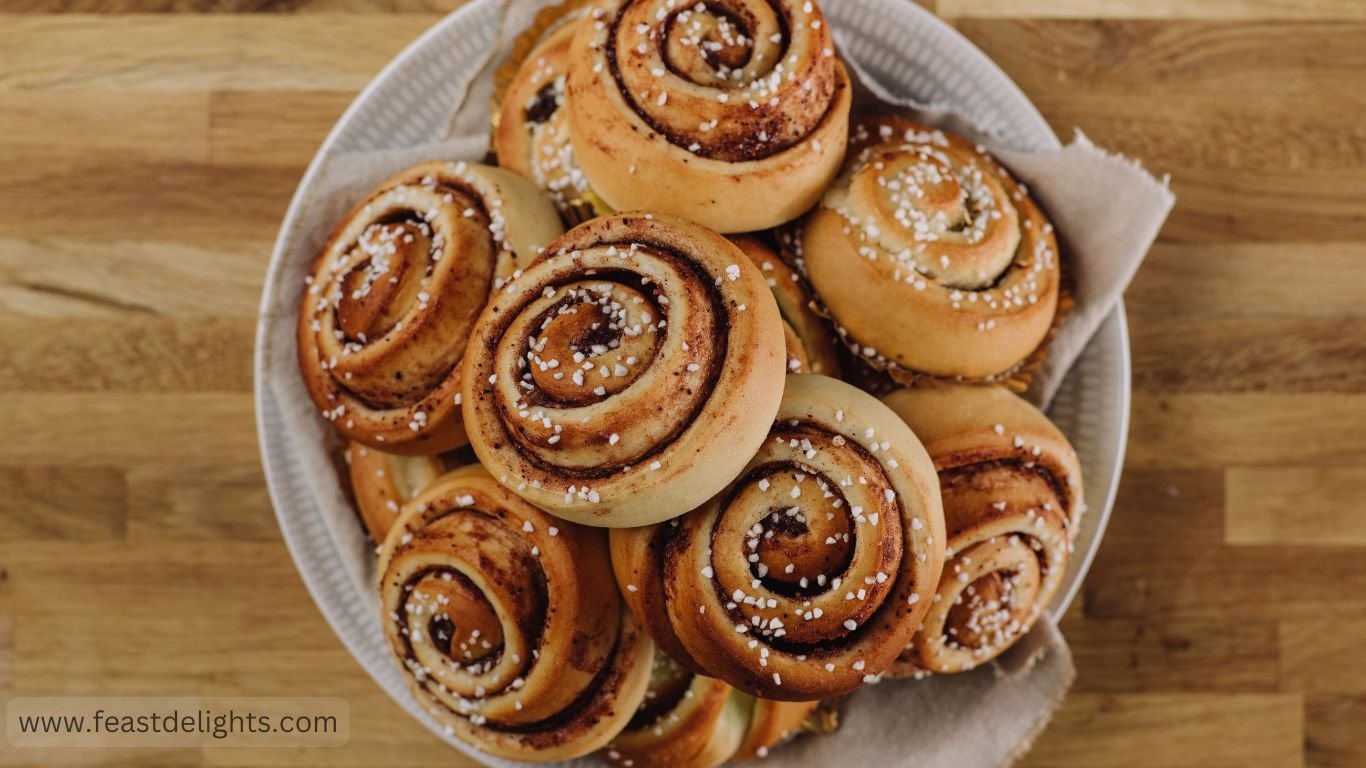
Recipe card
Cinnamon Rolls Recipe with Cream Cheese Frosting
35 minutes active preparation + 25 minutes baking + about 120 minutes rising and cooling = approximately 180 minutes. Rises vary: 60–90 minutes first, 30–45 minutes second, plus 10 minutes cooling; allow about 160–205 minutes overall.
Equipment: Kitchen scale; mixing bowl or stand mixer; rolling pin; ruler; knife or plain thread; 23 × 33 cm (9 × 13 inch) pan; cooling rack; electric whisk.
Ingredients
Dough
Cinnamon filling
Cream cheese frosting
Instructions
Mix and knead the enriched dough
Combine bread flour, instant yeast, lukewarm milk, sugar, cooled melted butter, egg and salt. Knead 8–10 minutes until smooth and elastic. If very stiff, rest briefly before adjusting with a teaspoon of milk.
Let the dough double
Cover and rise in a comfortably warm place for 60–90 minutes, until roughly doubled. Allow longer if needed.
Spread filling and form the log
Roll to 35 × 45 cm (14 × 18 inches). Spread softened filling butter, leaving a narrow bare strip along one long edge. Mix brown sugar and cinnamon and sprinkle evenly. Roll from the opposite long edge and seal gently.
Cut and proof
Cut into 12 even pieces. Arrange cut-side up in a greased or lined 23 × 33 cm (9 × 13 inch) pan. Cover and proof 30–45 minutes until puffy. Preheat a conventional oven to 180°C (350°F).
Bake until the centre rolls are set
Bake 20–25 minutes, checking from 20 minutes. The tops should be golden and centre dough cooked through; around 88°C (190°F) in the bread is a useful texture cue. Tent with foil if browning early. Cool about 10 minutes.
Make and spread the frosting
Beat softened frosting butter until smooth, then mix in cream cheese, icing sugar and vanilla just until creamy. Spread over warm, not piping-hot, rolls. Refrigerate leftovers promptly.
Kneading and the first rise
Mix the dough ingredients until there are no dry flour pockets. Knead for eight to ten minutes, or until the dough feels smooth and elastic. Because the formula has a relatively modest amount of milk, it may initially feel firm. Rest it briefly before deciding whether it needs adjustment. If very stiff and tearing, add a teaspoon of milk at a time; if sticky, continue kneading or rest for a few minutes before adding extra flour. A lightly tacky dough can be normal. Excess bench flour makes the finished buns dense and dry.
To check gluten development, gently stretch a small piece. It should extend without tearing immediately, although an enriched dough may not form a perfectly transparent window. Gather into a ball, place in a bowl and cover to prevent a dry skin. Let rise in a comfortably warm room until approximately doubled, normally 60–90 minutes. Mark the starting level on a straight-sided container if judging volume is difficult. A very hot oven or radiator can damage the yeast or melt the butter; use a mild, stable environment.
Rolling and filling without losing the spiral
Ease the risen dough onto a lightly floured worktop. Roll it into a 35 × 45 cm (14 × 18 inch) rectangle. Lift and turn the sheet occasionally to prevent sticking. Keep the corners reasonably square and the thickness even. If the dough springs back, cover it for five to ten minutes and continue rather than stretching the edges forcefully.
Spread the 100 g softened filling butter over the sheet, leaving a narrow strip along one long edge for sealing. Scatter the cinnamon-sugar mixture evenly, taking it almost to the short edges. Start rolling at the opposite long edge to form a log approximately 45 cm long. Roll snugly enough to avoid large gaps but do not squeeze the filling out. Pinch the seam lightly and turn it underneath.
Mark twelve equal pieces before cutting, each about 3.75 cm (1½ inches) wide. Use a very sharp knife with minimal downward pressure or slide plain thread underneath, cross the ends over the roll and pull to cut. Avoid mint-flavoured dental floss. Place the rounds cut-side up in the pan, giving them room to expand. If an end piece looks slightly smaller, place it at an outside edge. Tuck loose tails under the rolls so they do not unwind during proofing.
Second rise and baking
Cover the pan and proof until the spirals look visibly swollen and soft, usually 30–45 minutes. A gentle fingertip indentation on an exposed dough edge should return slowly rather than spring back instantly. If the rolls still feel firm, give them more time. A deeply sunken indentation can indicate overproofing; bake promptly rather than waiting for the timer.
Preheat a conventional oven to 180°C (350°F) while the rolls proof. Bake on the middle rack and check after 20 minutes. Expect about 20–25 minutes, but a cold or thick pan may take longer. The outer rolls should be golden, and the centre rolls must be set through, not wet or compressed. If using a thermometer, probe the bread portion rather than the hot sugar filling; around 88°C (190°F) is a useful bread-texture cue, not a substitute for checking that the dough is fully baked. If the tops darken early, tent loosely with foil and continue until the centre is done.
Do not judge by the exposed cinnamon alone: melted brown sugar can look dark and remain sticky even after the bread is baked. Let the pan cool on a rack for about 10 minutes before frosting. The rolls should be warm enough for the topping to soften but not so hot that it liquefies completely.
Making smooth cream cheese frosting
Beat the softened frosting butter until smooth, then mix in cream cheese, sifted icing sugar and vanilla just until creamy. Scrape the bowl and avoid prolonged beating after the cheese is added, especially if using a softer product. Spread a generous spoonful over each warm roll. For a thicker, more defined frosting layer, let the buns cool further before spreading. A separate cream cheese frosting for cinnamon rolls is useful if you need to prepare an extra batch; use its own measured formula rather than adding it to the quantities here.
Troubleshooting
The dough barely rises: check yeast freshness and milk temperature. A rich dough in a cool room can simply need more time. If there is no visible expansion after an extended warm rest, start again with fresh yeast instead of mixing more yeast into a shaped dough.
The rolls are dense: excessive flour, insufficient kneading or a short second rise can all reduce expansion. Judge the risen dough by appearance and elasticity rather than trying to match a precise minute count.
The spirals rise into tall peaks: the log may have been rolled too tightly or the centres may have been pushed upward during cutting. Before proofing, gently flatten a tall centre and tuck the tail underneath. A modest unevenness is harmless.
Filling leaks onto the pan: some melted sugar and butter at the base is normal. Avoid using hot melted filling butter or leaving the proofing pan in a very warm place. Do not add flour to absorb the syrup after the rolls have baked.
Golden tops but doughy centres: loosely cover with foil, lower the rack if needed and continue cooking. Inspect the bread itself, not only the sticky filling. Do not spread frosting over underbaked dough.
Frosting turns runny: the cheese, butter or rolls may be too warm. Chill the frosting briefly before spreading and let the rolls cool further. Adding large quantities of sugar changes the balance of tang and sweetness.
Variations and serving ideas
Add a small handful of finely chopped pecans or raisins to the cinnamon layer for texture, keeping the amount modest so the log still seals. Nuts introduce an additional allergen. Orange zest in the filling gives a citrus note without adding much moisture. A firm baking margarine or unsweetened plant milk may work in the dough, but their fat, protein and water content differ; the full dairy-free substitution has not been kitchen tested and the egg remains in the formula. Gluten-free dough needs a separately designed recipe.
Serve a warm roll with black coffee, tea or a few fresh berries. Because the buns are rich, there is no need for a heavy side dish. For another filled yeast bake, see the chocolate babka with dark chocolate swirls, which uses its own shaping technique.
Overnight preparation, storage and reheating
For breakfast the next day, make the dough and complete the first rise, then fill, cut and arrange the rolls. Cover the pan and refrigerate promptly overnight before the second rise. The next morning, let the cold rolls become visibly puffy before baking; this can take longer than the usual 30–45 minutes. Do not put a refrigerator-cold glass pan into a hot oven unless its manufacturer permits that use. Prepare frosting separately and keep chilled until needed. Do not leave the milk-and-egg dough or cream cheese frosting at room temperature overnight.
Refrigerate frosted rolls covered at 4°C (40°F) or below within 2 hours, or 1 hour above 32°C (90°F), and use within 4 days. For best texture freeze unfrosted rolls airtight for up to 1 month; thaw in the refrigerator, warm and add fresh frosting. If you want to reheat a frosted roll, a brief microwave warm-up can soften the bread but may melt the topping. Reheat unfrosted rolls in a low oven, covered loosely to avoid drying, and add frosting afterwards. Refrigerate remaining frosting separately and use within the same conservative storage period. Do not taste raw flour or dough. Contains wheat, milk and egg; optional pecans introduce tree nuts.
Give the dough time to expand, bake until the middle rolls are set, and frost while gently warm. The contrast between the soft spirals, cinnamon filling and tangy topping is what makes this version worth making.
Frequently asked questions
Can I use all-purpose flour instead of bread flour?
Yes, although it may absorb less milk and produce a slightly softer dough. Weigh it and judge the kneaded texture before adjusting liquid.
Why does my dough take longer to rise?
Sugar, butter and egg slow yeast activity, especially in a cool room. Wait for the dough to expand rather than relying on a fixed timer.
Which side do I roll from?
Start from a long edge of the 35 × 45 cm rectangle. This gives a log about 45 cm long to divide into twelve pieces.
Can I bake these in two smaller pans?
Yes, divide the rolls between pans with space for expansion. Check each pan separately because smaller batches may finish sooner.
How do I stop the rolls drying out?
Avoid excess flour and overbaking. Check the centre rolls early and cover loosely with foil if the tops brown too quickly.
Can I prepare them overnight?
Yes. Refrigerate the shaped, covered rolls before the second rise. Let them proof until puffy the next day before baking.
Can I use cream cheese spread?
A firm full-fat cream cheese is preferable. Softer spreads can produce a runnier frosting, especially on hot rolls.
Can the frosting be left out?
Yes. The cinnamon rolls can be served plain, or frost individual portions as needed. Refrigerate any prepared cream cheese frosting.
More recipes to try






Spotted a detail that needs correcting? Contact the FeastDelights editors.