Chilled Apple Zhivchyk-Style Drink with Lemon
This homemade apple Zhivchyk-style drink is a light, sweet-tart apple and lemon beverage inspired by the familiar Ukrainian apple soft drink. Fresh sliced apples simmer in water to release their aroma, then the liquid is strained, sweetened and chilled. Serve it still over ice or mix individual glasses with sparkling water for a refreshing fizz. The recipe makes approximately three litres, with about 40 minutes of preparation and cooking plus chilling time. It uses no added yeast and requires refrigeration rather than fermentation or canning.
Apple Zhivchyk-style drink is a homemade Ukrainian-inspired apple and lemon refresher. Simmer fresh apples, strain the liquid and chill it for a light fruit drink with optional sparkle. The recipe yields approximately three litres before adding sparkling water. Allow 40 minutes for preparation and cooking, plus chilling.
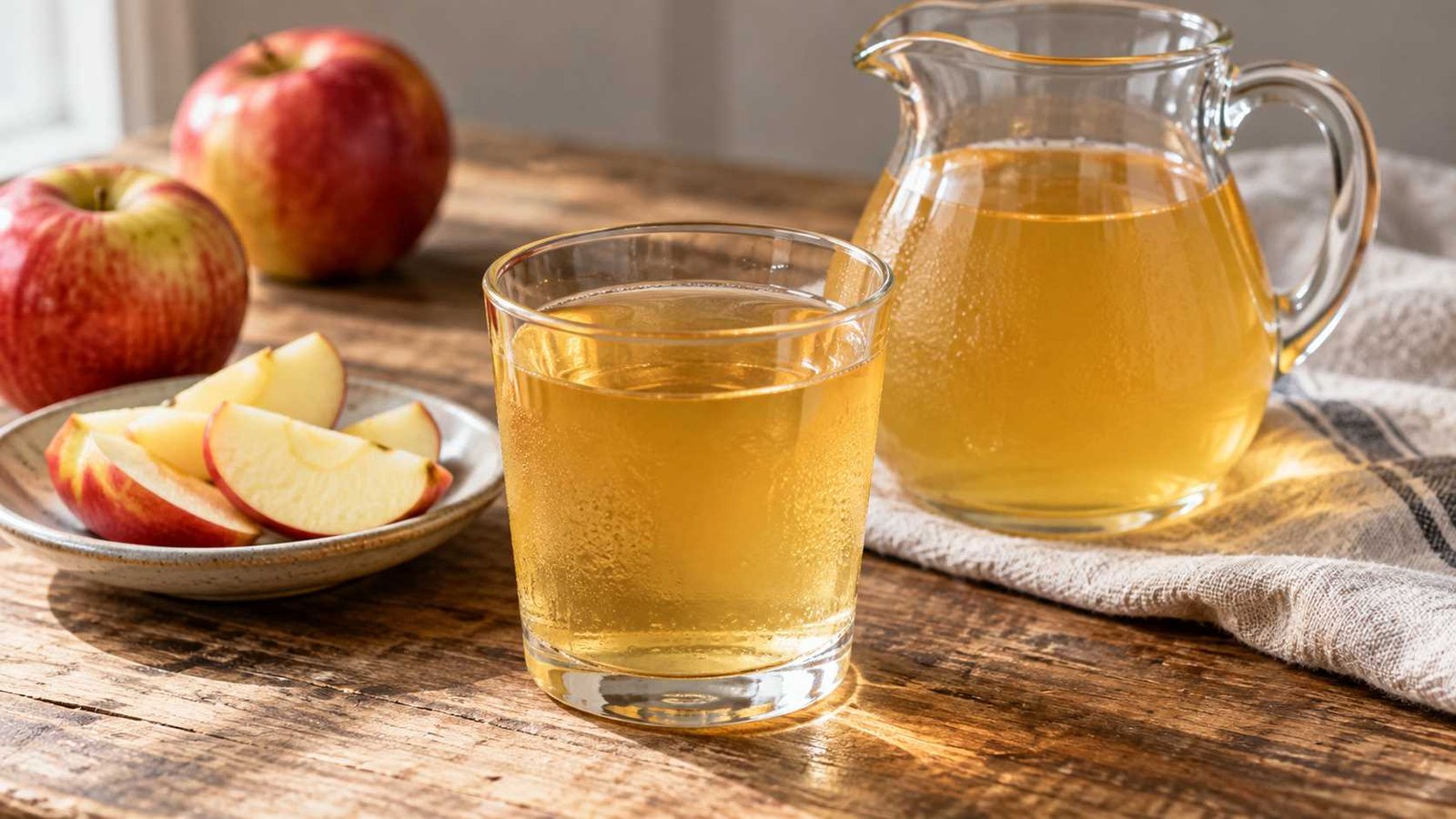
Recipe card
Chilled Apple Zhivchyk-Style Drink with Lemon
40 minutes preparation and cooking, plus about 2 hours chilling in small containers; chill until cold. Do not leave the full pot cooling on the counter.
Equipment: 5 litre or larger saucepan, knife, chopping board, sieve, heatproof bowl, kitchen scale, ladle, shallow heat-safe storage containers and clean jug.
Ingredients
Apple drink
To serve
Instructions
Wash and slice the apples
Wash apples under running water, discard spoiled fruit, core and slice evenly. Leave clean skins on for colour and aroma.
Simmer until fragrant
Combine apples and 3 litres water in a large saucepan. Bring to a boil, then reduce to a gentle simmer for 15–20 minutes until the fruit is soft and the liquid smells distinctly of apple.
Strain and adjust sweetness
Carefully strain through a clean sieve into a heatproof bowl. Stir 200 g sugar into the warm liquid until dissolved; taste a cooled spoonful and add more if desired, up to 300 g.
Add lemon and chill promptly
Stir in lemon juice. Divide into clean shallow heat-safe containers and refrigerate promptly within 2 hours (1 hour above 32°C/90°F). Chill until cold, then transfer to a clean covered jug if desired.
Serve still or sparkling
Pour into glasses over ice if desired. For fizz, add chilled sparkling water just before drinking. Do not add yeast or ferment the drink in sealed bottles.
Choosing apples and adjusting sweetness
Use fragrant apples that are firm and free from mould or rot. A mixture of sweet and tart varieties gives a more balanced drink than very mild apples alone. Leave the clean skins on for colour and aroma, but remove the cores. Slice the fruit evenly so it softens at the same rate.
Three litres of water produce a lighter drink than pressed apple juice. The sugar range is deliberately flexible: dissolve the lower amount first, cool a spoonful and taste before adding more. Lemon juice brightens the apple flavour rather than acting as a preservation treatment. Do not assume that extra sugar or lemon makes this drink safe for cupboard storage.
Simmering and straining
Bring the apples and water to a boil in a roomy pot, then reduce the heat. A gentle simmer releases flavour without breaking all the fruit into tiny pieces. After 15–20 minutes the slices should be soft and the liquid fragrant. Strain carefully into a heatproof bowl. For a clearer drink, avoid squeezing the cooked fruit through the sieve. A little cloudiness is normal.
How to serve a sparkling version
This is a cooked, refrigerated adaptation rather than a fermented drink. Add cold sparkling water to individual glasses just before serving. Start with a small splash and adjust to taste; more sparkling water makes the drink lighter and less sweet. Never add yeast to a sealed bottle or use room-temperature bottle fermentation for this recipe.
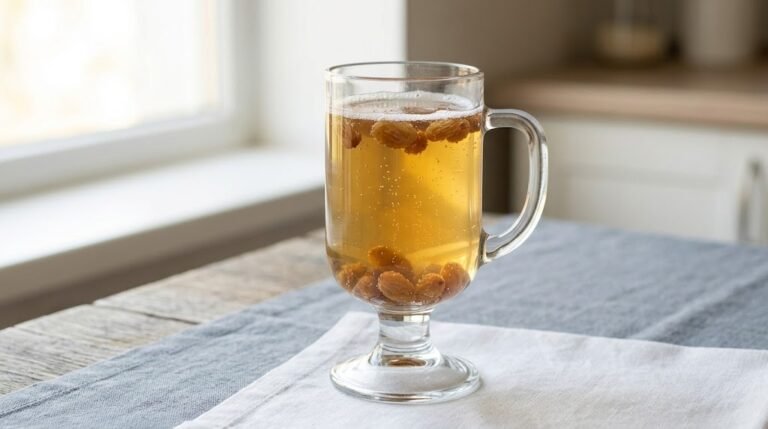
Serve with breakfast or a simple afternoon snack. For a closely related still fruit drink, see apple compote; for a dried-fruit version, try uzvar with dried apples, pears and prunes. A mint and lime nonalcoholic mojito offers another cold drink option.
Cooling and storage
Divide the strained drink into shallow heat-safe containers rather than waiting for a large pot to cool. Refrigerate promptly at 4°C (40°F) or below within two hours, or one hour above 32°C (90°F), and use within three days. The general cooling guidance is consistent with USDA leftover safety advice. Chill until cold; the estimated two-hour chilling period depends on container size and refrigerator temperature. Freeze portions in freezer-safe containers with expansion space and thaw in the refrigerator if needed. Do not store at room temperature or treat this as a canning recipe.
No major common allergens are intentionally added; check packaged sparkling water and any optional additions if needed. The exact yield varies with evaporation and liquid retained by the apples.
Frequently asked questions
Is this the same as commercial Zhivchyk?
No. It is a homemade apple-lemon drink inspired by the flavour, not a reproduction of the commercial formula.
Can I make it without sugar?
Yes. Use sweet apples and adjust the flavour with lemon; refrigerate it in the same way.
Why is the drink cloudy?
Fine fruit particles may pass through the sieve. Strain again through clean fine mesh without pressing the pulp.
Can I use sparkling water for the simmer?
Use still water for cooking. Heat drives off carbonation, so add sparkling water to the glass after chilling.
Can I use the cooked apple pieces?
If handled safely, they can be chilled promptly and eaten as soft cooked fruit; the flavour will be milder.
Can I keep the drink at room temperature?
No. This method is not a validated preservation process. Keep refrigerated and use within three days.
More recipes to try


Spotted a detail that needs correcting? Contact the FeastDelights editors.