Beef Beshbarmak Recipe with Homemade Flat Noodles
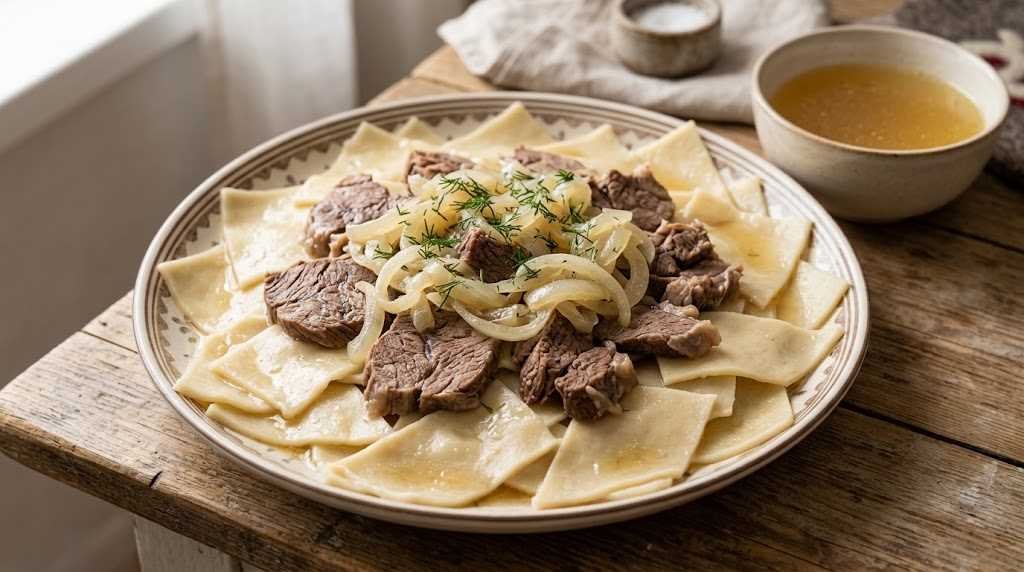
Tender simmered beef served over broad homemade noodle squares with onions softened in the meat broth. This beshbarmak recipe makes a Kazakh-style platter of tender beef, broad noodle squares and onions softened in broth. The meat cooks first at a gentle simmer, creating the liquid used to flavor the noodles and onion topping. Homemade dough gives the noodles a slightly chewy bite that stands up to the rich broth without turning heavy. Beef is an accessible choice for this version, while other regional preparations use lamb or horse meat. Allow about three and a half hours, with dough preparation fitted into the meat simmering time. Serve on a warm platter and offer extra broth in small bowls. The meal is straightforward, but patient cooking and thin, even noodle sheets make a noticeable difference.
A clear broth and broad, tender noodles
Use beef with connective tissue, such as chuck or brisket, and keep it in large pieces during simmering. A rolling boil clouds the broth and breaks meat into ragged fragments. Skim the early foam, then maintain small bubbles with the lid slightly ajar. Add hot water only as needed to keep the beef just submerged.
The dough should feel firm and smooth, not sticky. Rest it while the meat cooks so rolling becomes easier. Roll thin sheets and cut squares or diamonds rather than long ribbons. Keep the pieces lightly floured and separated until cooking. Use the broth in batches: reserve some for serving, cook onions in another portion, and cook noodles last so they reach the platter while still hot and supple.
Recipe at a glance
Yield: 6 servings. Active preparation: about 40 minutes. Cooking: about 190 minutes. Total elapsed time: about 210 minutes. The 30-minute dough rest and 20 minutes of active dough preparation overlap meat simmering; do not add them again.
How to make beef beshbarmak with homemade flat noodles
Recipe card
Beef Beshbarmak Recipe with Homemade Flat Noodles
Equipment: Large 6–7 litre stockpot; fine strainer; medium saucepan; rolling pin; dough cutter or knife; large warm serving platter; slotted spoon
Ingredients
Meat and broth
Noodles
Onions
Instructions
Start the meat broth
Put beef in the stockpot with 3 litres water, or enough to cover it. Bring slowly to a simmer and skim the foam for 10–15 minutes. Add the whole onion, bay leaves, peppercorns and 2 teaspoons salt.
Simmer until tender
Reduce heat to low, leave the lid slightly ajar and simmer for about 2 1/2 hours, or longer if necessary, until a fork enters easily and the meat separates without force. Keep the meat just submerged with a little hot water if needed.
150 minMake dough during the simmer
Mix flour and 1/2 teaspoon salt. Add eggs and 120 ml water. Knead for 8 minutes until firm and smooth; add 1 tablespoon water only if dry flour remains. Cover and rest 30 minutes. This work and rest happen while the beef simmers.
Roll and cut the noodles
Divide dough into four portions. Roll one at a time on a lightly floured surface to about 1–2 mm thick. Cut into roughly 5 cm (2 inch) squares or diamonds. Lay separately on lightly floured trays and keep the remaining dough covered.
Strain broth and prepare onions
Lift out tender beef and cover to keep warm. Strain the broth, discard the cooked whole onion and spices, and taste for salt. Put sliced onions in a saucepan with 500 ml (about 2 cups) broth and ground pepper. Simmer gently for 7–10 minutes until softened but not collapsed. Reserve another 750 ml broth for serving.
7 minCook the noodles in broth
Bring the remaining broth to a gentle boil. Cook noodles in two or three batches for about 3–5 minutes each, until tender with no floury center. Lift with a slotted spoon and arrange loosely on the warm platter. Add a little hot water to the cooking broth if the level becomes too low.
Assemble and serve
Slice or pull beef into bite-sized pieces. Put it over the noodles, spoon onions and a little onion broth on top, and serve immediately. Offer the reserved hot broth in separate small bowls.
How to tell when it is ready
Beef separates easily with a fork, noodles are tender without a floury core, and onions are soft but still recognizable. The finished platter has enough broth to moisten the noodles without turning into soup.
Tips
- Choose a simmering cut rather than lean quick-cooking steak.
- Skim the initial foam for a cleaner-tasting broth.
- Keep the pot at a quiet simmer instead of a rolling boil.
- Prepare and rest the dough while the meat cooks to avoid unnecessary extra time.
- Roll every dough sheet to an even thickness before cutting.
- Cook noodles in batches and serve promptly before they stick together.
Troubleshooting
- Beef remains tough: continue simmering; time is a guide, while fork tenderness is the deciding cue.
- Noodles stick: keep uncooked pieces separated and cook in small batches, then arrange loosely with a little broth.
- Broth is too salty: dilute with hot water before cooking noodles or making the onion topping.
Substitutions
- Lamb shoulder can replace beef; simmer until tender and expect a different flavor and timing.
- Fresh pasta sheets cut into broad squares can replace homemade noodles; follow the package cooking guidance and check texture.
- Brisket and chuck both work, but avoid trimming away every bit of fat because it contributes to the broth.
Variations
- Use a mixture of lamb and beef for a richer meat platter.
- Cut the noodles into diamonds rather than squares while keeping the thickness even.
- Keep the onion topping slightly firmer or softer according to preference without frying it.
Serving suggestions
- Bring the platter to the table while the noodles are still hot.
- Offer extra hot broth in small bowls.
- Serve a fresh cucumber and tomato salad on the side.
- Add crisp sliced radishes for a contrast to the soft meat and noodles.
- Offer a yogurt drink separately if desired, with dairy clearly identified.
Make ahead
Simmer the beef one day ahead, cool promptly and refrigerate with its broth. Lift off only excess hardened surface fat, then reheat thoroughly. Make noodles and onion topping on the serving day. Total time assumes dough work overlaps the meat simmer; cooking the components one after another takes longer.
Storage
Store beef, broth and noodles separately when possible. Refrigerate promptly in shallow covered containers and use within 3 days. Reheat beef and noodles with broth until the center reaches 74°C (165°F). Freeze beef and broth for up to 2 months for best quality; freshly cooked noodles have a better texture than thawed ones.
Food safety
Separate raw meat tools from dough and salad tools, and do not wash raw beef. Do not taste uncooked dough. Divide broth into shallow containers for quick cooling instead of leaving the entire stockpot on the counter. Refrigerate within 2 hours, or 1 hour above 32°C (90°F).
Frequently asked questions
Do I have to use horse meat for beshbarmak?
No. Regional and household preparations use different meats. This recipe specifically uses beef and does not claim to reproduce every ceremonial version.
Can I boil the noodles in water instead?
You can, but they will absorb less meat flavor. Cooking them in a portion of the strained broth is a defining part of this version.
More recipes to try

Spotted a detail that needs correcting? Contact the FeastDelights editors.