Hutsul Sour Cream Banosh with Bryndza
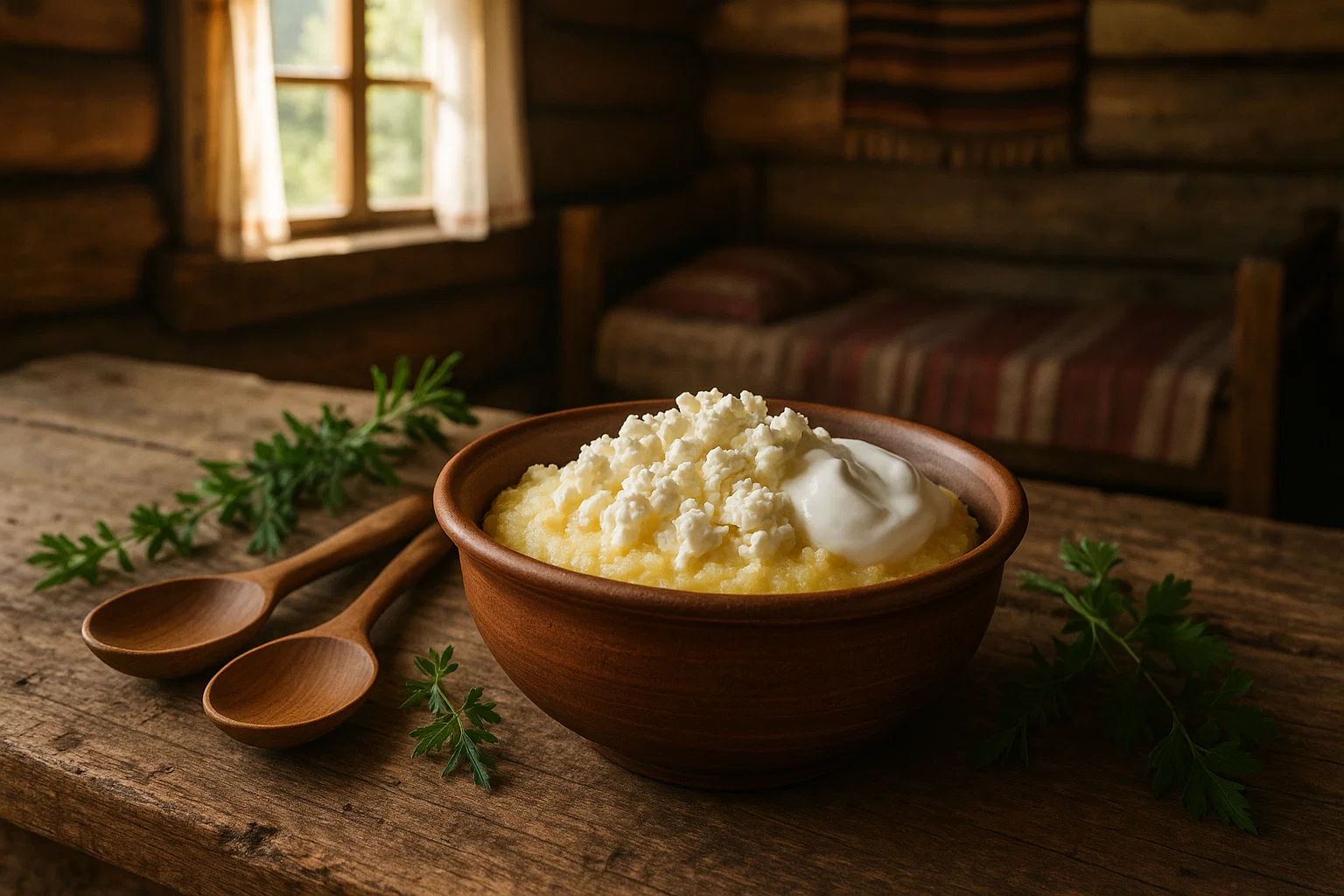
This Hutsul banosh is a creamy Carpathian cornmeal dish cooked gently with sour cream and water, then finished with crumbled bryndza cheese. Medium-ground cornmeal provides a soft but substantial texture, while the salty cheese balances the rich, tangy porridge. Sprinkle the cornmeal in gradually and stir over low heat so the grains soften without lumps or scorching. This stovetop version makes four portions in about 35 minutes, with optional butter and a short rest before serving. Enjoy it hot with mushrooms or cracklings if desired.
Hutsul banosh with bryndza is a rich cornmeal porridge associated with the Ukrainian Carpathians. It has a creamy, gently tangy base from sour cream and a salty finish from crumbled cheese. This stovetop version uses medium-ground cornmeal, sour cream and water, with optional butter. It makes four portions in approximately 35 minutes, including a short rest. Serve hot while the porridge is soft enough to spoon into bowls.
Recipe card
Hutsul Sour Cream Banosh with Bryndza
Allow approximately 15–20 minutes after adding water and 5 minutes resting. Coarser cornmeal may require longer.
Equipment: Heavy-bottomed saucepan, whisk, long-handled wooden spoon, measuring cups, serving bowls
Ingredients
Main ingredients
Instructions
Warm the sour cream
Warm the sour cream in a heavy-bottomed saucepan over low heat without bringing it to a rolling boil.
Gradually add cornmeal
Sprinkle in medium-ground cornmeal in a thin stream, stirring continuously with a whisk or wooden spoon to prevent dry lumps.
Stir in water and simmer gently
Gradually stir in measured water as the mixture thickens. Simmer very gently for about 15–20 minutes, scraping the bottom often, until grains are tender and the porridge is thick and creamy.
Season and rest
Taste and add only a little salt because bryndza is salty. Stir in optional butter, cover and rest off the heat for 5 minutes.
Serve with bryndza
Divide into four warm bowls and crumble bryndza over each portion. Serve immediately.
Banosh and Hutsul cooking traditions
Banosh, also spelled banush, is a traditional dish of the Hutsuls in the Carpathians. The Carpathian National Nature Park’s culinary guide describes banosh as part of local food culture. Versions vary with the available cream, cornmeal and toppings. Rich sour cream, bryndza and pork cracklings are familiar combinations. This home-kitchen version uses added water and makes the butter optional; cracklings and mushrooms are serving variations rather than required ingredients.
Choosing the cornmeal, sour cream and cheese
Use medium-ground cornmeal, sometimes sold as medium polenta. Fine corn flour can thicken too quickly and create a different texture, while very coarse grits may take substantially longer. Instant polenta also cooks faster than the cornmeal used here. Measure one US cup loosely and level it; the weight varies by grind, so the original volume is retained. The two cups of sour cream are about 480 ml, and the cup of water is about 240 ml.
Choose full-fat sour cream for a rich result; reduced-fat products can separate more readily when heated. The 150 g (5.3 oz) bryndza is a crumbly, salty cheese that provides contrast with the mellow cornmeal. Feta is an accessible substitute, although its flavour and texture are not identical to Hutsul bryndza. Check the rennet source if you need a vegetarian cheese. The optional tablespoon of butter adds richness; it is not necessary for the cornmeal to set.
How to prevent lumps and scorching
Use a heavy-bottomed saucepan over low heat. Warm the sour cream gently, avoiding a rolling boil. Sprinkle the cornmeal in a thin stream while stirring with a whisk or wooden spoon. Adding the entire cup at once can trap dry meal inside lumps. As the mixture thickens, gradually stir in the measured water to loosen it. Maintain a gentle simmer, scraping the bottom and corners of the pan often. Thick cornmeal may splutter, so keep the heat low and use a long-handled spoon.
Cook about 15–20 minutes after adding the water, or longer if the grind requires it. Taste a small cooled spoonful: the grains should no longer be hard or raw-tasting. The finished mixture should be thick and creamy, falling slowly from a spoon. Some richer traditional versions show small drops of fat at the surface as they finish, but do not force this by increasing the heat; this water-added version may look different. Stir in optional butter, season lightly and rest covered for about five minutes.
Troubleshooting
Lumpy cornmeal: Whisk while the mixture is still loose and add the remaining water gradually. Gritty texture: Continue simmering gently until the grains soften; add a little hot water if necessary to prevent drying. Scorched bottom: Reduce heat, stir frequently and transfer the unburnt portion to another pan without scraping burnt material into it. Separated sour cream: Use full-fat sour cream and gentler heat. Too salty: Add very little salt to the porridge because the cheese contributes substantial seasoning.
Serving and variations
Spoon the hot banosh into four shallow bowls and crumble bryndza over the top. Serve with cooked mushrooms or pork cracklings if desired. A spoonful of mushrooms in sour cream sauce makes a rich accompaniment, while a fresh cabbage and bell pepper salad adds crunch. For a less rich alternative, see the separate water-based banosh-style cornmeal recipe. This dish contains milk. Cornmeal itself is naturally gluten-free, but check all product labels and cross-contact if required.
Make ahead and storage
Measure ingredients in advance but cook shortly before serving, as the porridge thickens as it cools. Refrigerate leftovers in shallow covered containers at 4°C (40°F) or below within 2 hours (1 hour above 32°C/90°F). Use within 3 days. Reheat gently with a splash of water, stirring until 74°C (165°F) throughout. Freezing may make the dairy-based porridge grainy. Keep any extra bryndza refrigerated separately. See official food handling guidance.
Frequently asked questions
Is banosh the same as polenta?
Both use cornmeal, but this Hutsul dish is distinguished by its dairy-rich cooking liquid and bryndza topping.
What is bryndza?
A salty crumbly cheese associated with Central and Eastern European traditions, including Hutsul cheese-making. Feta is an accessible but different substitute.
Can I use instant polenta?
It cooks faster and may require different liquid quantities. Follow its package directions; the stated timing is for medium-ground cornmeal.
Why is my banosh gritty?
The grains may need longer cooking. Keep the heat low and stir in a little hot water if the mixture becomes too thick.
Can I use milk instead of sour cream?
Milk produces a lighter, less tangy porridge. It changes the richness and may require adjustments to the liquid ratio.
Is banosh vegetarian?
This version can be vegetarian if the cheese uses suitable rennet and no pork cracklings are added.
More recipes to try





Spotted a detail that needs correcting? Contact the FeastDelights editors.