Apricot Fruit Leather Made in a Dehydrator
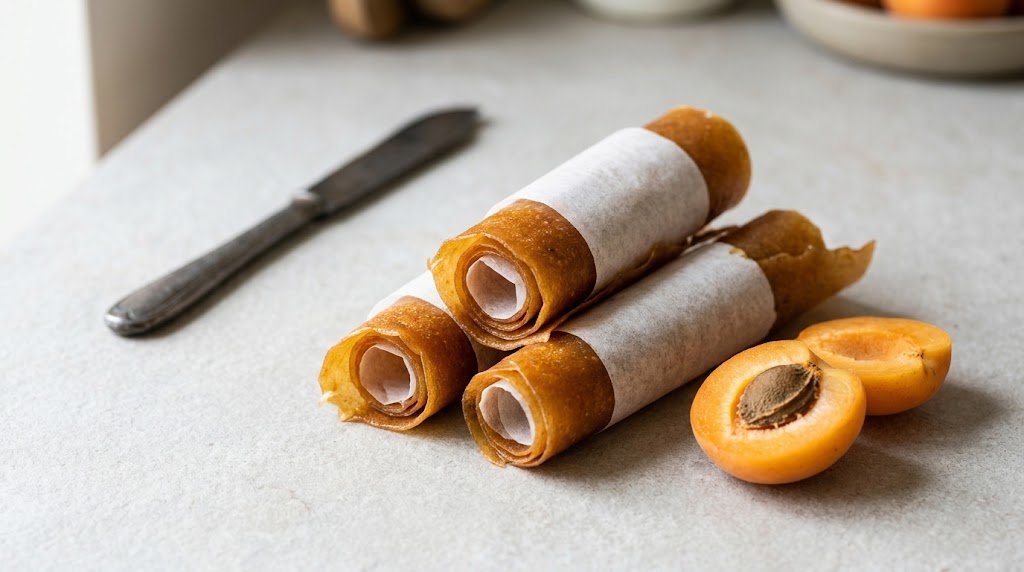
Apricot fruit leather is a thin sheet of fruit puree dried until it bends without feeling wet.
Apricot fruit leather is a thin sheet of fruit puree dried until it bends without feeling wet. A dehydrator that holds 60°C (140°F) makes the process easier to control than an oven that cannot stay at a low temperature. Ripe apricots provide both flavour and natural sweetness, so extra sugar is optional. Drying time changes with fruit moisture, tray thickness and airflow. Use the dryness checks rather than assuming every batch finishes at exactly eight hours.
Recipe at a glance
Yield: about 16 strips. Prep: 20 minutes. Cook: 480 minutes. Total: 530 minutes, including 30 minutes of additional resting, cooling, chilling or draining where stated. Times are estimates; follow the doneness checks.
Equipment
Dehydrator with food-safe fruit-leather inserts, blender, spatula, baking paper.
Ingredients and directions
Recipe card
Apricot Fruit Leather Made in a Dehydrator
Equipment: Dehydrator with food-safe fruit-leather inserts, blender, spatula, baking paper.
Ingredients
Instructions
Prepare puree
Wash and pit apricots, then blend flesh with lemon juice until smooth. Add optional sugar if the fruit is very tart. Measure the actual puree obtained.
Spread
Use food-safe fruit-leather trays designed for your dehydrator. Spread puree evenly about 3 mm (1/8 inch) thick, leaving a clear margin. Use enough trays to maintain that thickness.
Dry
Dry at 60°C (140°F), checking after 6 hours. Drying commonly takes 6–10 hours; 8 hours is used in the total-time estimate. Follow the appliance instructions and rotate trays if needed.
Check and cool
Leather is ready when it lifts cleanly, has no wet spots and does not leave an indentation when pressed. Cool for 30 minutes, peel, cut into strips and roll with baking paper.
Pack
Pack only completely cooled strips. Refrigerate for short-term use or freeze for longer keeping; do not pack wet or underdried leather.
Doneness checks
Leather lifts cleanly, has no wet spots and leaves no lasting finger indentation.
Helpful tips
- Spread a uniform thin layer to prevent wet centres.
- Use approved solid fruit-leather inserts.
- Check more than one spot before stopping drying.
- Cool completely before rolling and packing.
Troubleshooting
- A little surface tack can remain, but there should be no wet patches or lasting finger indentation and the sheet should peel cleanly.
- Check more than one spot before stopping drying.
Serving ideas
- Cut into narrow strips for a snack.
- Pack between pieces of baking paper.
- Serve with nuts as a separate snack pairing.
- Cut small pieces to add to a lunchbox.
Substitutions
Peaches can replace apricots by flesh weight; drying time may change. Do not substitute a thick layer of puree for the stated thin spread.
Variation
Blend in a pinch of cinnamon for a warmer fruit flavour.
Make ahead
Wash and pit fruit ahead and refrigerate promptly. Start drying early enough to monitor the final stage rather than leaving an uncertain batch packed overnight.
Storage and reheating
Refrigerate cooled, fully dried leather in an airtight container for up to 1 month for quality, or freeze for longer keeping. Discard any mouldy leather. Refrigeration cannot rescue an underdried batch.
Food safety
Dry to the stated endpoint before packing; do not package wet puree as finished leather. Follow dehydrator instructions.
Frequently asked questions
Is tackiness the same as wetness?
A little surface tack can remain, but there should be no wet patches or lasting finger indentation and the sheet should peel cleanly.
Can I use any oven?
Only one that reliably holds 60°C (140°F) with appropriate airflow. This workbook specifies a dehydrator rather than an unverified oven shortcut.
How to tell when it is ready
Leather lifts cleanly, has no wet spots and leaves no lasting finger indentation.
Tips
- Spread a uniform thin layer to prevent wet centres.
- Use approved solid fruit-leather inserts.
- Check more than one spot before stopping drying.
- Cool completely before rolling and packing.
Troubleshooting
- A little surface tack can remain, but there should be no wet patches or lasting finger indentation and the sheet should peel cleanly.
- Check more than one spot before stopping drying.
Substitutions
- Peaches can replace apricots by flesh weight; drying time may change. Do not substitute a thick layer of puree for the stated thin spread.
Variations
- Blend in a pinch of cinnamon for a warmer fruit flavour.
Serving suggestions
- Cut into narrow strips for a snack.
- Pack between pieces of baking paper.
- Serve with nuts as a separate snack pairing.
- Cut small pieces to add to a lunchbox.
Make ahead
Wash and pit fruit ahead and refrigerate promptly. Start drying early enough to monitor the final stage rather than leaving an uncertain batch packed overnight.
Storage
Refrigerate cooled, fully dried leather in an airtight container for up to 1 month for quality, or freeze for longer keeping. Discard any mouldy leather. Refrigeration cannot rescue an underdried batch.
Food safety
Dry to the stated endpoint before packing; do not package wet puree as finished leather. Follow dehydrator instructions.
Frequently asked questions
Is tackiness the same as wetness?
A little surface tack can remain, but there should be no wet patches or lasting finger indentation and the sheet should peel cleanly.
Can I use any oven?
Only one that reliably holds 60°C (140°F) with appropriate airflow. This workbook specifies a dehydrator rather than an unverified oven shortcut.
More recipes to try
Spotted a detail that needs correcting? Contact the FeastDelights editors.