Ukrainian Cottage Cheese Casserole
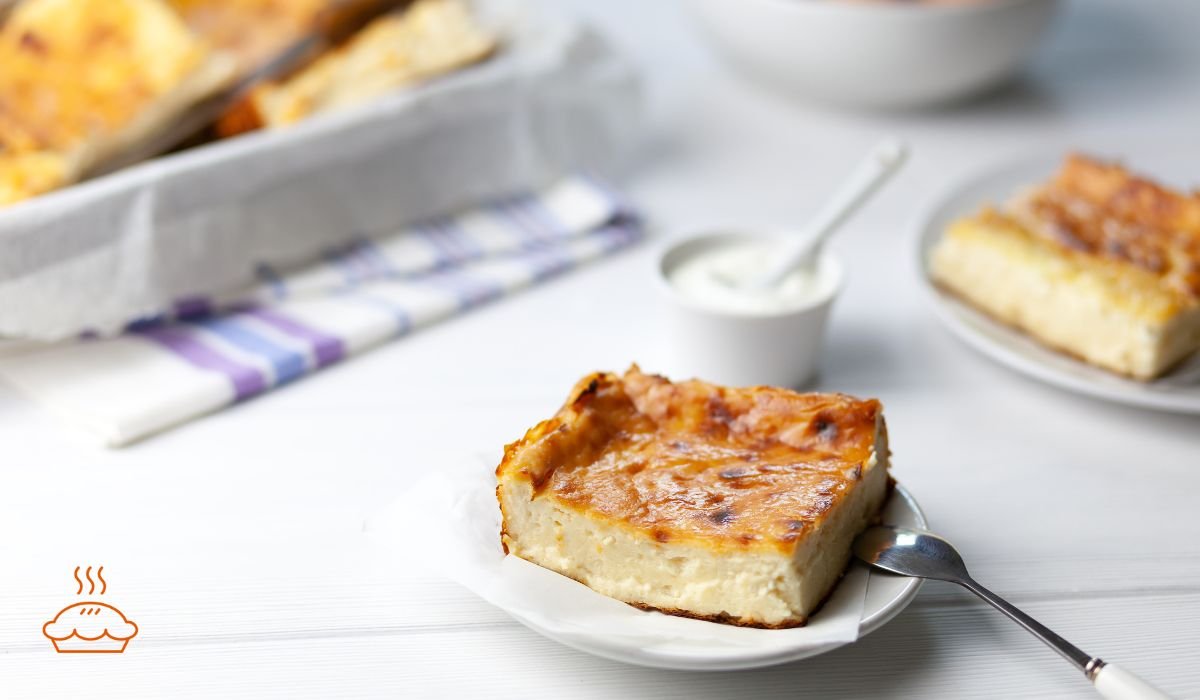
This Ukrainian cottage cheese casserole is a gently sweet baked curd dish made with tvorog, eggs, semolina, sour cream and vanilla. Its tender, sliceable filling becomes firmer as it rests after baking. Well-drained cottage cheese can stand in for tvorog, while optional raisins or dried apricots add little pockets of sweetness. Make eight slices for breakfast, an afternoon snack or dessert. Allow about 85 minutes including a semolina hydration period and a short rest after baking.
Ukrainian cottage cheese casserole is a sweet baked curd dish with a tender, gently set texture. It combines 500 g tvorog or drained cottage cheese with three eggs, semolina and sour cream. The recipe makes eight slices in about 85 minutes, including hydration and resting. Serve with berries, jam or sour cream for breakfast or dessert.
What kind of cottage cheese works best?
Tvorog is a cultured curd cheese that is typically drier than cottage cheese sold in tubs with cream dressing. Look for a relatively dry, unsalted or mildly flavoured curd. If using wet cottage cheese, drain it in a fine sieve in the refrigerator, then weigh out 500 g of drained cheese. This avoids adding excess liquid to the batter. Mash with a fork for a slightly textured result or blend briefly for a smoother casserole.
Semolina is milled durum wheat. It absorbs moisture as the batter rests, helping the casserole hold together. Use the original three level tablespoons; the precise weight depends on grind and packing. Sour cream contributes richness and vanilla sugar adds aroma. Optional raisins or chopped dried apricots should be distributed evenly through the batter; if rinsed, drain thoroughly.
Recipe card
Ukrainian Cottage Cheese Casserole
10 minutes active preparation, 15 minutes hydration, up to 50 minutes baking and at least 10 minutes resting. Allow extra time to drain wet cottage cheese or cool completely.
Equipment: Kitchen scale, fine sieve, mixing bowl, fork or blender, spatula, medium baking dish (about 20 cm square as a starting estimate), oven thermometer or instant-read food thermometer.
Ingredients
Curd mixture
For the dish
Optional fruit
Instructions
Drain and prepare the curds
Drain wet cottage cheese in a sieve in the refrigerator if needed. Weigh the drained curds and mash or blend until the desired texture.
Mix the casserole batter
Combine curd, eggs, sugar, sour cream, vanilla sugar, semolina, baking powder and salt. Fold in optional raisins or chopped apricots.
Hydrate semolina and prepare the dish
Cover and rest the mixture in the refrigerator for 15 minutes. Preheat the oven to 180°C (350°F) and butter a medium baking dish.
Bake until set
Spread the mixture evenly and bake for 40–50 minutes, or longer if needed, until the surface is golden and the centre reaches at least 71°C (160°F).
Rest and slice
Rest for at least 10 minutes before slicing. Serve warm or refrigerate promptly for chilled servings.
Hydrate, bake and rest
Mix curds, eggs, sugar, sour cream, semolina, vanilla sugar, baking powder and salt until evenly combined. Allow 15 minutes for hydration, keeping the bowl covered in the refrigerator. Butter a medium baking dish. A 20 cm (8 inch) square dish is a practical starting size, but the original source does not give a measurement and the baking depth needs testing.
Spread the mixture evenly and bake at 180°C (350°F) conventional heat. Begin checking at 40 minutes. The surface should look golden and the centre should be set rather than liquid. Because the mixture contains eggs, check the centre reaches at least 71°C (160°F). If the top browns early, loosely shield it with foil and continue baking. Rest at least ten minutes before cutting; a longer cooling period gives cleaner slices.
Troubleshooting and serving ideas
If the casserole is watery, first check the moisture of the curd and whether the semolina rested before baking. Do not automatically add large amounts of flour, which can produce a heavy texture. If the centre is still liquid, continue baking and check its temperature. A little graininess may be natural in tvorog; blending the cheese before mixing can make the texture more uniform.
Serve with sour cream, berries, fruit jam or plain yoghurt. Use raisins or diced dried apricots as optional additions rather than changing the entire base mixture. For other Ukrainian curd-cheese dishes, try Ukrainian syrniki or apple syrniki.
Make ahead and allergens
Drain cheese ahead and keep it refrigerated. Bake the assembled batter rather than leaving it at room temperature. Cool leftovers promptly, refrigerate and follow FDA safe food handling guidance. This recipe contains milk, eggs and wheat in semolina; check dried fruit for sulphites if relevant. The dish size and timing are editorial estimates awaiting kitchen confirmation.
Frequently asked questions
What is tvorog?
It is a relatively dry cultured curd cheese. Well-drained cottage cheese can substitute, although texture varies.
Can I skip the semolina rest?
It is best to allow the original 15 minutes so the semolina absorbs moisture before baking.
Why is my casserole runny?
Wet curds or incomplete baking can cause excess moisture. Drain the cheese and check the centre temperature.
Can I leave out dried fruit?
Yes. The raisins or apricots are optional.
Can I serve it cold?
Yes. Refrigerate promptly after baking and serve chilled with berries or jam.
More recipes to try






Spotted a detail that needs correcting? Contact the FeastDelights editors.