Black Prince Chocolate Cherry Cake
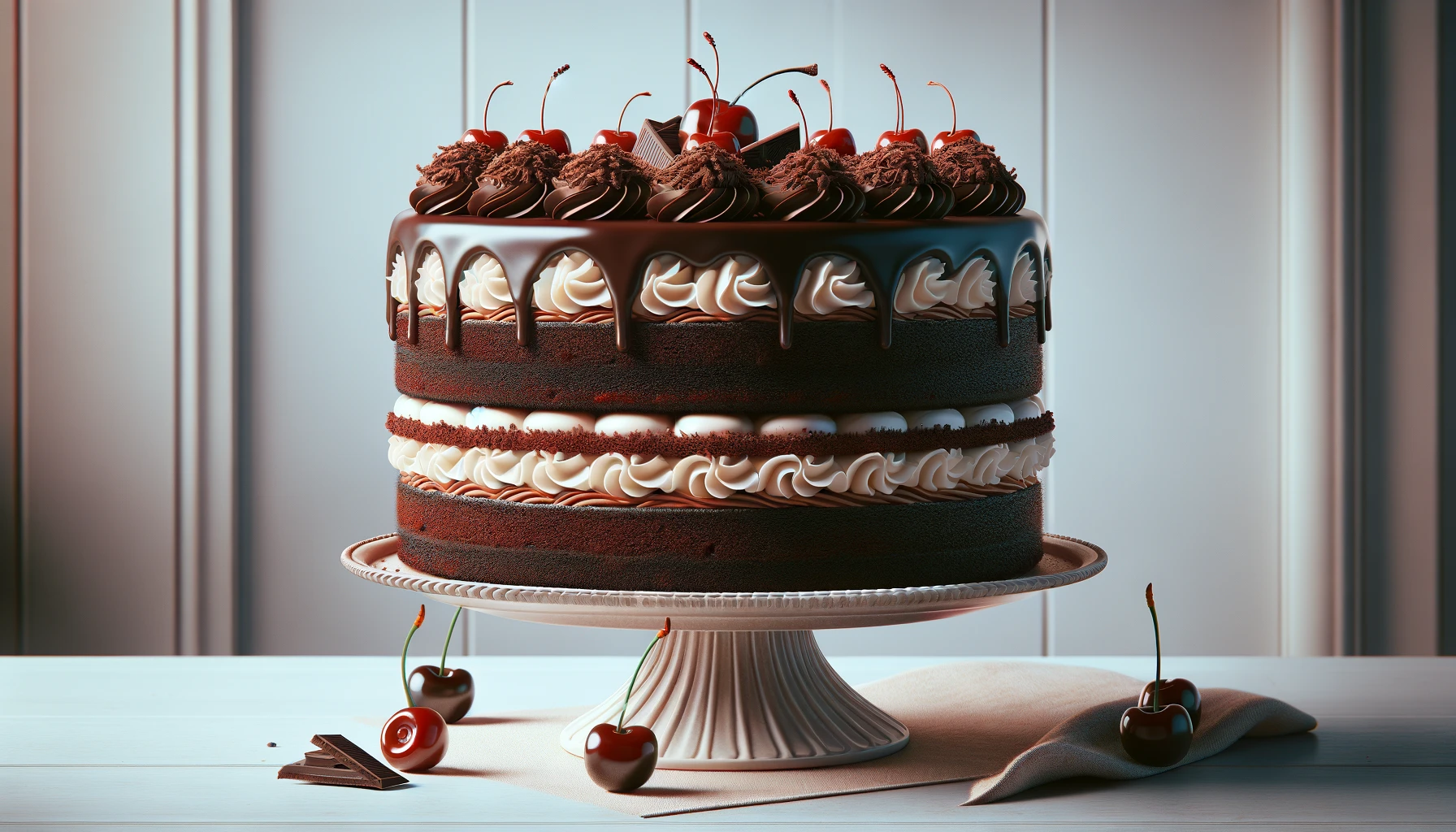
Black Prince chocolate cherry cake combines soft cocoa and kefir sponge layers with a sweet condensed-milk buttercream, optional tart cherries and grated dark chocolate. Two 20 cm round pans make a cake serving ten to twelve people. The cultured-milk batter uses both baking soda and baking powder, giving a moist crumb with a gentle tang. Cool the layers completely before assembling and chill the finished cake for at least three hours. Allow about five hours and twenty minutes overall.
Black Prince chocolate cherry cake is a home-style cocoa layer cake made with plain kefir, butter and a condensed-milk frosting. Drained cherries are an optional filling that brings a tart contrast to the sweet cream. The recipe makes ten to twelve slices from two 20 cm (8 inch) pans. Allow about five hours and twenty minutes including cooling and chilling, and prepare both pans before mixing the batter.
What is Black Prince cake?
Black Prince is a name used for several home-style chocolate cakes in Eastern European baking. This version is characterised by a cocoa batter made with kefir, a cultured milk, rather than the sour cream used in the related Prague-style chocolate cherry cake. The frosting contains butter and sweetened condensed milk, and cherries may be placed between the layers. The grated chocolate is a simple decoration rather than a poured glaze.
For this particular formula, the two sponge layers are baked separately so they can be stacked without cutting a deep cake horizontally. A tender crumb and stable filling matter more than impressive height. There is no claim that this is the only traditional formula or that a different cake with the same name will have identical proportions.
Ingredients for the kefir cocoa sponge
Weigh 250 g all-purpose flour and 35 g unsweetened cocoa powder. Cocoa adds both flavour and dry material, so replacing it with drinking chocolate changes the sugar and dry ingredient balance. Use baking soda and baking powder in their measured amounts. Kefir supplies acidity that reacts with baking soda, while baking powder contains its own raising ingredients. The exact acidity of kefir varies by brand, so measure carefully and avoid adding extra soda simply because the cake seems dense. Excess soda can leave a bitter or soapy taste.
Choose plain unsweetened kefir rather than a flavoured drinking yoghurt. The 240 ml is approximately one US cup. Bring the kefir and three large eggs towards room temperature briefly before mixing so the melted butter is less likely to solidify into small lumps. Keep the separate portions of butter clearly identified: 100 g melted and cooled for the batter, and 200 g softened for frosting. The melted butter should be fluid but not hot. The granulated sugar is the original measured quantity; reducing it substantially would affect the sponge’s moisture and structure.
Set aside two round 20 cm (8 inch) cake pans with similar depth and material. Grease them and line their bases with parchment. If you have only one pan, consider obtaining a second rather than leaving half the mixed kefir batter standing while the first layer bakes. The raising agents begin reacting once the wet and dry mixtures meet. A single deep cake would need its own baking-time assessment.
Prepare the optional cherries and frosting ingredients
The 200 g pitted cherries are optional but define the cherry version of the cake. Use the drained weight. Frozen cherries can be thawed in the refrigerator and blotted dry, and jarred fruit should be drained of its syrup. Check for missed stones. Large wet pieces can slide between layers or bleed juice into the cream. If the fruit is unusually large, halve it after draining. Keep the cherries refrigerated until assembly.
Sweetened condensed milk is thick and concentrated; ordinary milk or evaporated milk is not interchangeable. The frosting uses 200 g unsalted butter and 300 g sweetened condensed milk. Use softened butter that yields under a fingertip but is not greasy or melted. The condensed milk should be at a similar, moderately cool temperature during mixing. This ratio needs a kitchen check for firmness with the chosen products, especially if the cake will be transported. Use the full listed quantity as the starting formulation, adding the milk gradually and monitoring consistency rather than assuming every brand behaves the same way.
Mix the cake batter
Preheat the conventional oven to 175°C (approximately 350°F). Sift or whisk together the flour, cocoa, baking soda, baking powder and salt. Break up small cocoa lumps so you will not need to mix the batter excessively later. In a large bowl, beat eggs and granulated sugar until paler, thicker and slightly aerated. The mixture need not reach the stiffness of a meringue; a light ribbon falling from the whisk is a useful visual cue.
Mix in the kefir, cooled melted butter and vanilla until evenly incorporated. If the melted butter tends to separate, stir a little of the wet mixture into it first, then return that mixture to the bowl. Add the dry ingredients in additions and fold or stir gently, scraping the bottom. Stop when the batter is evenly chocolate coloured and no dry flour pockets remain. Avoid tasting uncooked flour and egg batter.
Divide the mixture equally between the prepared pans, ideally by weighing each filled pan if they have the same empty weight. Spread gently into an even layer. Do not beat the pans on the worktop repeatedly; a light tap to release an unusually large air pocket is enough. Place the pans in the preheated oven promptly.
Bake and cool the two layers
Bake on the middle rack for 25–32 minutes, provided both pans fit with air circulating around them. If the pans cannot fit safely on one rack, oven-specific timing may differ. Do not open the door during the early rise. Check the cakes around 25 minutes. The tops should spring back lightly and a centre skewer should come out with a few moist crumbs, not glossy wet batter. If one pan finishes sooner, remove it rather than overbaking both. The measured 30-minute cook time is a typical estimate.
Rest the layers for ten minutes in their pans. Loosen the edges gently, turn onto cooling racks and remove the base parchment. Allow the layers to cool completely, roughly 80 minutes including the initial rest as a planning estimate. Larger or thicker layers and warm kitchens may require longer. Even a slightly warm cake can melt butter frosting, so check the centre rather than judging only the surface. Avoid sealing a warm sponge in plastic, which traps condensation.
Recipe card
Black Prince Chocolate Cherry Cake
30 minutes active preparation, about 30 minutes baking both layers, approximately 80 minutes cooling including the pan rest, and at least 180 minutes assembled chilling. Extra time may be needed for separate baking batches or cream chilling. Kefir acidity and frosting firmness require kitchen confirmation.
Equipment: Digital scale, two 20 cm (8 inch) round cake pans, parchment, sieve, mixing bowls, electric mixer, spatula, skewer, cooling racks, serrated knife, grater and serving platter.
Ingredients
Kefir cocoa sponge
Condensed-milk frosting
Optional cherry filling
Decoration
Instructions
Prepare two cake pans
Preheat conventional oven to 175°C (approximately 350°F). Grease and line two 20 cm (8 inch) round cake pans.
Combine the dry ingredients
Whisk or sift flour, cocoa, baking soda, baking powder and salt until evenly mixed.
Mix the kefir cocoa batter
Beat eggs and sugar until pale and aerated. Mix in kefir, cooled melted butter and vanilla. Fold in dry ingredients just until no dry flour remains.
Bake and cool the layers
Divide batter evenly between pans and bake 25–32 minutes until tops spring back and a centre skewer shows no wet batter. Rest 10 minutes in pans, then cool completely on racks.
Make the condensed-milk frosting
Beat softened frosting butter until creamy. Gradually add condensed milk, mixing between additions and checking firmness. Chill briefly if soft; reserve unincorporated milk and record any adjustment if cream is unstable.
Assemble, decorate and chill
Spread firm frosting between completely cooled layers; add drained cherries if using. Frost top and sides and scatter grated chocolate. Cover and refrigerate at least 3 hours before slicing.
How to make condensed-milk buttercream
Beat the softened 200 g butter until creamy and lighter in appearance. Scrape the bowl, then add condensed milk a little at a time while mixing. Wait for each addition to disappear into the butter before adding more. A stable cream should hold a soft ridge when drawn up with a spatula and spread without running. If the mixture becomes increasingly loose, pause before adding the remaining milk and assess the temperature. Keep any unincorporated milk separate and record the amount if the full quantity does not work in your kitchen.
If the mixture is grainy and cold, let the outside of the bowl warm slightly and beat again. If it is glossy, oily and too warm, refrigerate briefly and rewhip. Do not heat the whole mixture until the butter melts. A short chill can help a properly mixed but soft cream; it is not a guaranteed fix for an unstable ratio. Confirm that the frosting supports a small spoonful of cherries before spreading it over the cake. If a formulation adjustment is needed, record it rather than silently changing the listed ingredient quantities.
Assemble and chill the Black Prince cake
Set one cooled layer on a flat serving plate. If the top is substantially domed, trim it level with a serrated knife. Spread an even portion of frosting over the surface. If using cherries, arrange the drained fruit in a single layer, leaving a border around the edge. Avoid a thick mound of fruit in the centre. A small rim of stable frosting can help hold the cherries inside.
Place the second cake layer carefully on top and check alignment from the side. Do not press hard, as this can squeeze out the filling. If the layers shift, refrigerate the partially assembled cake until the frosting firms before proceeding. Spread the remaining frosting over the top and sides with an offset spatula. Scatter the 50 g grated dark chocolate over the surface. Grate the chocolate while cool to prevent it melting in your hands.
Cover without pressing wrapping into the frosting and refrigerate for at least three hours at 4°C (40°F) or colder. The chilling time is important for stable, clean slices. Use a sharp knife, wiping the blade between cuts. If the buttercream feels very firm straight from the refrigerator, let individual portions soften briefly before eating instead of leaving the entire cake at room temperature.
Common problems and practical solutions
Dense or gummy sponge: check the raising agents, avoid overmixing and bake promptly after adding the dry mixture. Check that the centre is fully set before removing each pan. Soapy taste: measure baking soda with a level teaspoon rather than adding extra. Kefir acidity varies, and a persistent alkaline taste is a reason to review the formulation during kitchen testing. Cracked or domed tops: check the oven temperature and pan size. A small dome can be trimmed after cooling.
Dry edges: remove each layer once the centre is cooked and avoid an unnecessarily long bake. Split frosting: adjust ingredient temperatures gently and beat again before adding more milk. Slippery filling: drain the cherries thoroughly and use a thin fruit layer with a sufficiently firm cream. Crumbs in the frosting: cool the cake fully and apply a thin first coating, then chill briefly before finishing.
Serving ideas and variations
Serve with unsweetened coffee or tea, or offer fresh cherries on the side. The cake can be made without fruit for a straightforward cocoa and condensed-milk layer cake. Keep the grated chocolate for contrast. A few well-drained raspberries may be tried instead of cherries, but soft berries can release more juice and need careful handling. For another fruit-and-chocolate dessert, see Black Forest-inspired chocolate cake; for a simpler cultured-milk bake, see cherry kefir cake.
Plain buttermilk may be a possible alternative to kefir, but its thickness and acidity differ and the soda balance would need confirmation. Do not treat milk alone as an equivalent substitute. The recipe contains wheat, milk and eggs. Check the dark chocolate label for soy, nuts and other relevant allergens; gluten-free or dairy-free versions require separate development.
Make ahead, storage and freezing
Bake the sponge layers ahead and wrap after completely cooling. Refrigerate until assembly, or freeze the unfilled layers. Make the frosting and assemble the cake the day before serving if convenient, keeping the cherries cold until needed. Refrigerate covered at 4°C (40°F) or colder within 2 hours of assembly, or 1 hour above 32°C (90°F). Use within 3 days. Freeze completely cooled unfilled layers for up to 2 months for best quality; thaw wrapped in the refrigerator. Freezing the assembled cake can affect the frosting and cherries. Follow FoodSafety.gov chilling guidance for the dairy filling. Do not leave the cake out overnight, and serve only the portions needed.
Allow the cocoa layers to cool, check the cream’s firmness and give the assembled cake its full refrigerated rest before slicing.
Frequently asked questions
What is the difference between Black Prince and Prague-style cake?
This Black Prince version uses a kefir batter with soda and baking powder and two separate pans; the Prague-style recipe on this site uses sour cream and a different filling ratio.
Can I omit cherries?
Yes. They are optional in this formula; the result is a cocoa layer cake with condensed-milk frosting.
Can I replace kefir with ordinary milk?
Not directly. Kefir contributes acidity needed by baking soda, so a plain milk substitution would require a different leavening balance.
Can I bake the batter in one tin?
The original recipe is designed for two 20 cm pans. A deeper single cake needs separate timing and capacity assessment.
Why does the frosting become runny?
It may be too warm or the condensed milk may have been added too quickly. Chill briefly, rewhip and check its ability to hold a ridge before layering.
Do the cake layers need soaking syrup?
No. The kefir sponge and optional cherries already contribute moisture. Extra syrup may destabilise the layers.
Can I make the cake the day before?
Yes. Assemble with cooled layers, cover and refrigerate overnight, counting storage time from assembly.
Why chill for three hours?
The rest allows the buttercream to firm and the assembled layers to become stable for slicing.
More recipes to try






Spotted a detail that needs correcting? Contact the FeastDelights editors.