Sweet-Sour Refrigerator Peas for Cold Salads
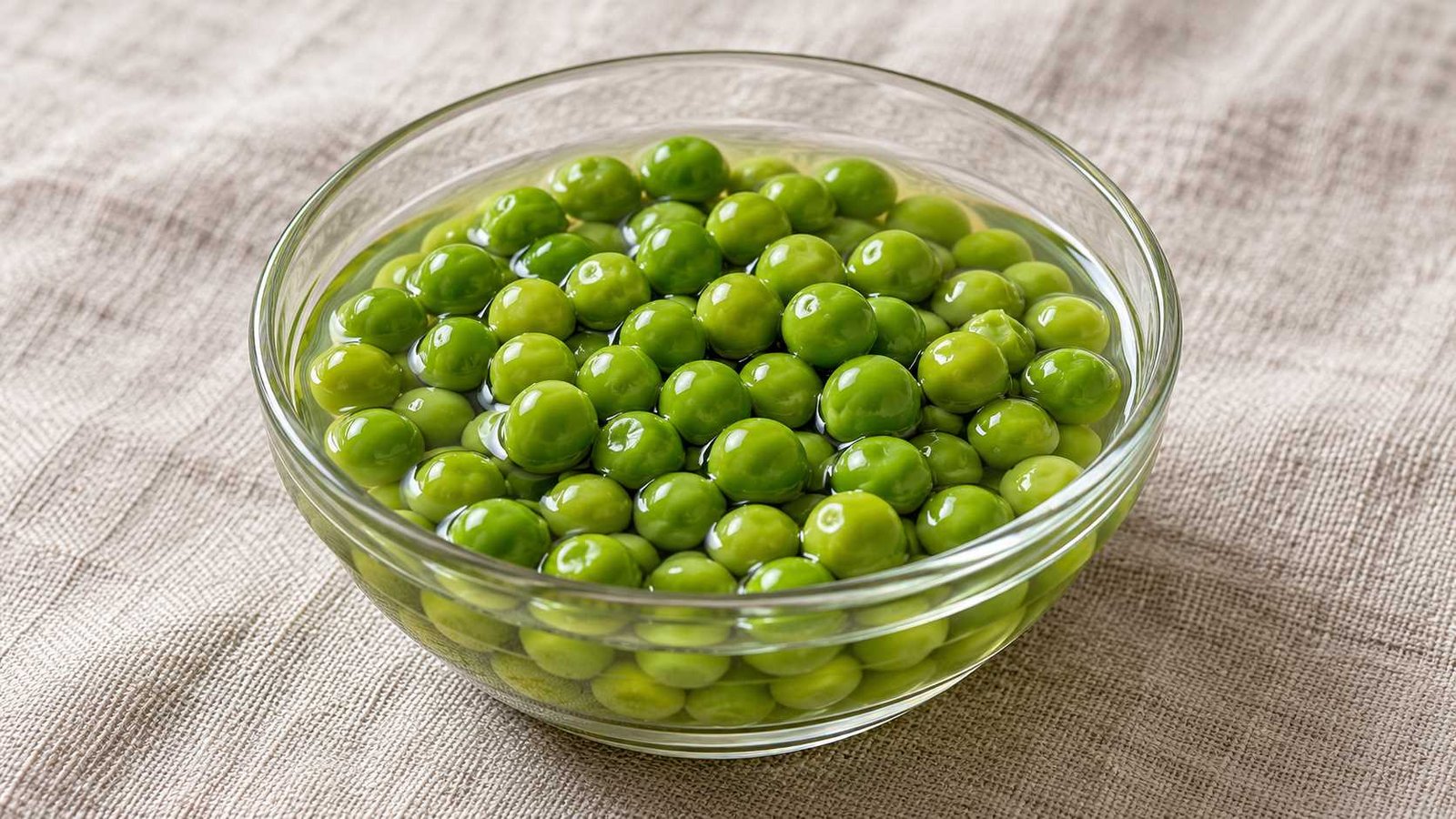
These sweet-sour refrigerator peas are a chilled salad ingredient made from tender green peas and a mild dressing of water, sugar, salt and vinegar. Brief cooking keeps the peas separate, while rapid cooling helps preserve their texture. Drain a portion before adding it to potato salad, or serve the peas as a small vegetable side. The batch yields about 1 kg of peas, plus dressing, and needs about 35 minutes of preparation and cooking followed by chilling. This is a short-term refrigerated recipe, not a shelf-stable preserve.
Sweet-sour refrigerator peas add a gentle tang to cold salads without the soft texture of long-cooked canned peas. This version keeps the existing proportions: 1 kg of shelled peas, 1 litre of water, sugar, salt and 50 ml of food-grade 9% vinegar. The peas cook separately from the dressing so you can stop as soon as they are tender. Cool both components quickly, combine them and refrigerate until cold. Plan on about 35 minutes of active preparation and cooking, then around 1 hour of chilling, depending on container depth. The result should taste lightly seasoned rather than sharply pickled. Use it as a refrigerated salad ingredient, and drain each portion so the dressing does not thin a creamy salad.
Choosing peas and measuring the dressing
Use young, tender green peas weighed after shelling. One kilogram is about 2 lb 3 oz; weighing is more reliable than measuring a large volume of peas. Remove tough, yellow or damaged peas. Older peas can stay starchy even after extra cooking, so taste one before making a large batch.
The dressing uses 1 litre of water, about 4¼ US cups, with 2 level 15 ml tablespoons of granulated sugar and 1 level tablespoon of fine table salt. Salt crystal sizes differ, so a tablespoon of coarse kosher salt will not season identically. Dissolve the sugar and salt fully before adding the vinegar.
Use only vinegar labelled for food use. If 9% vinegar is unavailable, replace 50 ml of 9% vinegar with 90 ml of 5% vinegar and reduce the water to 960 ml. This keeps the approximate amount of acetic acid and total liquid consistent for flavour. It does not establish a safe canning formula. Do not use cleaning vinegar, homemade vinegar of unknown acidity or concentrated vinegar essence.
Cooking and cooling without softening the peas
A large saucepan, colander, bowl of ice water and two or three shallow food-safe containers make this batch easier to handle. Keep a separate heatproof bowl for cooling the dressing. Avoid pouring hot dressing over the cooked peas; that continues cooking them and can leave their skins wrinkled.
Bring the blanching water to a rolling boil before adding peas. Work in batches if the water stops boiling for long. Start checking after 2 minutes: the peas should be bright green and tender enough to eat, with no hard, chalky centre. Allow another minute or two only if needed. Colour alone does not tell you whether they are tender.
Recipe card
Sweet-Sour Refrigerator Peas for Cold Salads
About 35 minutes preparation and cooking plus roughly 1 hour chilling; shelling peas is extra. Chilling depends on container depth.
Equipment: Large saucepan, smaller saucepan, colander, ice-water bowl, heatproof bowl, measuring spoons, shallow covered food-safe containers
Ingredients
Peas
Sweet-sour dressing
Peas
Instructions
Sort the peas and prepare cooling bowls
Rinse 1 kg of shelled peas and discard tough or damaged ones. Prepare a large bowl of ice water for the peas and a separate cold-water bath for the dressing.
Dissolve the dressing ingredients
In a saucepan, heat 1 litre water with 2 level tablespoons sugar and 1 level tablespoon fine salt over medium heat, stirring until clear. Remove from the heat and stir in 50 ml food-grade 9% vinegar. Cool the pan or a heatproof bowl in a cold-water bath, stirring occasionally; do not leave it cooling for hours.
Cook the peas until just tender
Bring a large pan of extra water to a rolling boil. Add peas in manageable batches and boil for about 2–3 minutes, checking that the centre is tender rather than chalky. Mature peas may need longer. Drain immediately.
Chill and drain thoroughly
Transfer the peas straight to the ice water. Stir gently until cold, then drain well. Divide between shallow clean containers and add the cooled dressing. Use several containers rather than one deep jar.
Refrigerate before serving
Cover and refrigerate promptly at 4°C/40°F or colder until thoroughly cold, allowing roughly 1 hour depending on container depth. Drain each serving. Use within 3 days and never store at room temperature or process this mixture for pantry canning.
Why these peas must stay refrigerated
This page retains its older URL, but the recipe is a refrigerator preparation. Its small amount of vinegar has not been validated as a preservation process. A sealed lid, boiling-water bath or longer simmer does not turn this mixture into a pantry preserve. The National Center for Home Food Preservation’s directions for shelled green peas use a tested pressure-canning process; follow those separate directions if pantry storage is your goal.
Adjustments and troubleshooting
Hard centres: the peas needed a little longer in boiling water, or were too mature. Chilling will not finish cooking them. Check tenderness before draining, and choose younger peas next time.
Wrinkled or dull peas: prolonged cooking, hot dressing or a long soak in acid can change their appearance. Keep the initial cook brief, cool promptly and make this close to when you need it. Do not add bicarbonate of soda to preserve colour; it can make the peas unpleasantly soft.
A watery salad: drain the peas thoroughly in a sieve before folding them into mayonnaise, yoghurt or another thick dressing. Use a slotted spoon for serving the peas on their own.
Too much seasoning: taste a drained spoonful once cold. If necessary, briefly rinse only the portion you will use immediately. Do not keep adding water to the stored container or assume dilution changes the storage limit.
Serving and make-ahead planning
Prepare these the same day or the day before a salad meal. Add dill, parsley or finely sliced spring onion to individual servings, rather than committing the whole batch to one flavour. The sweet-sour dressing suits Olivier potato salad with egg and pickles; taste the finished salad before adding more salt or pickle brine.
For a crisp side, try a drained portion in cabbage and pea salad with cucumber and dill, adjusting that salad’s lemon to taste. If you want plain peas for hot meals or the freezer, use the separate quick-cooked green pea recipe. This sweet-sour version serves a different purpose.
Storage
Refrigerate promptly in shallow covered containers at 4°C/40°F or colder and use within 3 days of cooking. Do not wait for a large covered pot to cool on the counter. Discard peas left out for more than 2 hours, or 1 hour above 32°C/90°F. Keep the batch cold while serving and use a clean utensil each time.
Freezing the finished dressed peas can soften them and dilute the dressing after thawing, so this recipe is intended for short-term chilling. For planned frozen storage, freeze plain peas using a suitable blanching method instead. These peas are served cold; reheating is unnecessary.
Allergens and ingredient checks
The listed ingredients contain no milk or egg. Check vinegar labels if avoiding gluten, because malt vinegar is unsuitable for a gluten-free diet. Peas are legumes and can themselves cause allergies. A salad made with these peas may introduce egg, milk, mustard or other allergens through its dressing.
Cook the peas only until tender, cool them quickly and drain well before serving. Keep this small-batch salad ingredient in the refrigerator.
Frequently asked questions
Can I use frozen peas?
Yes, for a refrigerated variation. Cook them according to the packet, cool quickly and drain before adding the dressing. Do not thaw them on the counter or assume every frozen brand needs the same cooking time.
Can I make half a batch?
Yes. Use 500 g peas, 500 ml water, 1 tablespoon sugar, ½ tablespoon fine salt and 25 ml of 9% food-grade vinegar. Keep the same cooking cues and refrigerator storage limit.
Do the peas need to sit overnight?
No. Serve once the peas and dressing are thoroughly cold. An overnight rest makes planning convenient but is not a safety treatment or a requirement.
Can I reduce the sugar or salt?
For this refrigerator-only dish, you can season a smaller batch to taste. Less sugar makes the vinegar more noticeable. The mixture still requires refrigeration and must be used within 3 days.
Can I reuse the dressing for another batch?
Make fresh dressing for a new batch. Used dressing has contacted cooked food and should not be treated as a reusable preserving liquid.
What should I do with a jar stored in the cupboard?
Do not taste it to judge safety. This recipe is not validated for room-temperature storage; discard a batch that has been kept as a pantry preserve.
More recipes to try


Spotted a detail that needs correcting? Contact the FeastDelights editors.