Fresh Horseradish Adjika with Tomatoes and Apples
A raw tomato, pepper, apple, garlic, and horseradish sauce blended into a bright, spicy condiment.
This fresh horseradish adjika is a raw, blended condiment made with tomatoes, sweet and hot peppers, apples, garlic, and horseradish. The source lists the produce quantities and adds salt, sugar, and vinegar to taste, so the card keeps those seasonings adjustable instead of inventing a fixed preservation ratio. The sauce is not fermented or canned in this version. Wash and dry the produce well, blend it in a clean processor, and refrigerate it promptly in a covered container. The horseradish and hot pepper give the sauce a sharp, warming flavour that works with grilled vegetables, roast meat, or sandwiches. Make a small batch and use it within three to four days.
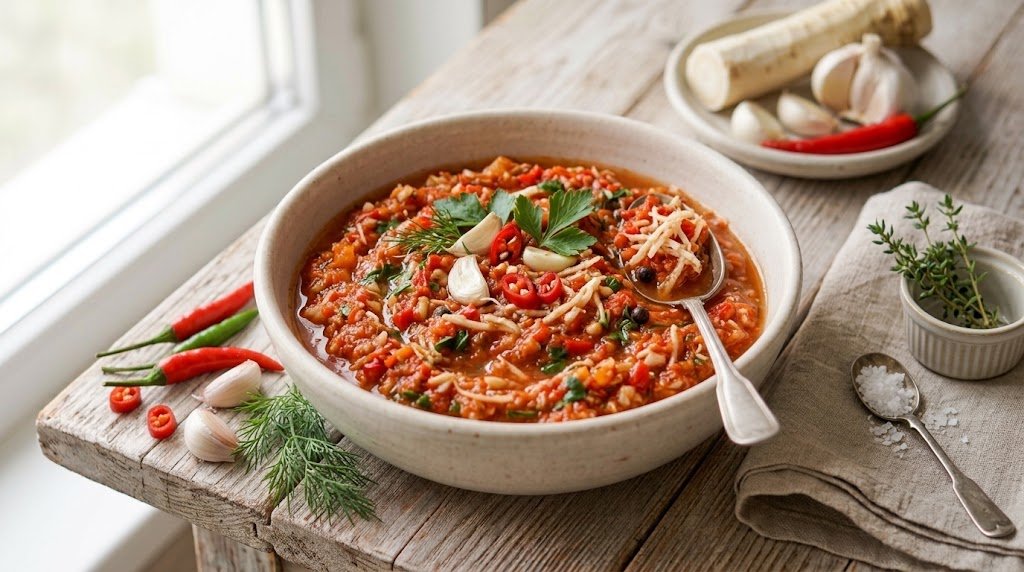
Recipe card
Fresh Horseradish Adjika with Tomatoes and Apples
Equipment: Food processor, knife, cutting board, clean covered refrigerator container
Ingredients
Instructions
Prepare the produce
Wash and dry the tomatoes and peppers. Seed the sweet peppers. Core the apples. Peel the garlic and horseradish.
Blend in batches
Pulse tomatoes, sweet peppers, hot peppers, garlic, horseradish, and apples in a clean food processor until finely chopped or smooth, as preferred.
Season
Transfer to a clean bowl. Stir in vinegar, salt, and sugar to taste.
Pack and chill
Spoon into clean covered containers, leaving a little headspace. Refrigerate promptly at 4°C (40°F) or below.
Serve and use promptly
Serve cold as a condiment. Use within three to four days; do not store at room temperature or treat as canned adjika.
How to tell when it is ready
The produce is finely blended and evenly seasoned.
Tips
- Measure and prepare the ingredients before you begin.
- Use the pan size and heat level described in the steps.
- Taste for seasoning near the end and adjust only where the source allows.
- Watch the visual doneness cues rather than relying on time alone.
Troubleshooting
- If browning happens too quickly, lower the heat and continue cooking gently.
- If the mixture is too loose, cook uncovered briefly while stirring and watching closely.
Substitutions
- Use a similar neutral cooking oil where the source calls for vegetable oil.
- Choose a garnish from the listed serving options rather than changing the recipe base.
Variations
- Use one of the source-supported optional additions noted in the ingredient list.
- Keep the core ingredient ratios unchanged when trying a garnish variation.
Serving suggestions
- Serve freshly prepared as the recipe describes.
- Pair with a simple green salad or seasonal vegetables.
- Offer bread or rice on the side when it suits the dish.
- Serve sauces and garnishes separately so each person can adjust.
Make ahead
Prepare the measured ingredients in advance. Refrigerate perishable ingredients until cooking.
Storage
Refrigerate perishable leftovers promptly in a covered container at 4°C (40°F) or below. Use within three to four days.
Food safety
Keep perishable ingredients refrigerated until use. Refrigerate cooked leftovers within two hours and keep them at 4°C (40°F) or below.
Frequently asked questions
Can I prepare fresh horseradish adjika ahead?
Prepare it close to serving for the best texture. If making ahead, refrigerate promptly and follow the storage directions.
How should I store fresh horseradish adjika?
Refrigerate perishable leftovers promptly in a covered container at 4°C (40°F) or below. Use within three to four days.
Serve fresh horseradish adjika while it is at its best, and refrigerate any leftovers promptly.
More recipes to try




Spotted a detail that needs correcting? Contact the FeastDelights editors.