Sautéed Eggplant with Tomatoes, Peppers and Garlic
This sautéed eggplant combines tender cubes of eggplant with sweet bell peppers, ripe tomatoes, softened onion and garlic. Cook the vegetables in stages, then cover the skillet so the eggplant softens in the tomato juices. Finish uncovered if the sauce needs thickening and scatter fresh parsley or coriander over the top. The dish makes four to six side servings in about 65 minutes, with a mild, savoury flavour that pairs well with rice, bread or grilled mains. No separate salting step is necessary for young, mild eggplants.
Sautéed eggplant with tomatoes and peppers is a simple stovetop vegetable dish with soft eggplant, sweet bell peppers and a lightly reduced tomato sauce fragrant with garlic. It makes four to six side servings in about 65 minutes. The vegetables cook in stages so the eggplant becomes tender without the peppers losing all their shape. Serve with rice, bread or grilled mains.
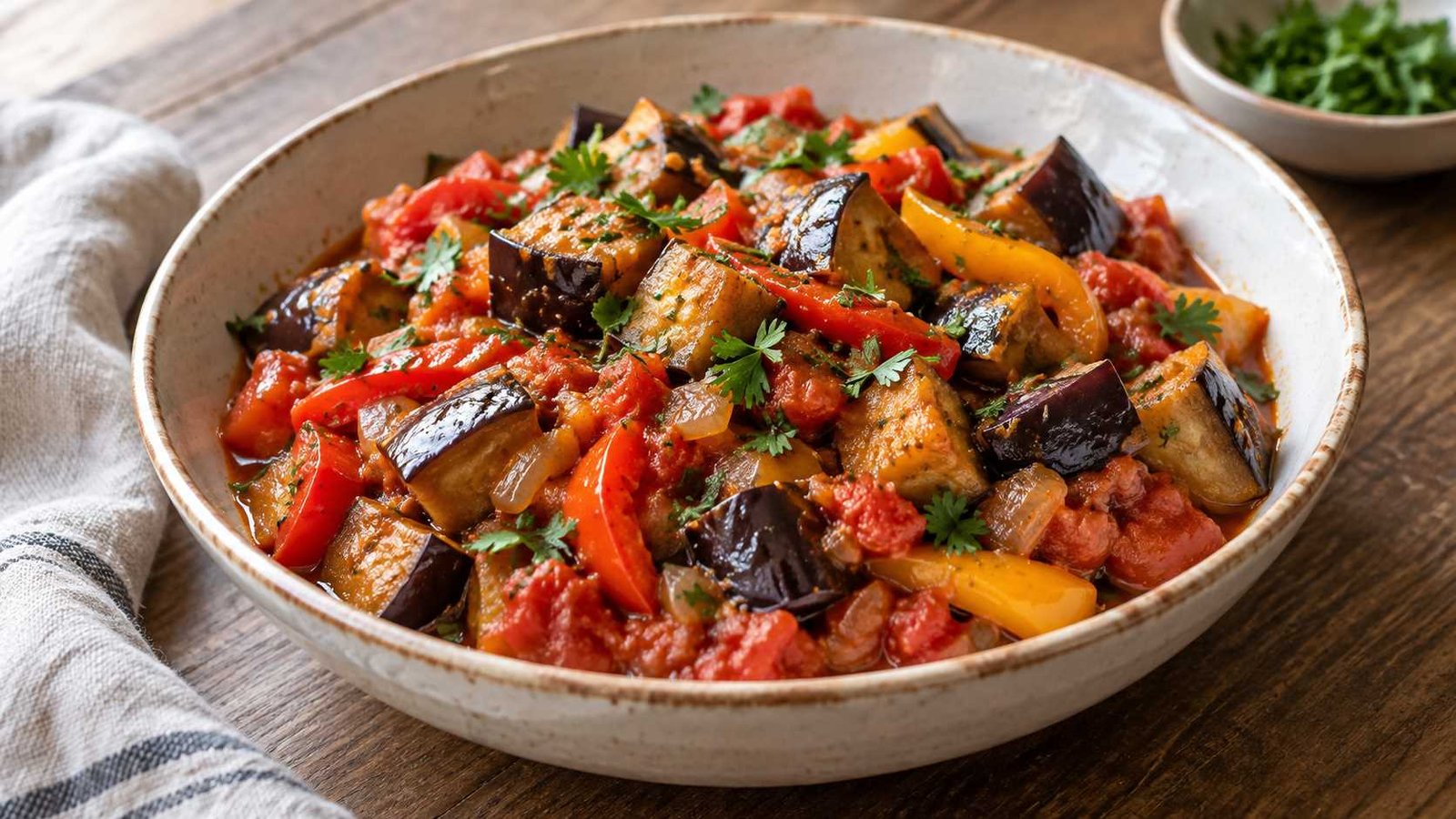
Recipe card
Sautéed Eggplant with Tomatoes, Peppers and Garlic
Allow about 5 minutes for onion, 10 minutes for eggplant, 5 minutes for peppers and 15–20 minutes covered simmering, plus heating and optional reduction.
Equipment: Knife, cutting board, wide deep skillet with lid, wooden spoon or spatula
Ingredients
Instructions
Wash and cut the vegetables
Wash vegetables. Dice eggplant into roughly 2–3 cm pieces, chop tomatoes with juices, slice peppers, dice onion and mince garlic.
Soften onion and garlic
Heat olive oil in a wide deep skillet over medium heat. Cook onion about 5 minutes until soft; add garlic for 30 seconds.
Sauté the eggplant
Add eggplant and sauté about 10 minutes, turning occasionally until starting to soften and colour. Lower heat and add a splash of water if sticking.
Add peppers and simmer with tomatoes
Add peppers and cook 5 minutes. Stir in tomatoes and their juices, cover and simmer gently 15–20 minutes until eggplant is fork-tender.
Reduce, season and garnish
Uncover and reduce excess liquid if needed. Season with salt and pepper and finish with chopped parsley or coriander.
Choosing and preparing the vegetables
Choose three medium eggplants with smooth, firm skin and no soft spots. Wash the vegetables under running water. Trim the eggplant and cut into roughly 2–3 cm (about 1 inch) cubes. The skin helps the pieces hold together and can be left on if tender; peel thicker skins in strips if preferred. Four large ripe tomatoes provide the cooking liquid, so chop them and retain their juices. Slice two sweet bell peppers into bite-sized strips, dice one large onion and mince two garlic cloves. Keep the garlic separate from the onion because it cooks much faster.
The recipe uses three tablespoons of olive oil (45 ml). Eggplant absorbs oil readily, but adding more every time the pan looks dry can make the final dish greasy. A wide, deep skillet with a lid gives the vegetables room to soften. Because eggplant sizes vary, use two pans or brown in batches if necessary; this may extend the cooking time.
How to sauté eggplant without making it greasy
Heat the oil over medium heat. Cook onion until translucent, about five minutes, then stir in garlic for 30 seconds. Add diced eggplant and sauté about ten minutes, turning occasionally. Look for a few golden patches and the beginning of softening rather than trying to brown every surface. If the pan becomes dry before the pieces soften, lower the heat and add a small splash of water rather than repeatedly pouring in oil. Avoid constant stirring, which breaks the softening cubes.
Add the sliced peppers and cook five minutes. Stir in chopped tomatoes and their juices, cover and simmer gently for 15–20 minutes. The eggplant should yield easily to a fork and have no raw, spongy centre. Remove the lid if the sauce is thin and simmer a few minutes more, until the tomato juices lightly coat the vegetables. Season to taste with salt and pepper, then add parsley or fresh coriander just before serving.
Troubleshooting and substitutions
Eggplant is tough: Continue the covered simmer with a little water until tender. Watery sauce: Reduce uncovered over medium-low heat. Vegetables fall apart: Cut larger, more even cubes and stir gently. Garlic burns: Add it just before the eggplant, not at the start of onion cooking. Salting eggplant beforehand is optional for firm, mature specimens; it can draw out moisture, but young mild eggplants usually need no salting step. Bell peppers of any colour work. Add a little diced courgette with the peppers for variety, or season with paprika. The listed ingredients are plant-based and contain no major common allergens; check any packaged additions and cross-contact where relevant.
Serving, make ahead and storage
Spoon over rice or serve with crusty bread. For a larger meal, pair with lemon herb chicken skewers. For different eggplant dishes, see Sicilian-style caponata with capers or oven-baked ratatouille. Prepare peppers and onion earlier if needed, but cut eggplant close to cooking to limit browning. Refrigerate in shallow covered containers at 4°C (40°F) or below within 2 hours (1 hour above 32°C/90°F). Use within 3 days. Reheat to 74°C (165°F), stirring gently. Freeze portions if desired; thaw in the refrigerator and expect a softer texture. See FoodSafety.gov handling guidance.
Frequently asked questions
Should I peel eggplant before cooking?
Young eggplant usually needs no peeling. Remove tough skin if preferred.
Do I need to salt eggplant first?
No for young mild eggplant. Salting mature pieces can draw out moisture; rinse and dry salted pieces before cooking.
Why does the eggplant absorb so much oil?
Its porous flesh absorbs oil. Use moderate heat and a splash of water if sticking rather than continually adding oil.
Can I use canned tomatoes?
Yes, but the amount of liquid and acidity may differ. Reduce uncovered to the desired consistency.
How do I know the eggplant is cooked?
A fork should slide into the flesh easily, with no firm or spongy centre.
More recipes to try




Spotted a detail that needs correcting? Contact the FeastDelights editors.