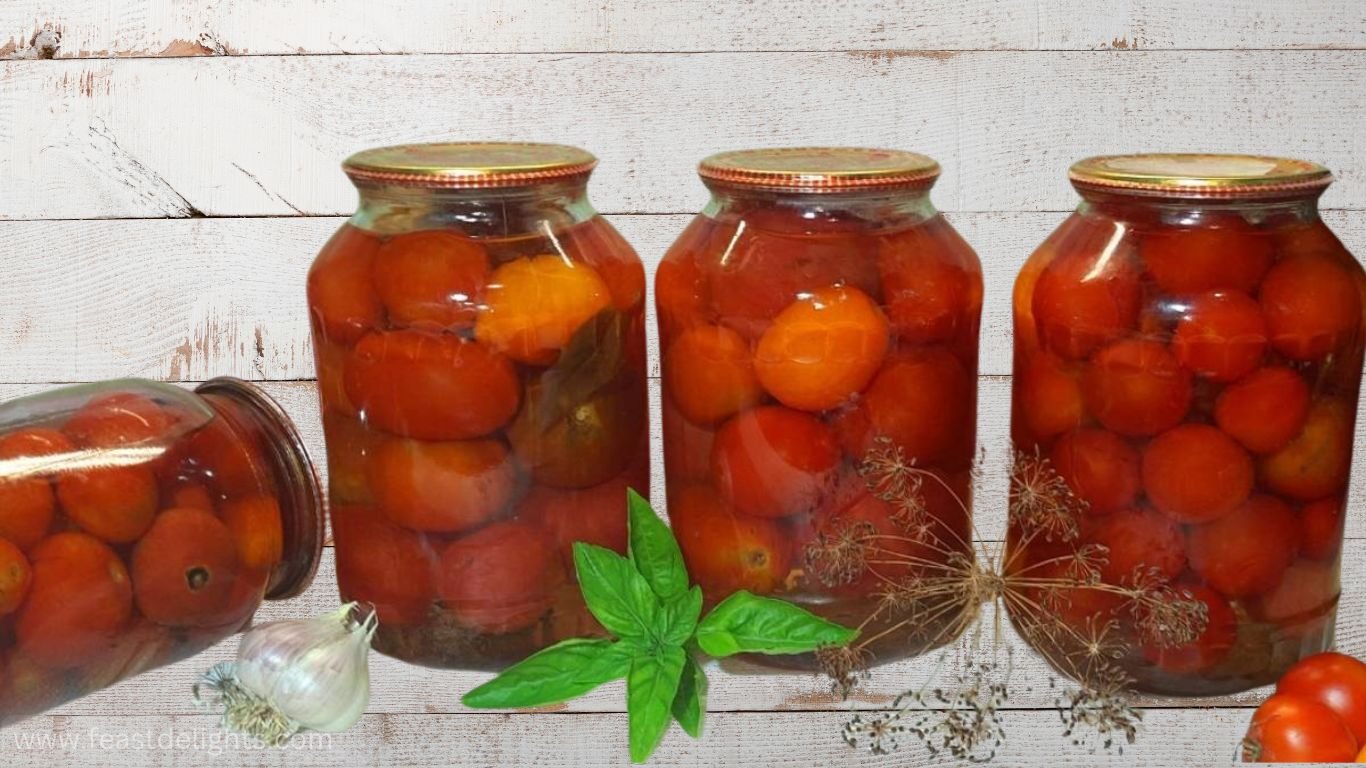
Refrigerator Pickled Tomatoes with Garlic and Bay
Firm small tomatoes quick-pickled in a refrigerated vinegar brine with garlic and spices.
These quick refrigerator tomatoes are a tangy, garlicky accompaniment, not a shelf-stable winter canning recipe. The source recommends filling jars with a weak, untested brine and sealing them without a validated processing method; that cannot be treated as safe for pantry storage. This version uses a balanced vinegar-and-water quick pickle, keeps the jars refrigerated and gives a short storage window. Choose firm small tomatoes, prick them so brine can enter and chill at least a day. For shelf-stable canning, use a current tested recipe and its exact jar size, acidification and processing directions. Wash two heatproof jars and lids with hot soapy water and rinse well. Wash tomatoes; prick each once with a clean skewer.
Recipe card
Refrigerator Pickled Tomatoes with Garlic and Bay
Equipment: Two clean heatproof jars, saucepan, measuring jug, skewer
Ingredients
Instructions
Prepare jars and tomatoes
Wash two heatproof jars and lids with hot soapy water and rinse well. Wash tomatoes; prick each once with a clean skewer.
Pack jars
Divide garlic, bay leaves, peppercorns and dill between jars. Pack tomatoes snugly without crushing.
Make brine
Bring vinegar, water, salt and sugar to a boil, stirring until dissolved.
Cover tomatoes
Pour hot brine over tomatoes to cover, leaving a little headspace. Let jars cool until no longer steaming.
Refrigerate
Cover and refrigerate promptly. Chill at least 24 hours before tasting; flavour improves over 2 to 3 days.
Serve and store
Use a clean utensil and keep tomatoes refrigerated. Do not store at room temperature or treat as canned pantry food.
How to tell when it is ready
Tomatoes are chilled and lightly pickled after 24 hours; jar remains refrigerated at all times.
Tips
- Use firm small tomatoes.
- Keep fruit submerged.
- Cool and refrigerate promptly.
- Never use this method for pantry storage.
Troubleshooting
- If tomatoes split, pour the brine less aggressively and choose firmer fruit.
- If flavour is too sharp, serve with rich foods; do not dilute stored brine.
Substitutions
- Use 5% acidity apple cider vinegar.
- Reduce sugar slightly, but keep the vinegar and water proportions unchanged.
Variations
- Add a small dried chilli.
- Use fresh oregano instead of dill.
Serving suggestions
- Serve with grilled meat.
- Add to a cheese board.
- Chop into a salad.
- Use the brine in a vinaigrette.
Make ahead
Prepare suitable components ahead and store them safely. Keep refrigerated at 4°C (40°F) or below and use within 1 week. This quick pickle is not shelf stable and must not be stored in the pantry.
Storage
Keep refrigerated at 4°C (40°F) or below and use within 1 week. This quick pickle is not shelf stable and must not be stored in the pantry.
Food safety
This is a refrigerator pickle only, not a validated canning recipe. Keep chilled and use within 1 week; do not seal for room-temperature storage.
Frequently asked questions
Can I store these tomatoes in the pantry?
No. This recipe is for refrigeration only. Use a current tested canning recipe for shelf-stable jars and follow it exactly.
How should I store refrigerator-pickled tomatoes with garlic?
Keep refrigerated at 4°C (40°F) or below and use within 1 week. This quick pickle is not shelf stable and must not be stored in the pantry.
Serve with grilled meat. Keep refrigerated at 4°C (40°F) or below and use within 1 week. This quick pickle is not shelf stable and must not be stored in the pantry.
More recipes to try


Spotted a detail that needs correcting? Contact the FeastDelights editors.