Tender Chicken Gizzards in Sour Cream
Slow-simmered chicken gizzards with onions, carrots and a creamy sour-cream sauce.
Chicken gizzards become tender with a patient simmer before they are browned with onion, carrot and sour cream. The source correctly notes that they need a long cook but gives a broad range and mixes boiling and frying without clear cues. Trim gizzards, simmer them until a knife pierces easily, then slice and sauté with vegetables. Keep raw poultry separate and avoid rinsing it. Lower the heat before adding sour cream so the sauce stays smooth. This is a savoury, mild dish that works well with rice, buckwheat or mashed potatoes. Trim away excess fat and tough yellow membrane if present. Pat dry with paper towels; do not rinse raw poultry. Place gizzards, bay leaf and half the salt in a pot with water. Bring to a boil, skim, then cover and simmer gently 60 to 90 minutes until easily pierced. Drain and reserve 120 ml broth.
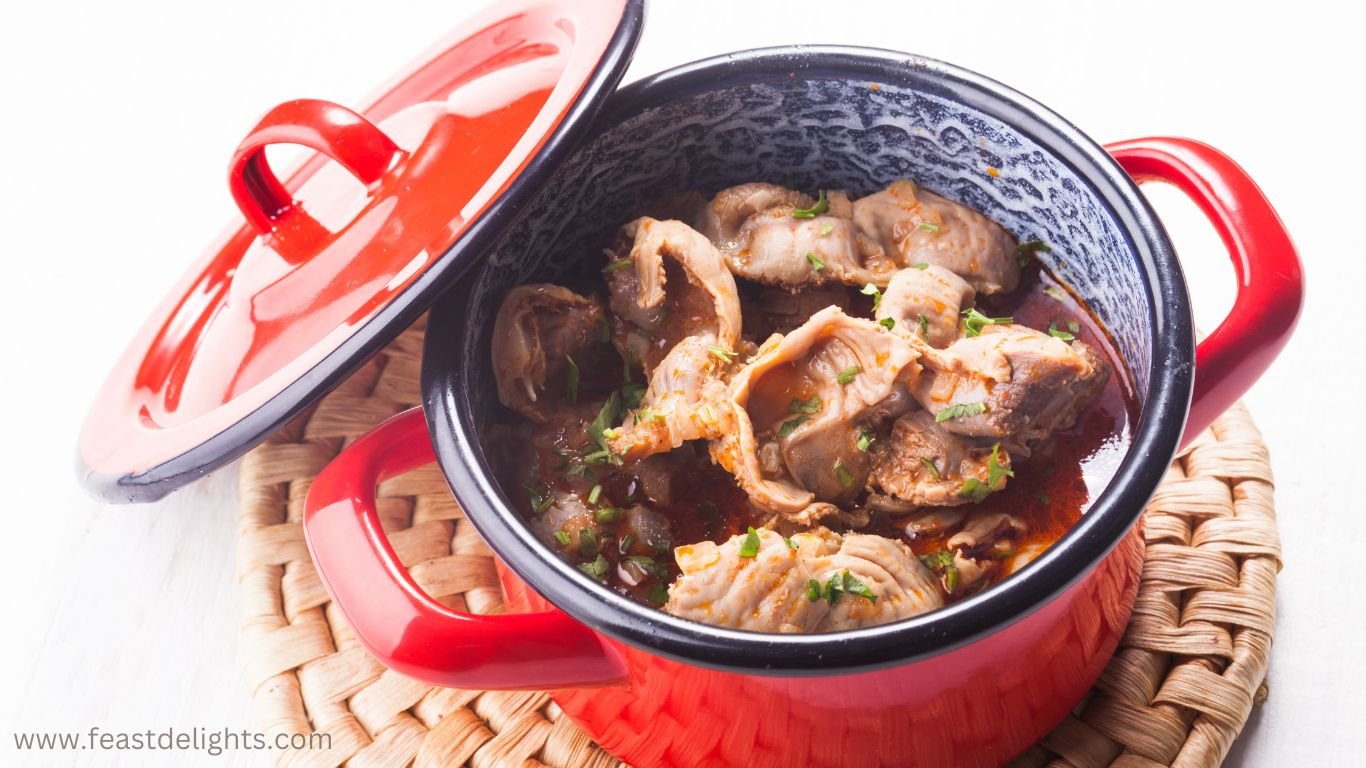
Recipe card
Tender Chicken Gizzards in Sour Cream
Equipment: Large pot, skillet, knife, cutting board
Ingredients
Instructions
Clean gizzards
Trim away excess fat and tough yellow membrane if present. Pat dry with paper towels; do not rinse raw poultry.
Simmer until tender
Place gizzards, bay leaf and half the salt in a pot with water. Bring to a boil, skim, then cover and simmer gently 60 to 90 minutes until easily pierced. Drain and reserve 120 ml broth.
Slice
Cool gizzards enough to handle, then slice into bite-size pieces.
Cook vegetables
Heat oil in a skillet over medium heat. Cook onion and carrot 6 to 8 minutes until softened. Add garlic for 30 seconds.
Make sauce
Add sliced gizzards and reserved broth. Simmer 5 minutes. Reduce heat to low, stir in sour cream and pepper, and warm gently without boiling.
Serve
Taste for salt, add herbs and serve with rice, buckwheat or mashed potatoes.
How to tell when it is ready
Gizzards are easily pierced with a knife and fully cooked; sauce is hot and smooth.
Tips
- Trim tough membrane carefully.
- Simmer at a gentle bubble.
- Cook until tender before slicing.
- Keep sour cream below a boil.
Troubleshooting
- If gizzards remain tough, continue simmering and add water as needed.
- If sour cream begins to split, remove from heat and stir in a splash of cool cream.
Substitutions
- Use plain yoghurt only off the heat, as it is more likely to split.
- Use chicken stock in place of reserved simmering broth.
Variations
- Add sliced mushrooms with the onion.
- Use paprika and a little stock for a non-creamy variation.
Serving suggestions
- Serve with mashed potatoes.
- Pair with buckwheat.
- Add rice and a cucumber salad.
- Finish with fresh dill.
Make ahead
Prepare suitable components ahead and store them safely. Refrigerate within 2 hours up to 3 days. Reheat gently until steaming; avoid boiling the sour-cream sauce.
Storage
Refrigerate within 2 hours up to 3 days. Reheat gently until steaming; avoid boiling the sour-cream sauce.
Food safety
Keep raw poultry separate from ready-to-eat foods and cook gizzards thoroughly; refrigerate leftovers within 2 hours.
Frequently asked questions
How do I know when gizzards are tender?
A small knife should enter easily and the pieces should be pleasantly chewy rather than rubbery. Simmer longer if needed.
How should I store tender chicken gizzards in sour cream?
Refrigerate within 2 hours up to 3 days. Reheat gently until steaming; avoid boiling the sour-cream sauce.
Serve with mashed potatoes. Refrigerate within 2 hours up to 3 days. Reheat gently until steaming; avoid boiling the sour-cream sauce.
More recipes to try




Spotted a detail that needs correcting? Contact the FeastDelights editors.