Baked Alaska with Swiss Meringue and Ice Cream
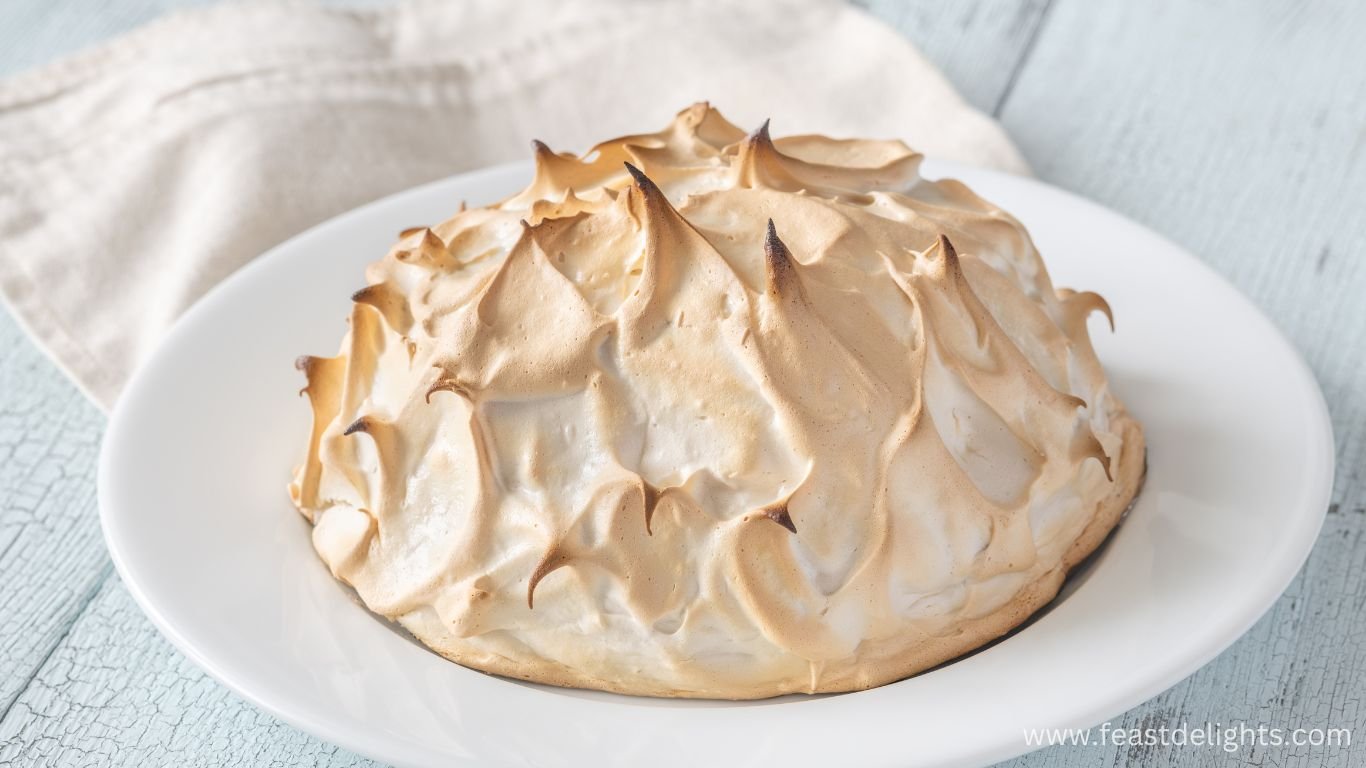
Baked Alaska combines a soft sponge cake base, a firm dome of ice cream and a glossy Swiss meringue shell with golden toasted peaks. The egg whites and sugar are heated together before whipping, and the frozen centre is completely covered with meringue before brief browning. Use an oven-safe metal tray and a very hot oven, or a culinary torch, for the finishing stage. This make-ahead dessert serves eight and is best sliced and served immediately after browning.
Baked Alaska is a dessert of contrasts: a soft sponge cake supports a frozen ice cream dome, while an airy meringue coating is toasted just before serving. This version uses Swiss meringue, in which egg whites and sugar are heated together before whipping. It makes eight servings from a 20 cm cake layer and one litre of ice cream.
Why the ice cream stays frozen
The bubbles of air within whipped meringue slow the transfer of heat to the ice cream, and the sponge provides another insulating layer underneath. However, the coating is not a permanent heat barrier. The centre needs to be frozen solid, the meringue must cover the exposed surfaces without gaps, and browning must be brief. A warm or partly melted centre can collapse even when the outside looks perfect.
Choosing the cake and ice cream
Use a fully cooled sponge approximately 20 cm across. A plain vanilla sponge works with most flavours; our genoise sponge cake is a useful starting point. Trim it to the required size if necessary. A warm cake will melt the ice cream, so allow it to cool completely before assembly.
Choose firm ice cream that holds its shape when spread. Vanilla is particularly versatile, and our vanilla ice cream recipe offers a homemade option. Soften only enough to shape a dome, rather than allowing it to melt. The three-hour freezing period is a minimum estimate; a thick dome or a crowded freezer may require longer.
Making stable Swiss meringue
Use a clean bowl and whisk free of grease or traces of egg yolk. Heating the egg whites, sugar and cream of tartar over gently simmering water dissolves the sugar. Whisk continuously and check the mixture with a thermometer. The target is at least 71°C (160°F), in line with food safety guidance for egg dishes. A culinary torch only browns the surface; it is not a substitute for heating the egg mixture properly.
Once heated, whip the mixture until glossy, cool and stiff enough to retain peaks. If the bowl is still warm, continue whipping before assembling. The vanilla goes in towards the end. See King Arthur Baking’s Swiss meringue method for further guidance on heating and whipping.
Recipe card
Baked Alaska with Swiss Meringue and Ice Cream
Includes at least 3 hours of freezing, approximately 5–10 minutes of heating the egg whites and 3–5 minutes of oven browning. Additional freezing if the ice cream softens, and preparation of the already-baked sponge, are not included.
Equipment: Sturdy metal baking tray suitable for freezer and high oven heat, heatproof mixing bowl, saucepan, whisk, instant-read food thermometer, electric mixer, spatula, oven gloves and sharp knife. Optional culinary torch.
Ingredients
Cake and ice cream
Swiss meringue
Instructions
Shape and freeze the base
Place the cooled sponge on a sturdy metal baking tray suitable for both freezing and high oven temperatures. Soften the ice cream just until spreadable, mound it evenly over the sponge and smooth into a dome. Freeze for at least 3 hours until very firm.
Heat the egg whites and sugar
Combine the egg whites, sugar and cream of tartar in a clean heatproof bowl. Set it over a saucepan of gently simmering water without letting the bowl touch the water. Whisk continuously until the sugar dissolves and the mixture reaches at least 71°C (160°F), checking with a clean food thermometer.
Whip the Swiss meringue
Remove the bowl from the heat and beat with an electric mixer until the meringue is glossy, forms stiff peaks and the bowl is no longer warm. Beat in the vanilla. Do not spread warm meringue over the ice cream.
Cover the frozen dessert
For oven finishing, preheat to 250°C (480°F). Remove the frozen cake from the freezer and promptly spread the meringue over the entire dome and exposed cake edges, leaving no gaps. Create peaks with the back of a spoon. If the centre softens, return the coated dessert to the freezer until firm before browning.
Brown and serve
Bake on the metal tray for 3–5 minutes, watching continuously, until the meringue peaks turn golden. Alternatively, use a culinary torch according to its manufacturer's instructions on a heatproof surface away from flammable materials. Do not use ordinary glass or ceramic freezer plates in the hot oven. Slice immediately with a warm, dry knife.
Oven or torch finishing
A very hot oven can colour the peaks in a few minutes. Use a sturdy metal tray that is suitable for the freezer and the oven temperature; a plate described only as freezer-safe may break under sudden heat. Avoid ordinary glass, ceramic and baking paper not rated for the temperature. Watch the meringue closely because the peaks can darken rapidly.
A culinary torch gives more control over individual peaks. Follow the torch manufacturer’s directions, work on a stable heatproof surface, and keep flammable objects away. Either method should colour the meringue without heating the frozen centre for an extended period.
Troubleshooting
Meringue will not hold peaks: Check for grease, yolk contamination or insufficient whipping. Ice cream is melting: Freeze the base longer and avoid warm meringue. Uneven browning: Create similarly sized peaks and keep the dessert under close observation. Meringue slides off: Check that the dome is firm, not wet or melting, and spread the coating all the way to the cake edges.
Serving ideas and variations
Serve immediately after browning. Dip a sharp knife in warm water, wipe it dry and cut through the frozen centre. Fresh berries add acidity, while a little sauce on the plate offers contrast. Our hot fudge sundae is another dessert built around warm and frozen components. Chocolate sponge, coffee ice cream or a thin layer of fruit jam can provide different flavours without changing the basic construction.
Make-ahead, storage and allergens
The cake and ice cream can be assembled and frozen overnight, reducing work before serving. Prepare the meringue fresh for the best texture. Keep the centre frozen until needed and do not refreeze ice cream that has melted. The recipe contains eggs, milk and usually wheat from the cake. Check the cake and ice cream labels for additional allergens; a suitable gluten-free sponge can be used if required.
Frequently asked questions
Why does Baked Alaska not melt immediately in the oven?
The air trapped in the meringue and the cake layer slow heat transfer to the frozen centre. A firmly frozen base, complete meringue coverage and very brief browning are essential.
Can I make Baked Alaska the day before?
Yes. Assemble and freeze the cake and ice cream base overnight. Make the Swiss meringue and brown it shortly before serving.
How do I know the Swiss meringue is ready?
The egg-white mixture must reach 71°C (160°F) during heating. After whipping it should be cool, glossy and hold stiff peaks.
Can I use a culinary torch instead of an oven?
Yes. Brown the finished meringue on a heatproof metal tray using a culinary torch according to its manufacturer's instructions.
Why is my meringue slipping?
Ice cream that has softened or developed a wet surface can prevent the meringue from adhering. Freeze the base firmly, cool the meringue and work quickly.
What ice cream flavours work well?
Vanilla, chocolate, coffee and firm fruit ice creams are suitable. Choose a flavour that complements the sponge and avoid ice cream that is already very soft.
Can I store leftover Baked Alaska?
It is best served immediately. Promptly freeze portions that are still frozen; discard melted ice cream. Expect the meringue texture to change during storage.
More recipes to try






Spotted a detail that needs correcting? Contact the FeastDelights editors.