Creamy Lobster Risotto with White Wine and Parmesan
This lobster risotto combines tender pieces of cooked lobster with creamy Arborio rice, white wine, butter and finely grated Parmesan. The rice gradually absorbs warm vegetable stock, releasing starch that gives the dish its soft, flowing texture without added cream. Onion and garlic provide a subtle savoury base, while the lobster is folded in near the end to avoid prolonged cooking. The recipe makes four servings in about 45 minutes and is best served immediately, while the rice retains a gentle bite.
Lobster risotto is a creamy rice dish with tender pieces of lobster and a savoury white-wine and Parmesan finish. This Italian-inspired recipe serves four in approximately 45 minutes, using fully cooked lobster. The rice supplies most of the creaminess, so there is no need to add heavy cream.
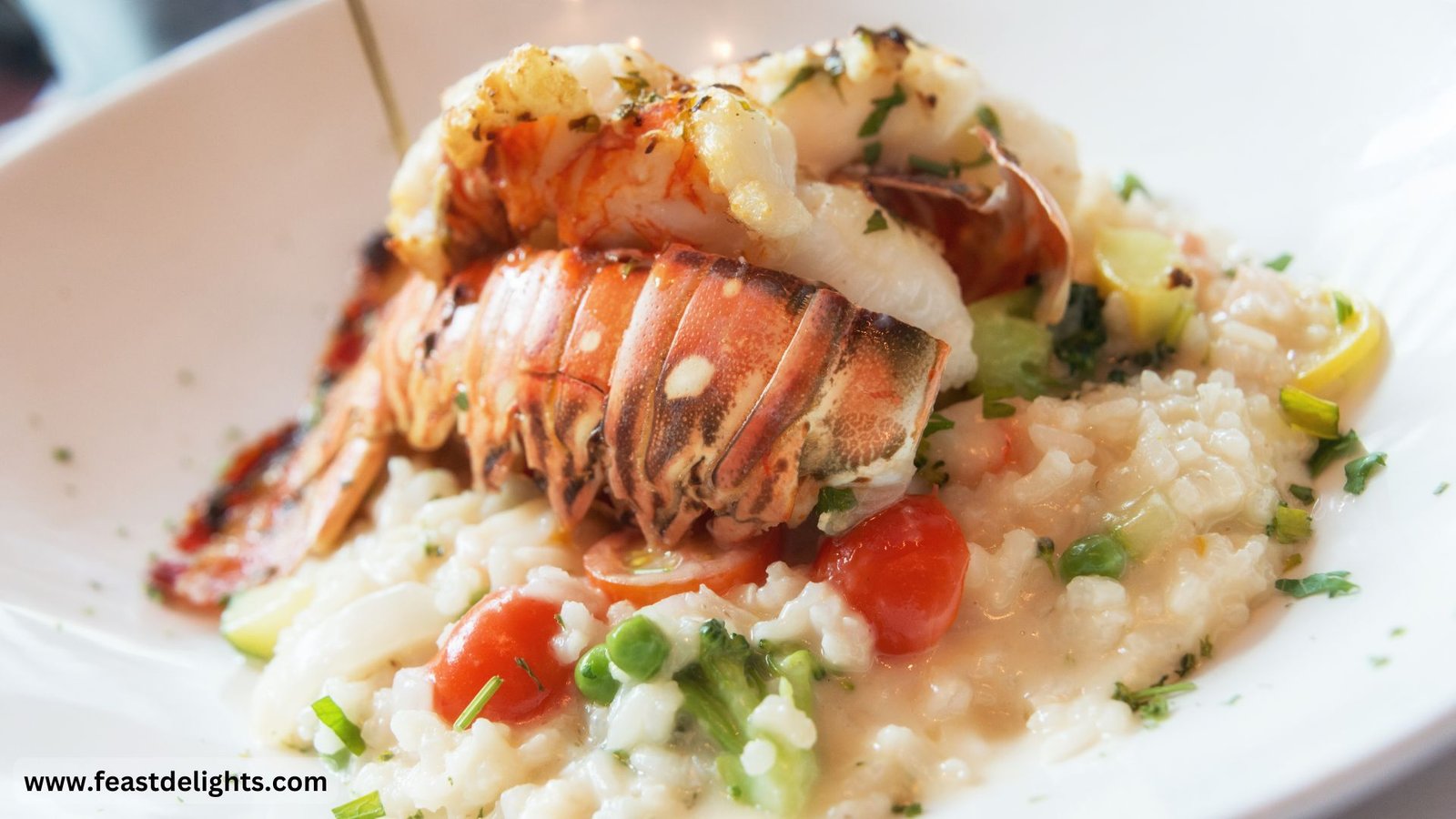
Recipe card
Creamy Lobster Risotto with White Wine and Parmesan
Uses fully cooked lobster meat; allow extra time for thawing or cooking raw lobster separately. Rice typically needs 18–22 minutes of stock additions.
Equipment: Kitchen scale, measuring jug, saucepan for stock, wide heavy sauté pan, ladle, wooden spoon, fine grater and instant-read thermometer.
Ingredients
Seafood
Risotto base
Finishing
Risotto base
Finishing
Instructions
Warm the stock
Warm vegetable stock in a separate saucepan over low heat. Keep it hot without boiling away.
Soften onion and garlic
Heat oil and half the butter in a wide heavy pan over medium heat. Soften onion about 4 minutes, then add garlic for 30 seconds.
Toast the rice and add wine
Stir in the dry Arborio rice for about 1 minute until edges look slightly translucent. Add white wine and stir until mostly absorbed.
Add stock gradually
Add warm stock one ladleful at a time, stirring regularly and waiting until mostly absorbed before the next addition. Cook about 18–22 minutes until rice is tender with a slight bite; use only as much stock as needed.
Heat lobster and finish off the heat
Fold in cooked lobster and heat through to 74°C (165°F). Remove from direct heat, stir in remaining butter, Parmesan and pepper. Loosen with warm stock if needed and serve immediately.
Choosing the rice, lobster and stock
Use 300 g (about 1½ US cups) Arborio rice. Its starch helps form the sauce while the grains retain their shape. Carnaroli is a suitable alternative, but ordinary long-grain rice will give a different result. Do not rinse the Arborio before cooking; the surface starch is useful here. Choose 450 g (about 1 lb) fully cooked lobster meat, drained and cut into bite-sized pieces. If using frozen cooked lobster, thaw it in the refrigerator according to the package directions. Keep it chilled until needed.
The 1.2 litres of vegetable stock (about 5 US cups) are an allowance rather than a quantity that must all go into the pan. Choose a lower-salt stock so the lobster and Parmesan do not make the dish excessively salty. A dry white wine gives acidity to balance the butter. For a version without added alcohol, replace the 150 ml wine with an equal amount of stock and finish with a little lemon juice to taste. Cooking wine does not guarantee that all alcohol evaporates.
Building the risotto
Warm the stock in a separate saucepan and keep it just below a boil. Use a wide heavy pan so the rice cooks evenly. Soften the onion in olive oil and half the butter over medium heat for around four minutes. Add garlic for thirty seconds, then stir in the dry rice. Toast it briefly until the edges of the grains look slightly translucent, without browning the onion or garlic. Pour in the wine and stir until most of it has been absorbed.
Add warm stock a ladleful at a time, keeping a gentle simmer. Stir regularly, especially around the edges of the pan, and add another ladle when the previous liquid is mostly absorbed. The rice should remain moist rather than sticking to the bottom. Start tasting after about 18 minutes. The grains should be tender with a slight bite in the middle, not crunchy or mushy. If the stock runs out before the rice is ready, add a little hot water. This approach follows the classic stock-by-stock risotto method described by the International Rice Research Institute’s risotto guide.
When to add the lobster
Fold the cooked lobster into the rice near the end of cooking, leaving just enough time to heat it thoroughly to 74°C (165°F). Large chilled pieces take longer to warm than small pieces. Avoid simmering the lobster throughout the rice-cooking stage, as extended heat can make it rubbery. Remove the pan from direct heat before stirring in the remaining butter and grated Parmesan. Loosen with a little warm stock if needed. The finished risotto should spread gently on a plate rather than hold a stiff mound.
Troubleshooting
Rice is still crunchy: continue adding small amounts of warm stock. Risotto is too stiff: stir in a little warm stock immediately before serving. Risotto is soupy: simmer briefly before adding lobster, allowing excess liquid to evaporate. Lobster is tough: use already cooked meat and add it near the end. Flavour is too salty: use unsalted stock and taste before adding cheese; do not reduce a very salty broth further.
Serving ideas and substitutions
Serve as a main course with a lightly dressed green salad or steamed vegetables. Try a lemon and oregano salad dressing on the side. If you enjoy the same rice technique, explore saffron risotto alla Milanese or mushroom risotto with white wine. A little lemon zest or chopped parsley can complement the lobster; neither is necessary. Cooked prawns can replace lobster by weight for a different seafood risotto.
Make ahead, storage and allergens
Grate the cheese, chop the onion and measure the rice in advance. Keep cooked lobster refrigerated separately. Risotto is at its best straight from the pan. Cool any leftover rice quickly in shallow portions, preferably within an hour, and use within 24 hours; rice can develop harmful toxins if left warm for too long. Follow the Food Standards Agency’s rice storage advice and official seafood handling guidance. Contains crustacean shellfish and milk; wine may contain sulphites and stock may contain celery or other allergens. Check labels.
Frequently asked questions
Can I use raw lobster directly in the risotto?
This recipe uses fully cooked lobster. Cook raw lobster separately according to its instructions before adding it; allow extra time.
Does risotto need cream?
No. Arborio starch, butter and Parmesan provide creaminess in this recipe.
Do I have to use all the stock?
No. Stop adding stock once the rice is tender and the risotto has a gently flowing consistency.
Can I omit white wine?
Yes. Replace it with 150 ml stock and add a little lemon juice to taste at the end.
Can I use Carnaroli rice instead?
Yes, by weight; adjust the stock additions and cooking time according to the grain's texture.
Why is my risotto thickening on the plate?
Rice continues absorbing liquid after cooking. Serve immediately and loosen with a little warm stock just before plating.
More recipes to try






Spotted a detail that needs correcting? Contact the FeastDelights editors.